However, a lack of time in the curriculum, issues around teacher confidence, and the increasingly prevalent use of multi-class teaching are also highlighted as areas of ongoing concern.
Researchers for the British Council emailed questionnaires to schools across Scotland, receiving responses from 169 primary schools (10%) and 114 secondary schools (37%), allowing for data to be collected from 27 of Scotland’s 32 local authorities. Response rates varied significant across the country, from 42% in Glasgow and Strathclyde to 5% in Edinburgh and the Lothians. Information was also received from 12 independent schools (18%).
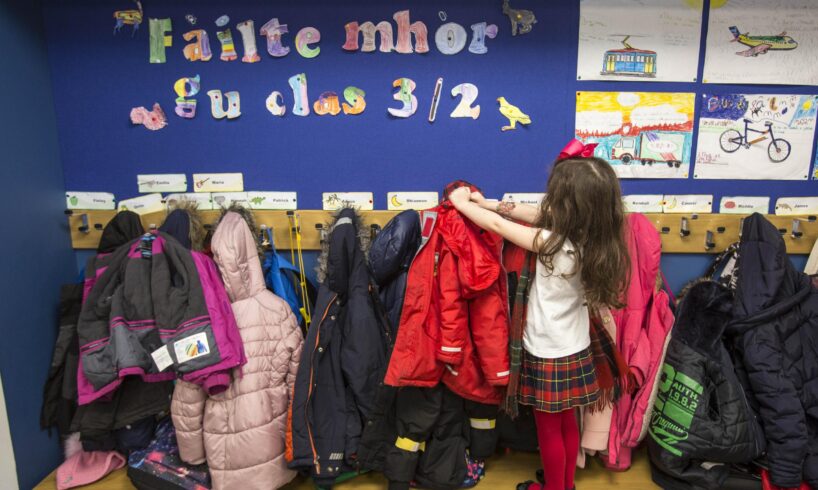
The latest report from the British Council examines language learning in Scotland (Image: British Council)
Scotland currently follows a languages policy known as the ‘1+2’ approach, which seeks to “create the conditions to provide all children and young people with an entitlement to learn two additional languages” throughout primary school and the first half of secondary school.
The policy states that a first additional language (referred to as L2) “should be taught continuously from P1 through to the end of S3.”
Primary schools are then expected to introduce a second additional language (L3) by primary 5 “at the latest”, with secondary schools expected to do the same thing during the period from S1-S3. This second additional language is unlikely to be taught continuously from primary 5 until the end of S3, and pupils may instead be exposed to several different languages and cultures in a more limited way.
The latest Language Trends Scotland report reveals that almost all primary schools are now teaching languages, and that just under one fifth are actively embedding language learning across their curricula.
French remains by far the most common, with 71 percent of responding schools teaching it from primary 1 through to primary 7 as the L2 language. Spanish is most common for L3, and is being delivered in that role by 37 percent of primaries.
The amount of time allocated to languages varies between schools, but the British Council researchers found that most primary school pupils receive less than one hour of language learning per week throughout their primary education. For a large minority, fewer than 30 minutes are dedicated to learning languages.
Survey responses also revealed that nearly three-quarters of schools create and use their own teaching resources, and that more than half make use of commercially-produced materials. However, just four percent reported having any funding to prepare or purchase resources in 2025/26.
Around half of primary schools reported that they have no educational links to outside organisations as part of their language teaching work, and just over two-thirds said that they have no international engagement opportunities for pupils or staff.
Across primary schools, almost all language learning is the responsibility of the class teacher, despite the fact that 40 percent of schools said that none of their teachers have any language qualifications whatsoever.
In longer comments quoted in the report, primary staff highlighted issues are around “teacher confidence and time”, the fact that time is “not available in an overcrowded curriculum”, a “lack of funding”, inadequate training opportunities, and the need for a bank of free, nationally approved resources.
Read More:
The Language Trends Scotland report also analysed the situation in secondary schools, highlighting the clear drop off in language learning in S3 that was sparked by the abolition of Standard Grade and the reduction in the number of subjects studied to qualification level. In the senior phase, the long-term decline in language students is already well documented.
Most secondary schools reported that they dedicate three periods per week to languages in S1-3, while just one percent said that languages are timetabled for less than one full period.
Around two thirds also reported that all S1 and S2 pupils are studying more than one language, although 28 percent stated that none of their pupils are doing so.
Sixty percent of schools reporting running multi-level classes for languages, meaning that several different qualification levels from National 4 to Advanced Higher are delivered at once. In some cases, teachers may also have to teach more than one language per class.
A similar proportion said that classes do not run if numbers are too low, with some schools setting a minimum of ten pupils, despite the fact that a third of all Higher and Advanced Higher languages classes have fewer than six pupils. Researchers discovered that schools serving more affluent pupil populations are more likely to run language classes even when pupil numbers are very low.
Just nine percent of responding secondaries said that they have no Higher or Advanced Higher languages students whatsoever, but half of this group were from the twenty percent of schools with the most deprived pupil populations.
More than half of schools told the British Council that timetabling constraints make it impossible for all pupils to study a language until the end of S3. Just over a fifth also reported that securing qualified languages teachers has now become a “major” challenge.
Amongst secondary schools responding to the survey, 66 percent organise trips abroad, 37 percent work with cultural institutions, 28 percent have one or more international partner schools, and 12 percent participate in exchange programmes.
Teachers quoted in the report referenced high attainment figures – which is reflected in national exam data – as well as the positive impact of an increased focus on spoken language. However, others spoke of the need for “resources and equipment to be able to engage our learners in a more realistic and relevant way”, as well as reforms to final exams. One teacher from a school serving the most deprived pupils said that a “change of mindset” is required, and that pupils must be given “the chance at achievement and attainment as a language learner so they see value and celebrate success.”
Claire de Braekeleer, Director of British Council Scotland, said: “At a time of global uncertainty, language skills are not a luxury, they are an essential. Learning a language opens doors, builds bridges, and fosters the kind of cultural understanding that our world urgently needs. This report shows we have strong foundations in Scotland to build on. At the British Council we are committed to working with education and public sector partners to address barriers, champion language learning, and equip the next generation with the skills to connect, collaborate, and compete globally.”
Dr Ian Collen, who co-led the research at Queen’s University Belfast, added: “As AI accelerates, human language becomes indispensable. Machines can automate, but they can’t create the cultural understanding or human connection that languages ignite. For Scotland’s young people, languages are gateways to opportunity and a voice in our fast-changing world.”