Feb 8 – The leader of Bangladesh’s largest Islamist party, Shafiqur Rahman, is hoping that his fourth attempt at electoral victory will finally deliver him the country’s top office.
Voters in the Muslim-majority nation head to the polls on Thursday for the first time since a 2024 uprising toppled former prime minister Sheikh Hasina, who ruled for 15 years and cracked down heavily on Islamist movements.
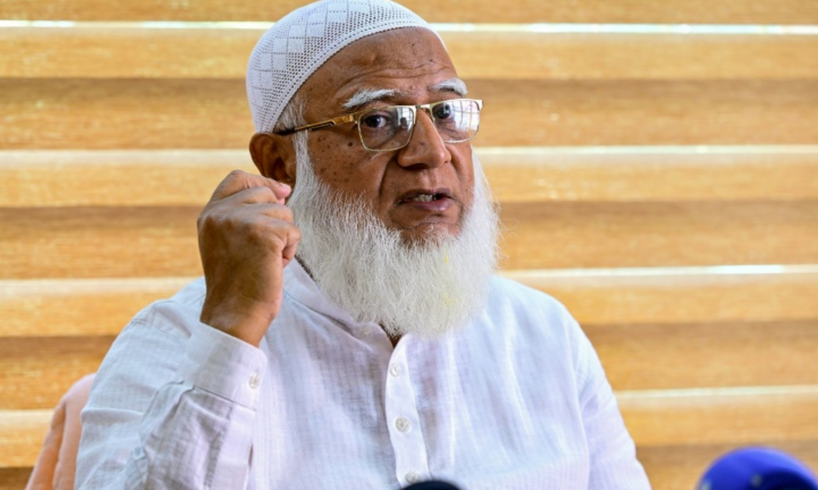
Rahman, a 67-year-old doctor and preacher, is leading an 11-party alliance and believes the political shift following Hasina’s fall has created an opening for his Jamaat-e-Islami party. His potential rise to power, however, has unsettled critics, women’s rights groups and minority communities.
“I stand for moral renewal in society,” Rahman has pledged on the campaign trail.
If successful, he would head the first Islamist-led government in constitutionally secular Bangladesh.
Dressed in white robes with a flowing white beard, Rahman cuts a distinctive figure at rallies. His party has fielded only male candidates in this election.
“Good governance is the foundation of stability, peace and prosperity,” he has said, promising rule-based and corruption-free leadership.
Hasina, whose government maintained close ties with neighbouring India’s Hindu-nationalist administration, targeted Islamist groups during her tenure, arresting hundreds and overseeing security operations that killed scores of alleged extremists. Following her removal from office, several Islamist leaders were released from prison.
Born in 1958 in the northeastern district of Moulvibazar, Rahman has been a longtime activist within Jamaat-e-Islami. He previously ran for parliament in 1996, 2001 and 2018, losing each time.
His wife, Ameena Shafiq, also a doctor, was appointed to one of the parliamentary seats reserved for women in 2018. Their two daughters and son are likewise medical professionals.
Rahman’s leadership ambitions have drawn scrutiny, particularly over his views on women’s roles. Bangladesh has long been led by powerful women, including Hasina and her rival, the late three-time prime minister Khaleda Zia.
Last year, remarks attributed to Rahman suggesting that women should be encouraged to remain at home sparked backlash. At one rally, he said, “We don’t want to lock women at home — we don’t have enough money to buy the locks.” A social media post allegedly linked to him, which described women being “pushed out of home in the name of modernity” as “another form of prostitution,” prompted protests in Dhaka. Rahman later claimed his account had been hacked and the post was removed.
Women demonstrators marched in the capital carrying brooms in a symbolic protest against his candidacy. Some former allies have also distanced themselves.
“You have to make your position clear regarding women who do not want to be directed by men, and those who belong to other faiths,” said Tajnuba Jabin, who quit the National Citizen Party after it allied with Rahman’s party.
Rahman has since sought to reassure voters, stating that minority rights would be protected “regardless of caste or creed.” His party has nominated one Hindu candidate. Around 10 percent of Bangladesh’s 170 million people are non-Muslim, most of them Hindu.
The Jamaat-led coalition includes several Islamist groups, some ideologically aligned with the Muslim Brotherhood. While hardliners within the alliance have called for restrictions on cultural activities they consider “anti-Islamic,” Rahman has struck a more conciliatory tone in recent weeks, pledging balanced foreign relations, including with India.
Despite longstanding accusations that Jamaat supported Pakistan during Bangladesh’s 1971 independence war, the party’s student wing has recently scored victories in university elections, including at Dhaka University, often viewed as a political bellwether.
Salahuddin Muhammad Babar, editor of the right-leaning newspaper Naya Diganta, described Rahman as “inclusive and accommodative,” saying those qualities could broaden his appeal.
Yet concerns persist among minorities and civil society groups, who fear that an Islamist-led government could restrict cultural freedoms and erode secular protections.
The outcome of Thursday’s vote could mark a turning point in Bangladesh’s political trajectory, testing whether the country’s post-uprising shift will usher in greater pluralism or a new ideological realignment.