The Personal Allowance has been frozen at £12,570 since 2021, but you can legally add £7,500 tax-free income through HMRC’s rent a room relief to boost your total tax-free earnings
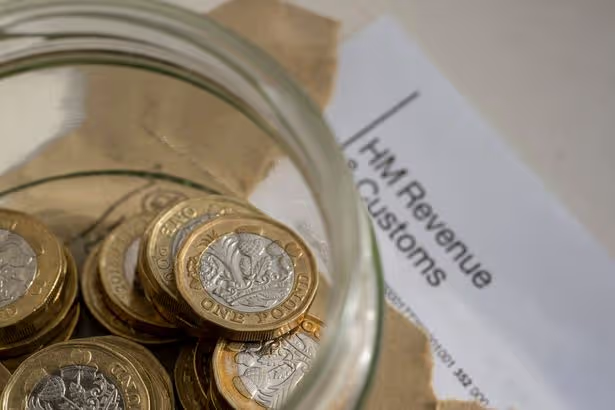
A little known HMRC means your tax-free personal allowance could increase(Image: Alphotographic via Getty Images)
The tax-free Personal Allowance has once again become a focal point in recent months, following another freeze on the threshold that has remained unchanged since 2021.
The Government has prolonged the freeze on income tax bands for an additional three years. Consequently, the amount you can earn without paying any tax will also remain at the same level during this period, despite inflation and wage growth pushing more individuals into higher earnings brackets, resulting in larger tax bills.
However, individuals can utilise a lesser-known rule that could increase their tax-free Personal Allowance to as much as £20,070, significantly above the standard £12,570 that has been frozen since 2021 and is now set to remain unchanged until 2031.
Read more: February half-term events in and around Coventry
Read more: Urgent plea for action at Coventry park
When bands are frozen, it results in an increasing number of people being pulled into paying more tax as inflation drives up wages and pushes more workers into higher income tax bands, a situation referred to as ‘fiscal drag’.
This is one of the reasons why many are seeking legal ways to enhance their tax allowances in an attempt to stretch their money further and surrender less of their income to the taxman, reports the Express.
The standard Personal Allowance for income tax is set at £12,570. This is the maximum amount you can earn in most situations before you are required to start paying tax on your income.
The tax rate starts at 20% for earnings between £12,570 and £50,270, then rises to 40% for earnings above this threshold. It further escalates to 45% for every £1 earned over £125,140 for additional rate taxpayers.
However, it’s possible to increase the Personal Allowance up to £20,070 with tax-free earnings of £7,500 through a specific HMRC scheme. This means you can earn your first £20,070 without having to pay any income tax on it.
This is made possible by the rent-a-room scheme, a fully legal tax mechanism recognised by HMRC. By renting out a room, you can earn up to £7,500 from letting out a bedroom in your home before the earnings become taxable.
The allowance from this scheme can only be applied to rooms being let in the property you reside in, so it cannot be used to cover buy-to-let income.
You must declare it to HMRC as part of a self-assessment tax return, and if you earn £7,500 or less from renting out a room (£625 per month), then you will be exempt from paying any tax on that income.
In this manner, you can benefit from the £12,570 Personal Allowance and add an extra £7,500 on top without having to pay income tax on any of it, entirely within the law.
Of course, you have the option to opt out of the scheme and choose to have the rent-a-room income taxed in the usual way. This might be beneficial if you somehow incurred a loss from this (perhaps due to having to refurbish the entire room after significant damage), and you wish to offset the loss against your tax liability on another buy-to-let property.
The government clarifies: “The Rent a Room Scheme allows you to earn up to a threshold of £7,500 per year tax-free from letting out furnished accommodation in your home. The threshold is halved to £3,750 if you share the income with someone else.
“You can let out as much of your home as you want. The tax exemption is automatic if you earn less than your threshold. Which means you do not need to do anything.
“You must complete a tax return if you earn more than your threshold.
“You can then opt into the scheme and claim your tax-free allowance. You do this on your tax return.
“You can choose not to opt into the scheme and instead record your income and expenses on the property pages of your tax return.”
You can now get more Coventry exclusives and top stories – and it won’t cost you a penny. Find out more here.