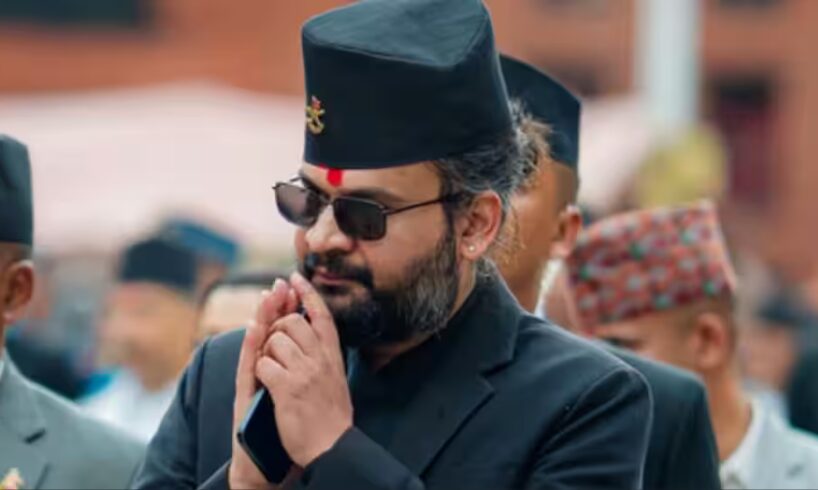
A multi-billion-rupee industrial project in eastern Nepal, backed by China under the Belt and Road Initiative (BRI), has been omitted from the election manifesto of Kathmandu’s former mayor Balen Shah, who is contesting the parliamentary seat of Jhapa-5 against former prime minister K. P. Sharma Oli.
Nepal is set to hold parliamentary elections on 5 March under an interim government formed after Oli resigned last September amid widespread Gen Z-led anti-corruption protests.
At the centre of the debate is the Damak Industrial Park in Jhapa district, since renamed the Nepal-China Friendship Industrial Park. The project has drawn renewed scrutiny following Shah’s decision to leave it out of his election pledges, according to The Kathmandu Post.
Add Zee News as a Preferred Source
Citing unnamed government officials, the newspaper reported that New Delhi has expressed concern over the project’s proximity to the Nepal–India border, particularly near the strategically sensitive Siliguri Corridor, often referred to as the “chicken’s neck”. Officials reportedly questioned why Kathmandu was allowing Beijing to develop such a large-scale project so close to the frontier, noting that the matter has become increasingly sensitive.
Shah, a 35-year-old engineer-rapper-turned-politician with strong youth appeal, had been viewed by many among Nepal’s Gen Z as a preferred candidate for interim prime minister, though he declined the role. Representing the Rastriya Swatantra Party, he is widely regarded as a potential future prime minister.
“The project is part of the Belt and Road Initiative (BRI), an ambitious multi-continent infrastructure programme initiated by Chinese President Xi Jinping. In February 2021, former Nepal PM Oli laid the foundation stone of the project in Jhapa district’s Kamal Rural Municipality,” the newspaper reported.
While Oli, chairman of the Communist Party of Nepal (Unified Marxist-Leninist), included completion of the industrial park in his 41-point “commitment paper” released last week, Shah excluded it from his manifesto unveiled on Monday.
“We know about the project and the controversy around it, so we decided to exclude it,” an unnamed aide to Shah was quoted as saying.
The Damak project forms part of China’s expansive BRI programme launched by President Xi Jinping, aimed at building infrastructure links across Asia and beyond. Oli laid the foundation stone in 2021 during his tenure as prime minister and has been widely regarded as maintaining close ties with Beijing.
The issue has also exposed divisions within Nepal’s political class over the financing of BRI projects. Earlier reports indicated differences between the Nepali Congress and the UML regarding the acceptance of Chinese loans. Concerns have been amplified by delays in the execution of several BRI projects in Nepal, none of which have yet been fully completed.
Sections of Nepali society have voiced caution over the financial implications of BRI investments, drawing comparisons with Sri Lanka’s economic difficulties linked to Chinese-funded infrastructure.
A document released last year by the Centre for Social Innovation and Foreign Policy (CESIF) stated: “According to those privy to negotiations, originally, China had proposed several funding modalities ranging from blended financing models to commercial loans. Nepali Congress had been insistent that it would not be taking commercial loans under BRI, but the final agreement adopted the phrase ‘aid financing modalities’ in place of the ‘grant financing modalities’ insisted upon by the Nepali Congress Party.”
The Damak Industrial Park aims to access the Indian market via the Kakarvitta and Birgunj ports, underlining its strategic importance. The significance of the project was further highlighted by a visit from China’s ambassador to Nepal, Zhang Maoming.
According to the CESIF paper, negotiations were complicated by Beijing’s request for extensive tax exemptions, not only during construction but for years after completion, a demand reportedly resisted by Nepal’s Finance Ministry.
Despite these disagreements, a meeting of the Investment Board of Nepal, chaired at the time by Oli, decided to accelerate progress on the project.
The report also stated that India had conveyed that the project constituted a “red line” and had advised both the Nepali Congress and the UML against proceeding.
With the election approaching, Shah’s decision to distance himself from the Damak project signals how geopolitics, financing concerns and regional sensitivities have become central to Nepal’s domestic political contest.
(With IANS inputs)