Inspectors also raised concerns about the window blinds at the hospital, which looks after women with mental health concerns
06:00, 07 Mar 2026
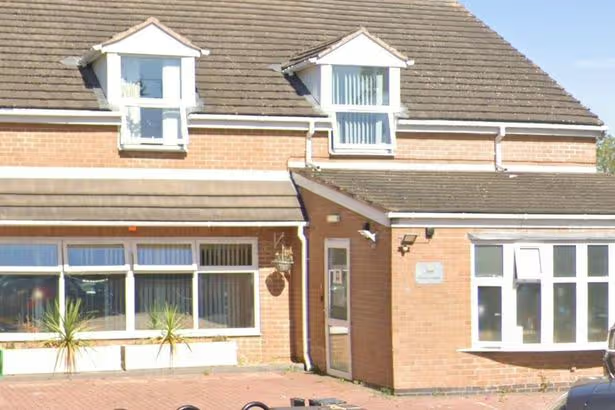
The community hospital in Runcorn Road, Leicester(Image: Local Democracy Reporting Service)
A community hospital where staff said they feared they would be bullied if they raised concerns has been told to improve by a health watchdog.
The Care Quality Commission (CQC) raised concerns in two of the five areas it inspected at Sturdee Community Hospital, a report has revealed.
The hospital in Runcorn Road, Leicester, was graded “requires improvement” – the second-lowest mark possible – in two areas of its inspection: the safety of the service and whether the service is well-led.
Sturdee Community Hospital is an independent hospital with two wards and nine flats, providing care and treatment to up to 31 female patients, who have complex mental health needs.
Inspectors found the service in breach of two legal regulations relating to good governance and safe care and treatment. The health watchdog asked the service provider for an action plan in response to the concerns raised.
Inspectors said the service was not told the assessment, which included a visit to the premises in August last year, was going to take place beforehand.
The final report was produced on Thursday, February 26. During the previous assessment in April 2024, the service was rated good.
The CQC said there were 21 patients at the hospital during its inspection. It said the service was registered to provide treatment for disease, disorder, or injury, and assessment or medical treatment for persons detained under the Mental Health Act 1983.
During the visit, inspectors found patients were “not always protected from harm or the risk of harm” and “some staff did not feel listened to and feared harassment and bullying if they raised concerns”.
The watchdog concluded there was “continued and ongoing culture concerns regarding harassment and bullying within staff teams”.
However, they said, “Other staff reported improvements to staff morale and better patient care since the new management and leadership team were put in place.”
Inspectors found that although patients and carers had opportunities to give feedback on the service, some patients and staff “did not feel confident doing so and did not feel their concerns would be listened to or acted upon”.
The CQC added: “We had received and continued to receive anonymous complaints about this issue and ongoing concerns about patient care”.
During the visit, the CQC also found that Sturdee Community Hospital’s risk register “did not capture all known risks”, adding “it did not include any reference to risk to patients and staff through verbal and physical aggression or self-harm incidents identified within the analyses”.
These risks were also raised by staff through anonymous complaints sent to the CQC, it added.
The watchdog also noted that ligature risk management required improvement. Noting there was a ligature risk assessment in place, the CQC said not all window blinds were anti-ligature.
The service informed the watchdog that they were reviewing all window blinds and curtains in the hospital.
Inspectors said they spoke to eight patients and two carers, and received mixed feedback. They said: “Most patients told us they felt safe and knew who to inform if they did not. Some patients felt staff did not always believe them when they raised concerns.
“They told us the quality of care, treatment and support varied depending on which staff were on duty.
“They described some staff as kind and helpful, and some staff as rude and did not always listen to them or take their concerns seriously.”
A spokesperson for InMind Healthcare Limited, which owns Sturdee Community Limited, said “We welcome the CQC’s feedback following its inspection in June 2025, with the report published in February of this year. The service is rated Requires Improvement overall, with two domains rated Requires Improvement and three rated Good, and we recognise that further improvement is needed.
“Since the inspection, we have made significant progress by strengthening governance, enhancing staff training and improving clinical oversight. We continue to work closely with the CQC, commissioners and the local ICBs to embed the improvements made and progress towards delivering an Outstanding standard of care.”