By John Lee.
Iraq’s Ministry of Oil and the Kurdistan Regional Government’s Ministry of Natural Resources have issued statements outlining differing positions on the possible resumption of crude oil exports through the northern pipeline to the Turkish port of Ceyhan.
The exchange comes amid regional disruption affecting exports through the southern system via the Strait of Hormuz.
Federal Ministry of Oil position
In a statement responding to enquiries from media outlets and members of parliament, the ministry said it had been in continuous contact with the Kurdistan Regional Government regarding the possibility of resuming exports through the northern pipeline.
According to the ministry:
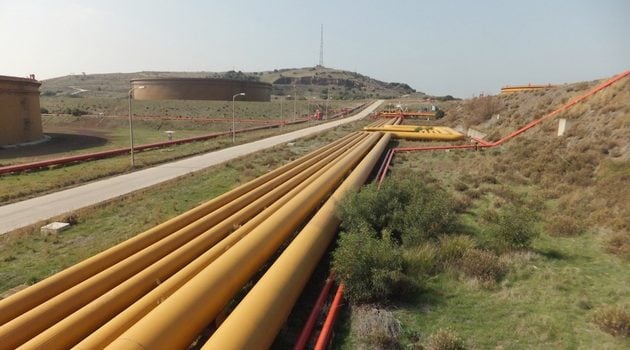
Baghdad said it is ready to resume exports of up to 300,000 barrels per day through the pipeline running within the Kurdistan Region to Ceyhan.
It added that at least 200,000 barrels per day from fields in the Kurdistan Region had previously been exported before the current circumstances.
The ministry said the pipeline has a capacity of about 900,000 barrels per day.
It stated that the Kurdistan Regional Government’s Ministry of Natural Resources had declined to restart exports at this time, while raising conditions that Baghdad said were not directly related to crude oil exports.
The federal ministry said such issues could be discussed later, while exports resume in parallel.
It warned that continued delays could deprive Iraq of financial resources that could help offset the suspension of exports from southern outlets.
The ministry renewed its call for the Kurdistan Regional Government to resume exports immediately, citing national interest and referring to the Iraqi constitution and federal budget law.
KRG Ministry of Natural Resources position
In a counter-statement, Kurdistan Regional Government Ministry of Natural Resources said Baghdad’s statement “distorts the facts” and blamed the federal government for the current situation.
The ministry said:
Baghdad has imposed what it described as a “suffocating embargo” since January under the pretext of implementing the ASYCUDA customs system.
It said restrictions on access to US dollars for traders in the Kurdistan Region had halted commercial activity, and that insufficient time had been given to implement the system.
It claimed that armed groups have carried out attacks on oil, gas and energy facilities in the Kurdistan Region, forcing production offline and leaving no oil available for export.
The ministry said Baghdad has not taken effective measures to prevent these attacks.
It also alleged that some perpetrators receive salaries or support from Baghdad, while salary payments to public employees in the Kurdistan Region are delayed or reduced.
The Kurdistan Regional Government said it remains ready to cooperate with Baghdad to resolve the crisis through “serious, constructive dialogue.”
Both sides indicated willingness to resolve the dispute, but their statements highlight continuing differences over the causes of the export suspension and the conditions for restarting northern oil flows.
Full statement from the Ministry of Oil (Baghdad):
This unofficial translation is provided in good faith for general information only. While every effort has been made to ensure accuracy, Iraq Business News accepts no responsibility for any errors, omissions, or misinterpretations.
In light of the enquiries received by the Ministry from news agencies and media outlets, as well as enquiries from the honourable members of the Council of Representatives and those with an interest in petroleum affairs, particularly given the current critical regional circumstances and the halt of Iraqi oil exports from the southern network via the Strait of Hormuz, as to why the Ministry of Oil does not resume exports, within feasible limits, from the northern network via the Turkish port of Ceyhan in order to mitigate the damage caused by the complete suspension of exports, we wish to clarify the following:
Through continuous communication with our colleagues at the Ministry of Natural Resources in the Kurdistan Region since the outset of the regional crisis, the Ministry of Oil has expressed its readiness to resume exports of no more than 300,000 barrels per day via the export pipeline within the Region towards the port of Ceyhan, in addition to quantities of oil from fields within the Region that were being exported prior to the current circumstances at no less than 200,000 barrels per day, noting that the pipeline’s export capacity stands at approximately 900,000 barrels per day.
The Ministry of Natural Resources has confirmed its refusal to resume exports at present and has set forth numerous conditions that bear no relation to the matter of crude oil exports.
We have made clear, for our part, that these conditions may be discussed at a later stage in parallel with the resumption of oil exports, given that any delay in exports will deprive Iraq of a portion of its financial revenues, forming part of the compensation for the suspension of exports via the southern outlets.
Through this statement, we reiterate our call upon the Ministry of Natural Resources to resume exports immediately, in the supreme national interest and in accordance with the Constitution and the Budget Law.
We pray to Almighty God to bestow upon our country, our people, and the region security, safety, and stability.
Ministry of Oil
15/3/2026
Full statement from the KRG Ministry of Natural Resources (Erbil):
Iraq’s Federal Ministry of Oil has issued a statement claiming that the Kurdistan Region is not ready to export oil through the pipeline to Türkiye’s Ceyhan port. For the sake of public clarity, we underline the following:
The Ministry’s statement does not address the full dimensions of the issue. It distorts the facts and attempts to blame the Kurdistan Region in order to mislead public opinion.
Since January, the current government in Baghdad has imposed a suffocating embargo under the pretext of implementing the ASYCUDA system. It has prevented dollars from reaching the
Kurdistan Region’s traders, effectively halting commercial activity. Baghdad has also failed to allocate the necessary time and arrangements for the Kurdistan Region to implement the system, something we requested from the beginning of this crisis.
Outlaw militias have made all of the Kurdistan Region’s oil, gas, and energy fields and facilities targets of their attacks. As a result of these terrorist attacks, production has been taken offline, leaving no oil available for export.
Baghdad is not prepared to confront these terrorist attacks against the Kurdistan Region or to prevent them. To date, no effective measures have been taken to stop these assaults.
Many of the perpetrators behind these attacks receive salaries and support from Baghdad, while the salaries of the people of the Kurdistan Region are consistently delayed and cut.
The Kurdistan Region has made clear, in every way, its readiness to help Iraq and the Kurdistan Region overcome this crisis. We have repeatedly called on Baghdad to begin a serious, constructive dialogue to resolve all of these issues. Instead, our requests have been ignored, and there are attempts to impose unconstitutional and illegal agendas on our region.
Ministry of Natural Resources
Kurdistan Regional Government
15/3/2026
(Sources: Ministry of Oil; KRG Ministry of Natural Resources)