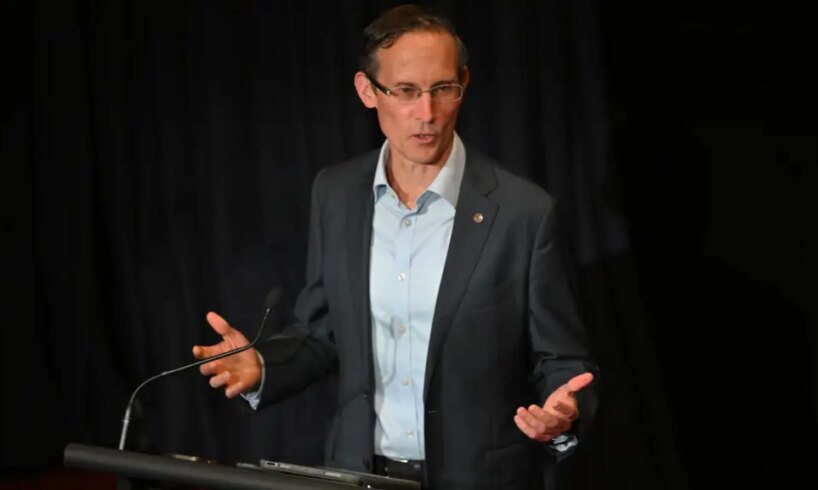
A university degree might become less valuable for securing a job in the age of artificial intelligence, posits an influential member of the government’s economics team, as financial workers worry that AI might steal their jobs.
Rather than formal schooling, judgment may become a greater predictor of success, Andrew Leigh, the assistant minister for productivity, will say in a speech in Brisbane on Tuesday.
Related Article Block Placeholder
Article ID: 332559
As AI erodes the premium placed on cognitive expertise, universities and employers will need to rethink assessment and recruitment, argues Dr Leigh, a former professor of economics who has written extensively on innovation and inequality.
“Rather the formal skill categories, such as school completion, vocational qualifications and university degrees, the more relevant distinction in the future might be differences in the type of cognition performed,” he will say.
“Potentially, the significant distinction might be judgment versus execution, oversight versus production, or conceptual reasoning versus procedural cognition.”
Smarter business news. Straight to your inbox.
For startup founders, small businesses and leaders. Build sharper instincts and better strategy by learning from Australia’s smartest business minds. Sign up for free.
By continuing, you agree to our Terms & Conditions and Privacy Policy.
Whereas in the past, school leavers were encouraged to get a degree in coding, “meta-skills” — framing problems, identifying errors, allocating attention, and bearing responsibility — will become the attributes most valued by employers, according to Dr Leigh.
That has implications for inequality.
New technologies have tended to increase the importance of educational attainment in boosting wage outcomes, by eliminating less-skilled labour while complementing skilled labour, raising the relative demand for cognitive skills.
But AI threatens to automate non-routine aspects of cognitive work, like drafting text and writing code, disproportionately raising productivity for lower-performing workers, Dr Leigh argues.
“Inequality may have less to do with years of education and more to do with whether or not someone occupies a judgement-intensive role.”
Related Article Block Placeholder
Article ID: 332976
The early evidence does point to white-collar workers being most at risk of AI job displacement.
Hundreds of jobs at Australian tech companies Atlassian and WiseTech and at Commonwealth Bank have been lost in recent weeks, which bosses have linked to technology.
Finance Sector Union national secretary Julia Angrisano told the Australian Financial Review Banking Summit on Monday that bank workers were feeling “incredibly nervous” about their futures as AI restructured the workforce.
Westpac chief executive Anthony Miller told the summit that there was a risk that job security could change as a result of AI, but skilled workers would still be in high demand with employers.
“There are so many skills that you may not need going forward; the capacity of AI to do what a highly capable coder can do is something that suggests that there are a lot of roles that will change there,” he said.
“But equally, a highly capable engineer and coder has a certain mind and a certain intellect and a certain skill that we can redeploy in other areas.”
This article was first published by AAP.