Millions of families will be enjoying the long Easter weekend
08:02, 01 Apr 2026Updated 08:02, 01 Apr 2026
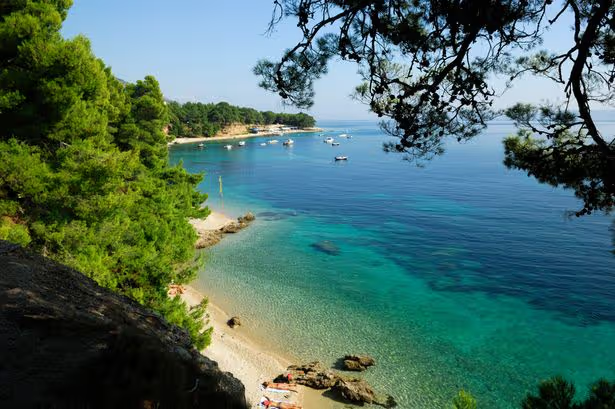
An elevated view of beach Zlatni Rat, near Bol, island of Brac, Croatia(Image: Sheldon Levis/Getty Images)
The long Easter weekend is almost here and families across the country will be preparing for a trip away in the sunshine. However, travel disruption as a result of the tensions in the Middle East has been a huge concern for many. Thousands of flights have been cancelled or delayed since the war began.
The conflict involving the United States, Israel, and Iran has made it harder to travel through the Middle East and the Foreign Office has regularly updated advice for countries across the globe, even those not in the Middle East. Travellers have been advised to keep updated with the latest advice for the country they are travelling to and monitor local and international media for the latest information.
A lot of countries are still safe to visit, but if you travel, you should research your destinations and get appropriate travel insurance. Insurance should cover your itinerary, planned activities and expenses in an emergency. Political conflicts, natural disasters and safety concerns are among the reasons the UK Foreign Office will recommend British nationals to avoid certain destinations.
We have rounded up the latest travel guidance for some of the most popular holiday locations ahead of the long weekend:
Croatia
The Foreign Office has updated its advice for anyone travelling to Croatia, which is a popular spot for British holidaymakers. The latest update issued on Friday, March 27 said: “New information about traffic conditions” uploaded onto the safety and security page of the country via Gov.uk.
You must check the rules of the road in RAC’s Croatia guide, if you are planning to drive in Croatia. Some driving regulations and legal requirements you should be aware of include having your headlights on and dipped when driving a car from November 1 until March 31, even during daytime.
You should also be cautious of driving with dipped headlights year-round on scooters and motorcycles, using winter tyres between November 15 and April 15 and carrying a fluorescent vest in the car, not in the boot – you must wear the vest while attending to a breakdown.
THE FCDO also updated its advice on floods in Croatia. It said: “Flash floods can happen with very little warning and lead to dangerous water flows and disruption to transport and other networks.
“There is the highest risk of flooding in central Croatia, between Karlovac and Slavonski Brod. Monitor Croatian Meteorological and Hydrological Service forecasts, as well as traffic conditions with the Croatian Automobile authority and follow the advice of local authorities.”
Crime levels are low and violent crime is rare across Croatia. The Foreign Office does not advise against travelling to any parts of the country.
Spain
Spain’s travel advice has not been updated by the Foreign Office since February. The last update is about The European Union’s (EU) new Entry/Exit System (EES) being rolled out. EES checks are being introduced in a phased way across external borders, with full operation expected from April 10, 2026.
This means that when you travel into the Schengen area for short stays, you may need to register your biometric details, such as fingerprints and a photo. You do not need to take any action before you arrive at the border, and there is no cost for EES registration.
EES may take each passenger a few minutes extra to complete so be prepared to wait longer than usual at the border. Your digital EES record is valid for three years. If you enter the Schengen area again during this time, you will still only need to provide a fingerprint or photo at the border, when you enter and exit.
The Foreign Office does not advise against travelling to any parts of the country. However, if you choose to travel, research your destinations and get appropriate travel insurance. Insurance should cover your itinerary, planned activities and expenses in an emergency.
Turkey
There are no travel warnings for most of Turkey from the UK Foreign Office. However, the FCDO advises against all travel within 10km of the Syrian border because of fighting and a higher risk of terrorism.
The latest FCDO update also says that rising tensions in the region pose serious security risks and have already disrupted travel. The FCDO advises British nationals to follow local authority advice, avoid security or military areas, keep their departure plans flexible, and make sure their travel documents are up to date.
Turkish officials have confirmed that the tourism infrastructure remains intact and fully operational. Flights from the UK to Turkey are continuing to run on schedule, and accommodation providers and resorts are reporting that they are welcoming guests as usual.
The Ministry of Culture and Tourism of the Republic of Turkey, along with the Tourism Promotion and Development Agency (TGA), have both confirmed that tourist activities across the country are proceeding without any interruptions. These reassurances are being highlighted by Turkish authorities in an effort to encourage tourists to maintain or reconsider their travel plans to the country.
Turkish tourism leaders stress that the country has long maintained a reputation for welcoming international visitors. Its government has made substantial investments in improving the safety and security of tourists, particularly in areas with high concentrations of foreign visitors.