By John Lee.
Iraq has agreed steps to unify customs procedures across all border crossings, including those in the Kurdistan Region, as part of efforts to enhance trade management and public revenues.
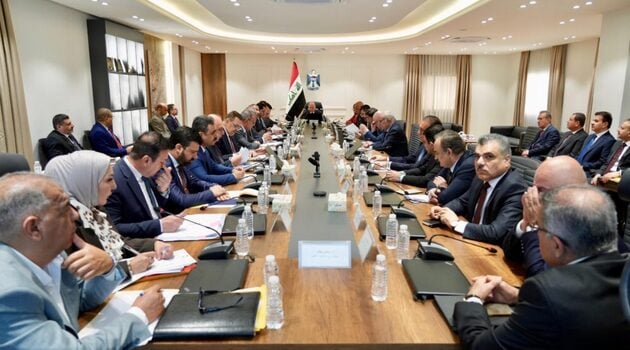
The decisions were taken during a meeting of the Ministerial Council for the Economy, chaired by Foreign Minister Fuad Hussein and attended by senior federal and regional officials.
The Council hosted a delegation from the Kurdistan Region, including representatives from its Council of Ministers, customs authorities, and chambers of commerce, to discuss coordination on customs systems and procedures.
Key outcomes from the meeting include:
Agreement to unify customs policy across Iraq, including tariffs and measures to protect domestic products
Implementation of the ASYCUDA system at border crossings in the Kurdistan Region
Coordination between federal and regional authorities to standardise procedures and improve transparency
A technical delegation from the Kurdistan Region’s General Directorate of Customs will meet with the national implementation team at the Ministry of Finance to align systems and processes. Both sides are expected to submit a joint report to the Council within one week.
In a related decision, the Council designated the Trebil border crossing as an approved entry point for imported gold, pending the lifting of airspace restrictions linked to ongoing regional military operations.
Officials said the measures aim to strengthen institutional performance, increase revenue collection, and improve oversight of cross-border trade during a period of heightened economic and security challenges.
Full statement from the Minister of Foreign Affairs:
Deputy Prime Minister and Minister of Foreign Affairs of the Republic of Iraq, H.E. Mr. Fuad Hussein, chaired on Monday, 6 April 2026, the thirteenth session of the Ministerial Council for the Economy, held at the Council’s headquarters. The meeting was attended by the Ministers of Finance; Industry and Minerals (acting for Planning); Water Resources (acting for Agriculture); Labor and Social Affairs; the Secretary-General of the Council of Ministers; the Governor of the Central Bank; the Chairman of the Securities Commission; the Deputy Chairman of the National Investment Commission; the Deputy Minister of Oil for Distribution Affairs; and the Prime Minister’s advisors for economic and legal affairs.
The Council also hosted the Ministers of Construction, Housing and Municipalities, and Justice, along with the Prime Minister’s advisors for customs and border crossings; the Chairman of the Border Ports Commission; the Director General of the General Customs Authority; the Director General of the General Tax Authority; and the National Team for the implementation of the (ASYCUDA) system.
In addition, the Council hosted a delegation from the Kurdistan Region, including the Secretary of the Council of Ministers of the Region; the Head of the Council of Ministers’ Diwan; the Head of the Kurdistan Region Representation; an advisor from the Ministry of Finance; the Director General of Customs; the Director General of Follow-up and Coordination; and the heads of chambers of commerce of the provinces of Erbil, Sulaymaniyah, Duhok, and Halabja. The meeting aimed to discuss the unification of customs procedures at all border crossings.
H.E. the Chairman welcomed the guests, noting that Iraq is facing security, economic, and trade challenges due to the ongoing war conditions in the region. H.E. stressed the importance of unifying efforts and positions during this sensitive and exceptional period.
For his part, the Secretary of the Council of Ministers of the Kurdistan Region conveyed the Region’s government’s appreciation and thanks to the Ministerial Council for the Economy and the Council of Ministers for hosting the delegation. He emphasized the Region’s support for all government efforts to enhance customs systems and automate procedures, contributing to enhanced transparency, improved institutional performance, and increased public revenues.
The Council then discussed mechanisms for implementing the (ASYCUDA) system at the Region’s border crossings and agreed to unify customs policy, including tariffs and measures to protect national products, in a manner that serves the public interest and enhances transparency.
The Council also decided to form a technical delegation from the General Directorate of Customs in the Kurdistan Region to meet with the national team responsible for implementing the advance declaration system at the Ministry of Finance. The aim is to discuss technical mechanisms for unifying procedures, while taking into account the legal framework and applicable laws in the Kurdistan Region. Both teams are to submit a report to the Ministerial Council for the Economy next week for an appropriate decision.
In a related context, the Council decided to designate the Trebil border crossing as an approved entry point for imported gold into the country, pending the lifting of the airspace restrictions resulting from military operations in the region.
(Source: MoFA)