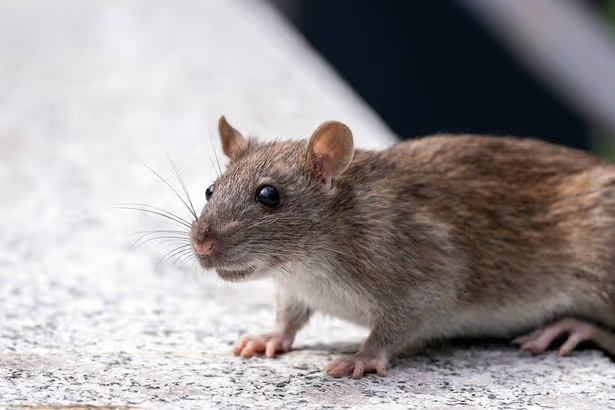
A pest control expert has shared some simple checks to help prevent rats getting into your property – and they don’t take too long to complete
Katie-Ann Gupwell Content Editor and Chloe Dobinson Digital Production Editor
05:05, 10 Apr 2026Updated 15:58, 10 Apr 2026
Rats in the home or garden can be a nightmare to get rid of(Image: Denitsa Kireva via Getty Images)
Nobody wants rats in their home. But sometimes regardless of how clean you keep your home, they can still manage to gain entry to your property.
However, a pest control expert has claimed you can prevent a rat invasion in “60 seconds” by carrying out some remarkably straightforward checks. Triumph Pest Control regularly shares useful tips on TikTok, and this particular piece of advice is well worth heeding.
If you want to keep the rodents out, there are several things you need to do. While there are numerous checks you can carry out around the house to prevent rats getting in, he said these are the ones that “stop you from getting an infestation”.
To start, you need to walk around your property and check whether there are any breaks around your vents. Inspecting around your gas and electric meters for cracks is equally essential, as rats will “exploit” any gaps.
Content cannot be displayed without consent
He explained: “They’ll go up the pipe and into the actual structure of the gas and electric meter and get into the property that way.
“You can also go and check your sewer drains. If the drain covers up, have a look in there for any breaks and gaps around the back of your property.
“Around the back of your property, check for any pipes or any old pipes that have been left empty. So the pipes have been pulled out, but there’s a hole and a gap going in that hasn’t been re-filled. Rats love that one.
“And, finally, if you’ve got any bird feeders or food stored at the back, these are really good for rats and, if you’ve got them in the shed – get them into nice metal containers with a clip on top or weight it down. That’ll stop rats chewing through to anything else.”
Thankfully, experts have shared what homeowners can do to get rid of the pests(Image: Getty)
What to do if you have rats
Should you suspect a rat problem, there are several steps you can take to prevent them from returning. First and foremost, you need to identify the issue and confirm that it is indeed rats.
Next, eliminate any outdoor food sources, such as bird feeders, and remove anything that could provide shelter, including rubbish piles and timber stacks.
It goes without saying you should seal any gaps or cracks you can locate around the property, and ensure the surrounding area is kept as tidy as possible.
Repellents are available to help keep rats at bay but, if you remain concerned or feel that nothing is proving effective, get in touch with your local pest control service. Professional advice is always the wisest course of action, particularly if the rats have made their way inside the property.
This follows as the seeds you put out for birds can also attract unwanted rats. But with a few simple swaps and smart feeding habits, you can help wildlife survive the cold without giving rodents a free buffet.
Garden bird feeding expert Lucy Taylor of Vine House Farm Bird Foods shared that “there are simple steps you can take to help ensure rats don’t set up home in your garden, with an absolute key one being to remove their key requirement of a source of food – and in this case bird food”.
This might not seem like an obvious step, but actually, cheap bird food seed mixes can be a major cause for attracting rats to gardens (while also a waste of money as far as birds are concerned).
The reason being that bird food mixes which contain cheap fillers like wheat and pulses, aren’t eaten by most birds and instead will be turfed-out of feeders and fall to the ground, as birds like Blue tits and Greenfinches rifle through the mix in search of the odd edible morsel.
The food then sits on the ground below the feeder, and although some species like Wood pigeon and Jackdaw may eat some of it, chances are it will remain there and therefore be available to a passing rat at night (rats are mainly nocturnal).