The SNP’s manifesto, published on Thursday, vowed that there would be no geographical barriers to the policy – meaning, for instance, a journey from Glasgow to Skye would cost just £2.
It is understood the policy would include a subsidy for bus companies to cover the difference.
The £2 cap is already in place as part of a year-long pilot running in several council areas; Shetland, Orkney, Na h-Eileanan an Iar, Highland, Moray and Argyll and Bute.
The SNP’s new policy pledge would expand this across all of Scotland’s 32 local authorities by the end of the next parliamentary term.
In response to the SNP’s pledge, we asked bus operators in Scotland for their response, and if they would support the policy.
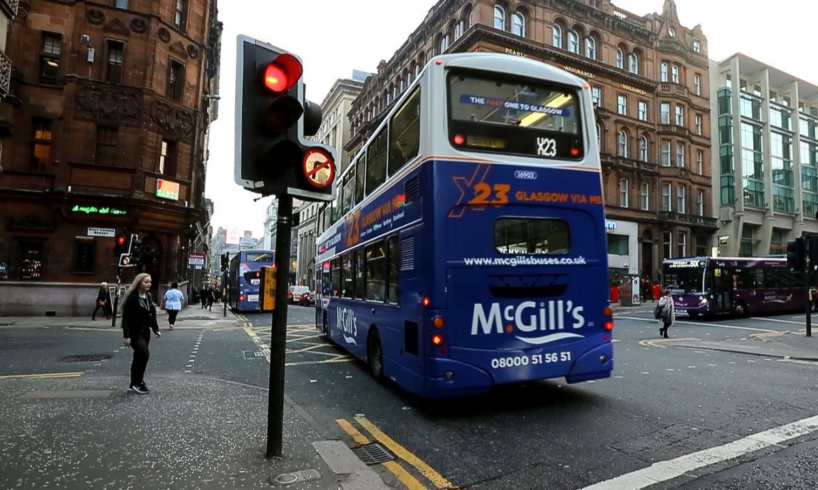
McGill’s Buses, owned by the billionaire Easdale brothers, said they were concerned that the policy had “such a narrow focus” and that it would be left to “others” to work out how it would be implemented.
Ralph Roberts, chairman of McGill’s Group, said that it was “unclear” how the proposals would be delivered and if the estimated £210 million per year the SNP have said it would cost is “accurate”.
“At a time when there are significant pressures across the economy, it is surprising to see such a narrow focus,” he said.
“Bus companies and coach operators are all grappling with sustained high fuel costs, as are many others such as farmers, motorists and haulage contractors, and this is the immediate challenge affecting people and businesses across the country.
“While measures to support public transport users are always welcome in principle, they must be properly thought through.”
Roberts added that without engagement with the sector or a “clear understanding of the consequences” there is a risk that impacts could “undermine” services.
The Scottish Greens have called for bus services to be brought under public ownership and expand free bus travel to everyone in Scotland.
“Ultimately, a number of political parties want the debate to be centred on controlling bus fares and control of services and operators without considering the wider picture,” he said.
“This includes making it easier for buses to operate through investment in better infrastructure such as improved bus shelters with real-time information, high-access kerbs, traffic light priority and dedicated bus lanes. This would help bring costs down and are all matters already in the gift of our politicians.
“Instead, we risk election-driven initiatives rather than a serious, deliverable policy.
“Good policy requires collaboration, clarity and credibility – not headline-grabbing announcements that then leave others to deal with how it could possibly be implemented.”
John Swinney unveiling the fare cap pilot in Inverness (Image: Scottish Government)
The Confederation of Passenger Transport (CPT) Scotland – the trade body for buses and coaches – said they had concerns that the pilot in the Highlands and Islands had not yet concluded.
Paul White, director of CPT Scotland, said: “It’s encouraging to see the SNP recognise the importance of bus travel to communities across Scotland. However, the pilot of a £2 bus fare cap in the Highlands and Islands has only recently started, and we are yet to see any evaluation of its costs and benefits.
“The pledge for a national £2 fare cap is seemingly uncosted and must not come at the expense of other measures to improve bus services – including policies to speed up buses, which passenger surveys highlight as an important factor in encouraging people to take public transport more often.”
Get Glasgow Moving, a campaign group calling for Scotland’s bus network to be brought under public ownership, welcomed the pledge but said they had some reservations.
A spokesperson said that the £2 fare cap is a “step in the right direction” but cheaper fares and free public transport are “useless if you haven’t got a decent service”.
“If the SNP did plow ahead with a £2 cap we would obviously welcome that, but it would be incredibly expensive to deliver under the current privatised model,” they said.
They added that the current concessionary card scheme – that allows free bus travel for under 22s, those aged over 60 and those with disabilities – is a “blank cheque to private bus operators without any conditions on the service that they run”.
“In return, we’re currently giving more than half a billion pounds every year in public subsidies to private operators, and most of that is because of the concessionary card scheme. That will obviously massively go up if they rolled out the £2 cap, and it’s just a really inefficient way of delivering a cheaper public transport network.”
Instead, Get Glasgow Moving said they would like to see the SNP commit to supporting transport authorities – like Strathclyde Partnership for Transport (SPT) – to bring the network into public control.