It is the largest and oldest of its kind in the country
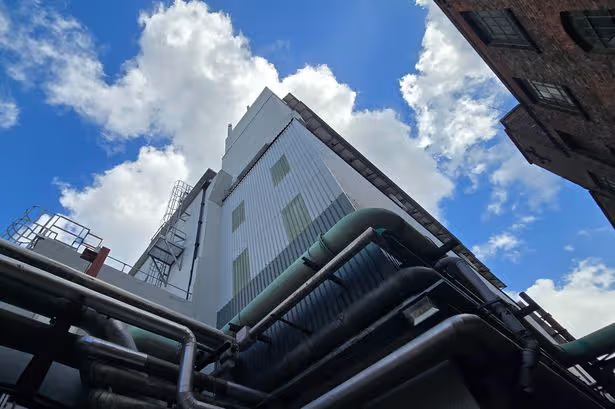
The towering heat station in London Road (LDRS)(Image: LDRS)
The oldest and largest heat network in the country could be sold off so it can provide more customers with cheaper energy.
Nottingham’s district heat network is currently powered by the incineration of 180,000 tonnes of household waste at the Eastcroft incinerator.
Super-heated steam from this process is then used to provide heat and hot water to 5,000 homes and around 100 businesses across the city and St Ann’s.
The incinerator is privately owned by Doncaster-based waste management firm FCC Environmental, a subsidiary of Spanish public services company Fomento de Construcciones y Contratas – while the heat station and its 90km network of pipes is owned and operated by the city council, after being brought in-house in 2022.
There are hopes the network could more than double in capacity – by potentially using the River Trent and Nottingham Canal – to provide cheaper heat and hot water to thousands more homes and businesses at a time of worsening energy market instability.
However, such a feat requires tens of millions of pounds in investment, as well as expertise not found within the council.
The council has agreed to go out to market in May, to find out which organisations in the private sector might be interested in the network.
While the Labour-led authority, which runs the heat station in London Road, is currently hoping for a partnership, documents reveal a transfer of the system and its assets could be on the cards within 18 months – “should this be confirmed as the best way to proceed.”
A transfer to a market provider could be seen as the best way to reduce financial risk to the council, while allowing for future investment opportunities.
Cllr Neghat Khan (Lab), the leader of the council, told the Local Democracy Reporting Service: “We are saying all options are on the table. We are saying let’s explore the market and then decide what the next option for us actually will be.
“We are putting it out there, come on, if you are interested in it, work with us on that if you want to purchase it – all the options.
“If we are ever going to expand it, it is now. But does the city council have the expertise? No, we don’t. So how do we get the expertise in? This decision today we are saying, people, businesses, put your proposals forward and we will consider the best proposal that is right for the network.
She added: “We are looking for partnership work. We are hearing there will be interest. We have tested the market, but if nobody comes forward Nottingham City Council is going to do this alone.”
A view of the London Road heat station from inside, featuring a number of different pipes carrying water and steam(Image: LDRS)
The original heating network was established as a joint venture between British Coal and the Nottingham Corporation, which preceded the city council, in the early 1970s.
In 1995, upon the collapse of British Coal, it was transferred to the council, after which it began operating as an arms-length management company called EnviroEnergy (Nottingham) Ltd.
EnviroEnergy Ltd had been owned by the council since 2001, but operated as a separate legal entity, which had been given loans by the authority to keep running.
The council assumed full control of the network in 2022.
The firm made a profit every year since 2013, with the exception of 2017, but it was wound up with £11 million in unpaid loans, and the network was left requiring some £17.5 million in investment.
The council said at the time that bringing it in-house was the best way to support the investment in maintenance required.
Colin Parr, corporate director for communities, environment and resident services, said: “The report and its appendices set out the path for doing this, allowing the council to engage with the market and articulating what it would look like for a prospective partner.
“The report also provides the ability for contract extensions to be entered into for hot water and energy, should suitable terms be offered. What the report does not do is make a decision today on the future of the network.”
He added the decision made at a meeting on Tuesday (April 21) allows the council to respond to market offers, and will ensure the success of the network and its future growth, all while protecting customers.