There are two schools of thought regarding oil shocks and inflation.
More accurately, there are two types of oil shock inflation, and the response to this inflation is different.
When an oil shock arises from excess demand – as in 2007, when an unprecedented spike in worldwide oil demand overwhelmed global production, central bank theory suggests that interest rate hikes are the appropriate response.
Monetary policy largely (but not exclusively) works by controlling the level of demand in the economy. So tightening makes sense if demand is so strong that it is generating resource limitations in commodities like oil.
The argument is weakened when demand comes from economies other than your own, but it is not changed, given that Australia adds to demand in global oil markets.
The second scenario for an oil price shock is a supply curtailment.
The typical monetary policy response to this kind of inflation shock is to “look through it”. Australia often does this in other areas, such as with fruit or vegetables after cyclone damage.
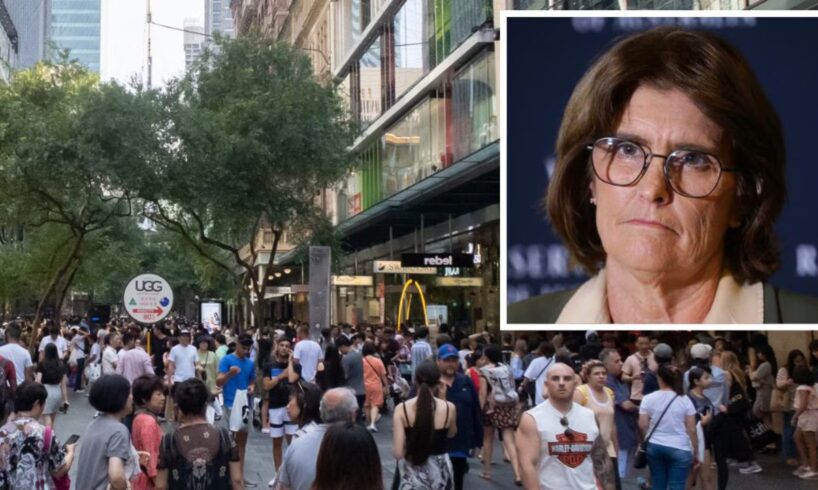
Yesterday, the governor of the Reserve Bank of Australia, Michele Bullock, went to great lengths to explain that the bank hiked rates three times in a row, not because of a nine-week-long oil shock, but because of “excess demand” expressed by a tight labour market before the shock started.
Yet that excess demand is not easy to find in labour market data. The RBA’s own charts show it had already squashed it, with employers throwing in the towel, consumers throwing in the towel and wages coming back into line with productivity growth.
The truth is, the rebound in inflation last year was not driven by wages. It was driven by electricity prices.
If there had been no oil shock, inflation would have fallen away in 2026 regardless of what the RBA did.
Stagflation nation
The other point Governor Bullock repeatedly drove home yesterday is that you can expect to get poorer during this oil shock because it is an exogenous, or external, supply-side shock that will dent your real income.
This is very true.
But what the governor did not say is that that is precisely why monetary economists argue that raising interest rates is the wrong response to an exogenous oil shock, because the real income shock is already applying a vice to demand.
By ignoring this conventional monetary policy theory, the RBA will now ensure that demand is completely crushed, adding even more pressure on household real incomes.
Its own forecast is for Gross Domestic Product to fall to 1.3 per cent next year, which is stall speed for an economy. Combined with the oil shock, this will repeat the destruction of purchasing power for households we experienced during and after Covid, as inflation outstrips wage gains.
This is called stagflation, and the RBA just guaranteed it.
Depressflation
From here, if the war and oil shock continue into May, diesel shortages are likely to spread fast. By shortages, I don’t mean it will be more expensive; I mean there will simply not be enough of it to run our agribusiness and mining economies, plus the transport of food around the country.
Rationing will shut down business overnight, and stagflation will turn instantly into depressflation, with unemployment skyrocketing, wages tumbling and inflation still high on energy prices.
Under Governor Bullock, the RBA has given up forecasting of this nature. It now drives the economy through the rear-view mirror of long-dated data.
Forecasting was scrapped because the bank kept getting it wrong.
But in a world of sudden shocks and supply-side crises, driving in the rear-view mirror is even worse because it risks doing the wrong thing precisely at critical turning points that have not registered in yesterday’s data feed.
It’s not much comfort, but yesterday’s decision was 8-1 to hike rates, so there is at least one sane central banker left in Australia.
Perhaps they can fix the bank over the long term.
David Llewellyn-Smith is Chief Strategist at the MB Fund and MB Super. David is the founding publisher and editor of MacroBusiness and was the founding publisher and global economy editor of The Diplomat, the Asia Pacific’s leading geopolitics and economics portal. He is the co-author of The Great Crash of 2008 with Ross Garnaut and was the editor of the second Garnaut Climate Change Review.