Three passengers have died after travelling on the cruise ship
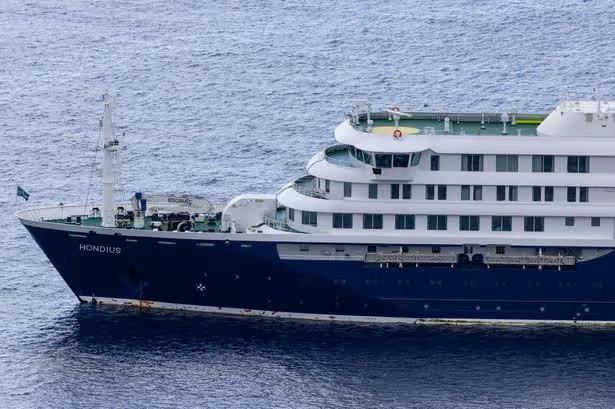
A view of the Dutch-flagged vessel MV Hondius is seen navigating the Atlantic Ocean near Saint Helena Island (Image: 2026 Anadolu/Getty Images)
A GP has shared the early symptoms of hantavirus to look out for. It comes after 20 British nationals from the MV Hondius, together with a German who is a UK resident and a Japanese passenger, were taken to Arrowe Park Hospital on Sunday after the ship docked in Tenerife.
The MV Hondius departed Tenerife for the Netherlands on Monday after its final six passengers departed- four Australians, one Briton and one New Zealander, alongside crew members. Three passengers have died after travelling on the ship, two were confirmed to have had the virus.
An American and a French national who had previously returned home have tested positive, authorities said. Seven cases of hantavirus linked to the MV Hondius have been confirmed, with two others suspected, according to the World Health Organisation.
Dr Tang, GP at Pall Mall Medical said: “The early symptoms can feel similar to many common viral illnesses, including headaches, fever, tiredness and muscle aches. In rare cases, people can become more seriously unwell, which is why it’s sensible to seek medical advice if symptoms develop after possible exposure to rodents or contaminated environments.”
The doctor advised that keeping good hygiene and being aware of the symptoms is sensible, but this is not something most people need to be concerned about in everyday life and the virus “remains quite rare in the UK”.
He said: “It is understandable that people are more alert to infectious diseases following the pandemic, but hantavirus behaves very differently and remains quite rare in the UK.”
Further advice said: “Stay informed through trusted medical sources and anyone with ongoing concerns or symptoms following possible exposure should speak to a healthcare professional for personalised advice.”
Passengers arrive at Arrowe Park Hospital in Wirral, Merseyside(Image: 2026 Anadolu/Getty Images)
Hantavirus is linked to rodents such as rats and mice. People can become unwell after coming into contact with rodent droppings, urine or saliva, usually in enclosed or poorly ventilated spaces where rodents have been present. It is not something people are likely to catch through everyday contact with others or from normal day-to-day activities.
The UKHSA said on Monday evening that clinical assessments and testing at Arrowe Park hospital were ongoing. Arrowe Park will have the former ship passengers in their facility for three days before they are sent home to continue isolating for a further 42 days. If people cannot go home, they will be placed in other accommodation to see out the isolation period.
Strict infection control measures were in place throughout the journey to Arrowe Park, with passengers, crew, drivers and medical teams all wearing personal protective equipment such as face masks. The UKHSA said strict measures remain in place at the hospital. Arrowe Park Hospital is operating completely normally, a spokesperson for the Trust said.
In a statement, a spokesperson added: “All planned services are continuing as usual and patients, visitors and staff should continue to come to the hospital with complete confidence. Our guests are accommodated separately from all patient-facing areas and robust infection control measures are in place at every stage.
“We would like to pay tribute to the extraordinary efforts of staff and partners across the NHS, emergency services and local government who have worked with remarkable dedication and professionalism to prepare for this moment. Getting this site ready at pace, while maintaining the full range of services a busy working hospital provides, has been a genuinely herculean effort. The speed, commitment and good spirit with which everyone has come together has been something to be proud of.
“We are confident that we now have safe, well-tested and carefully considered processes in place to support our guests throughout their stay, and we will continue to work closely with the UK Health Security Agency and all partner organisations as the situation develops.”
On Wednesday, May 6, the type of virus in this outbreak was confirmed as Andes hantavirus by the National Institute for Communicable Diseases, South Africa and the Geneva University Hospitals, Switzerland.
Symptoms of hantavirus infection can include fever, extreme fatigue, muscle aches, stomach pain, nausea, vomiting, diarrhoea, or shortness of breath. In some cases, people develop severe breathing difficulties requiring hospital care.
Symptoms usually appear between two to four weeks after being exposed to the virus, but there are reports of symptoms occurring up to 40 days after exposure.
Although hantavirus is a serious infection, the risk to the wider UK population is very low. Only Seoul hantavirus, which does not transmit person to person, has ever been identified in the UK.