India’s examination system has once again come under intense scrutiny after allegations of a large-scale leak involving the NEET examination, prompting the National Testing Agency (NTA) to cancel the test and triggering widespread concern over the integrity of competitive exams in the country.
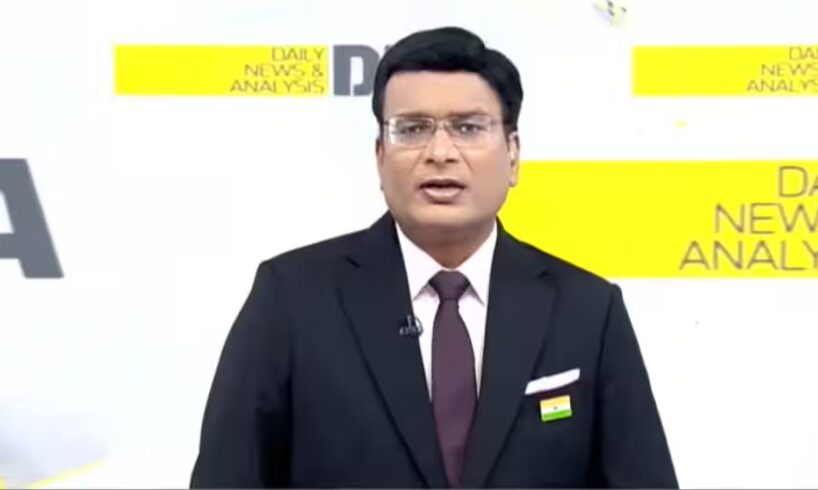
In today’s episode of DNA, Rahul Sinha, Managing Editor of Zee News, conducted a detailed analysis, describing the emergence of what he termed a parallel “leakocracy” operating alongside India’s democratic framework. According to the analysis, this system rests on four interconnected pillars — the exam-conducting agency, intelligence mechanisms, a paper mafia network, and buyers who purchase leaked papers at high prices, each contributing to the breakdown of exam integrity.
Watch Here:
Add Zee News as a Preferred Source
#DNAमित्रों | ‘पेपर लीक’ से हर साल देश को कितना नुकसान? ‘पेपर माफिया’ के ‘राष्ट्रीय रैकेट’ का DNA टेस्ट#DNA #DNAWithRahulSinha #NEET #NEETPaperLeak #NTA@RahulSinhaTV pic.twitter.com/lph5bAAZr8
— Zee News (@ZeeNews) May 12, 2026
The controversy centres around the NEET examination held on 3 May, in which nearly 23 lakh students appeared for admission to medical colleges. However, within hours of the exam, reports of leaked questions and “guess papers” being circulated on social media began to surface. While the NTA initially denied any breach, subsequent inputs from investigative agencies, including the Home Ministry, indicated that the question paper had indeed been compromised, leading to the cancellation of the examination.
Investigators have found that parts of the question paper were allegedly accessed around 42 hours before the exam. These were reportedly used to create a larger “question bank” containing over 300 questions across Physics, Chemistry and Biology. Of these, nearly 150 questions are said to have appeared verbatim in the final paper, raising serious concerns about the scale of the breach.
Preliminary findings suggest the leak originated in Maharashtra’s Nashik, before moving through a network spanning Gurugram, Jaipur, Sikar, Jhunjhunu, and further into states including Bihar, Jammu and Kashmir, Uttarakhand and Kerala. Communication channels such as WhatsApp groups and Telegram channels were allegedly used to circulate PDFs of the leaked material, with one group, reportedly named “Private Mafia”, having around 400 members.
Several arrests have been made in connection with the case. In Jaipur, a suspect named Manish was detained, while in Maharashtra, Nashik police took custody of Yogesh Khare, a 30-year-old BAMS graduate who runs a medical counselling agency. Reports also suggest that he attempted to alter his appearance to avoid identification. The CBI has since taken over the investigation, receiving case records, digital evidence and arrest details from state agencies.
The NEET examination has faced similar allegations in the past, including in 2024, when parts of the exam were linked to irregularities in Bihar and Jharkhand, resulting in arrests and partial re-tests. Previous years, including 2018, 2021 and 2022, have also seen claims of malpractice, all of which remain under varying stages of investigation.
The issue is not limited to NEET alone. Data cited in the analysis shows that over the past 11 years, more than 100 examination leaks have been reported across India, affecting nearly 6–7 crore candidates and causing estimated financial losses of around ₹50,000 crore. In the last five years alone, 41 recruitment exams across 15 states have been impacted, affecting approximately 1.4 crore candidates.
The scale of the current disruption has also raised questions about systemic weaknesses in examination conduct. The NTA operates through multiple outsourced agencies for printing, distribution, centre management, biometric verification and result processing, a structure that experts say increases vulnerability to breaches.
While the Public Examinations (Prevention of Unfair Means) Act 2024 prescribes jail terms of 3 to 10 years and fines up to ₹1 crore for organised malpractice, conviction rates remain low, estimated at only 5–10 per cent, allowing many accused to escape punishment.
Comparisons have also been drawn with international systems, particularly China’s Gaokao examination, where strict enforcement and higher conviction rates have significantly reduced malpractice.
As investigations continue, authorities maintain that the priority remains safeguarding student interests and restoring confidence in the examination system. However, the latest incident has once again intensified the debate over structural reforms needed to prevent large-scale leaks and protect the credibility of India’s competitive examinations.