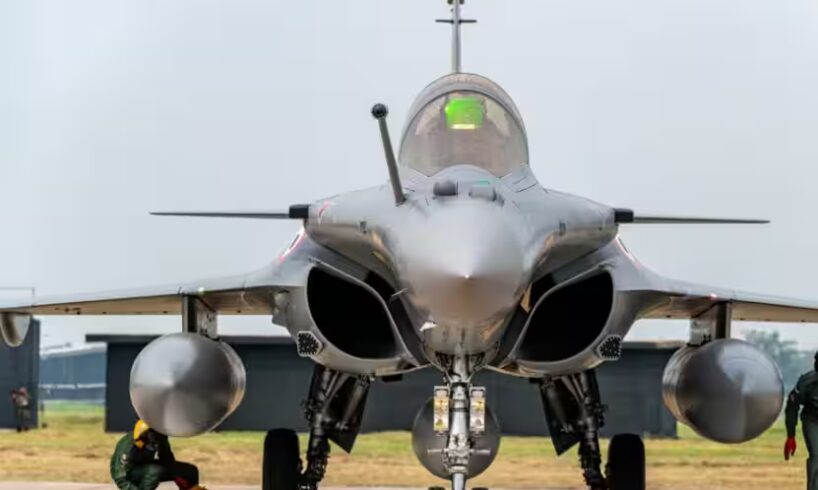
New Delhi: The proposed deal between India and France for 114 Rafale fighter jets is facing uncertainty due to a technical and strategic disagreement over an important system requirement. The issue has slowed down negotiations, even as the Indian Air Force (IAF) continues to deal with a shortage of fighter aircraft.
At present, the IAF has a reduced squadron strength of around 29, while the sanctioned strength stands at 42 squadrons. This difference has raised concern within defence circles, and the Rafale deal is being seen as an important step in closing it.
The core issue in the deal
Add Zee News as a Preferred Source
The main point of disagreement is related to India’s demand for full operational control over the aircraft systems, including integration of indigenous weapons such as the BrahMos missile. Indian officials want full access to certain system-level controls so that the aircraft can be used with locally developed weapons without external restrictions.
Without this capability, the aircraft would be dependent on French-certified weapons systems, which are more expensive and limit operational flexibility. India’s position is that once a full-price acquisition is made, the platform should allow complete freedom in deployment and integration.
France, however, has raised concerns over sharing deeper system-level access, including sensitive software-related controls. The French side fears that such access could risk technology exposure due to India’s defence cooperation with multiple partners, including Russia. India and Russia jointly developed the BrahMos missile system, which adds another layer to the concern from the French perspective.
Indian officials have reportedly assured France that such information would not be shared with any third country, but the issue has still not been fully resolved.
Why Rafale is important for India
The potential delay or cancellation of the deal is being viewed as a serious concern for India’s air power requirements. Defence experts point out that India faces a two-front security environment involving China and Pakistan, while its present fighter fleet strength is below requirement.
The Rafale is in service with the IAF and is considered a proven 4.5-generation platform. Its performance across different terrains, from high-altitude regions such as Ladakh and Siachen to desert environments in Rajasthan, has made it a reliable option for India’s operational needs.
The Air Force leadership had previously assured that fighter aircraft are not systems that can be replaced fast or treated like standard commercial equipment, as their selection depends heavily on geography, mission needs and long-term support systems.
Limits of alternative options
If the Rafale deal does not work out, India’s alternatives appear limited in the near term. While fifth-generation stealth aircraft are often debated, experts say that these platforms are primarily designed for penetration and precision roles and may not carry the same heavy payload capacity as multi-role aircraft like the Rafale.
This limits their use as full replacements in conventional strike roles. Platforms like the F-35 or Su-57, or India’s own future Advanced Medium Combat Aircraft (AMCA) programme, are still in different stages of capability development and availability timelines.
Other aircraft programmes under consideration
India continues to rely heavily on the Sukhoi-30MKI fleet, which forms the backbone of its current combat strength with around 250 aircraft in service. Modernisation efforts are underway under the ‘Super Sukhoi’ upgrade programme to enhance their capability.
At the same time, indigenous projects such as the Tejas series are progressing, though they are also facing delays. The Tejas Mk1A programme, involving 180 aircraft, has been affected by delays in engine supply from the United States. Around 30 aircraft are reportedly ready, but deliveries are pending engine availability.
The Tejas Mk2 programme, built as a more advanced platform, is also facing timeline delays. While it is expected to match higher-end 4+ generation fighters in capability, its development and testing schedule has not progressed as initially planned.
Strategic pressure and regional balance
India’s air power planning is influenced by developments in the region. China has expanded its fleet of advanced fighter jets and maintains a large number of operational squadrons, while Pakistan continues to upgrade its capabilities with Chinese-origin platforms.
This regional context has increased pressure on India to maintain a balanced and modern fleet. In this setting, the Rafale deal is seen as a critical component of short to medium-term air capability planning.
As negotiations continue between India and France, the focus is on finding a workable arrangement that allows operational flexibility while addressing concerns over technology sharing. The outcome of these negotiations is expected to play an important role in influencing India’s air force capability roadmap over the coming years.