From sports competitions, educational grants, cultural exchanges, and attractive job agency advertisements to participating in the war against Ukraine on the side of the Russian Federation. Today, Russia utilizes its entire arsenal of “soft power” to replenish its military ranks, particularly with natives of African countries. These are not isolated incidents, but systematic work, where every step (from the promise of an easy journey abroad to signing a contract with the Ministry of Defense of the Russian Federation) is meticulously thought out. The Russian side exploits the vulnerability and desire of people for a better life, turning their hopes into a tool in its aggressive war.
Based on the data provided to the Center for Strategic Communications, an analysis was conducted on the methods and mechanisms used by the Russian Federation to recruit African citizens to participate in hostilities. The identified recruitment scenarios are based on materials provided to the Center from interviews with prisoners of war from African countries (Kenya, Togo, Nigeria, and Sierra Leone) who served in the Russian army and fought against Ukraine.
“One-Way Ticket”: Scale of the Problem
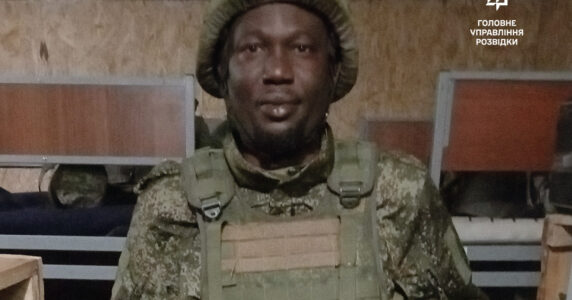
At the end of April 2026, the Main Directorate of Intelligence of Ukraine reported the elimination of another group of foreigners — citizens of Kenya, whom the Russian command threw into a virtually suicidal assault. Despite agreements reached by the Kremlin with individual African countries to stop recruiting their citizens, the Russian Federation continues this process. According to the GUR, data has currently been established for 2,965 citizens of African countries who signed contracts with the Russian army. The top ten countries from which the largest number of mercenaries originate include: Kenya, Egypt, Cameroon, Ghana, Nigeria, Uganda, Algeria, Mali, South Sudan, and the Republic of South Africa. It was previously reported that, according to estimates by Ukrainian intelligence, individuals from 36 African countries were recruited to fight for Russia.
And this network extends beyond Africa. A similar situation is observed with citizens of India, Iraq, and Cuba. In particular, in December 2025, the Ministry of External Affairs of India reported that since 2022, 202 Indian citizens had been recruited into the Russian armed forces.
The situation looks particularly acute in Kenya. Local intelligence at the beginning of 2026 revealed that about a thousand Kenyans ended up in the war through blatant deception. People were promised jobs as electricians or plumbers, issued tourist visas through the Russian embassy in Nairobi, and upon arrival, forced to sign contracts in Russian, a language they did not understand. After that, with minimal training, they were sent to the front line. At the same time, the Russian side denies coercion and formally refers to “voluntary enlistment into the armed forces,” although underground agencies and shadow schemes operate behind the scenes.
Mercenaries from Kenya, 2026. Photo: Defence Intelligence of Ukraine.
The image is illustrative and is not related to the respondents mentioned in the report.
African governments are beginning to respond to this challenge. In Kenya, authorities have already closed more than 600 dubious recruitment agencies and are trying to negotiate with Moscow for an official ban on the conscription of their citizens. Similar processes are underway in South Africa, where the return of men from the front is being discussed at the presidential level. However, the problem remains: as long as Russia uses “gray” channels and promises of easy earnings, hundreds of people from all over the world continue to become expendable material in Russia’s war.
Trap Scenarios: How Promises Turn into Weapons
Behind the facade of various “opportunities” lies a well-established recruitment mechanism, where instead of diplomas or employment contracts, people are ultimately handed weapons. In particular, there are several main scenarios through which foreigners end up in the ranks of the Russian army.
The first path lies through cultural and sports events. Recruiters operate simultaneously both in African countries and directly in Russia. Agents help with processing tourist visas for participation in festivals or competitions. Many view such a visit as a chance to find a job and stay in the Russian Federation, without even suspecting that “employment” actually means military service.
Another scenario involves searching for a job abroad through specialized agencies. Here, the target audience consists of people in difficult financial situations. They are ready to pay recruiters to find vacancies, especially if payment is promised after starting work. Maximum anonymity prevails in this scheme: agents hide their faces, and cash is handed over through intermediaries. Participants in such schemes often do not even know who exactly helped them end up on another continent until it is too late. A separate category consists of educated people who took advantage of international grants or educational programs. Educational grant projects offer free tuition at Russian universities, full coverage of expenses, and even stipends. Winners are enrolled without exams and receive the opportunity to study in English. However, for many, this intellectual trajectory ends with receiving a Russian passport and subsequent signing of a contract for military service.
Documents certifying the involvement of foreign citizens in the ranks of the Armed Forces of the Russian Federation. Photo: Defence Intelligence of Ukraine.
The image is provided as general evidence and does not relate to the personal data of the research respondents.
Retention Mechanisms: From Isolation to Ideological Indoctrination
The recruitment process involves complex networks of interactions, which include agents or recruitment agencies in the candidates’ home countries, agents in neighboring countries (to help with visa processing), as well as networks of personnel in Russia who meet, accommodate, process documents, and assist with bureaucratic procedures.
New recruits do not always realize what they are signing up for and where they end up. In general, the recruitment system operates on the principles of classic human trafficking: passports are taken away from seekers of a better fate under the pretext of processing documents, their communication with relatives is restricted, and they are forced to sign papers whose content they do not understand.
The mechanism of retaining people begins back in the rear. Often, new arrivals are left without any documents for a long time: passports are taken away under the pretext of processing applications for citizenship of the Russian Federation, effectively depriving a person of freedom of movement and choice even before they reach the front.
The control system is maintained through total isolation. Upon arrival, foreigners are often left without means of communication with relatives. The lack of internet access and the refusal to issue Russian SIM cards for personal needs turn them into “invisible people.” Without documents, without language, and without the ability to call home, they find themselves in a trap where the only path left for them is the path toward Ukrainian positions.
Most often, people who do not speak Russian at all become victims. The language barrier becomes a real sentence for them even at the stage of document preparation. Characteristically, recruiters deliberately ignore the lack of language understanding: signatures under contracts with the Ministry of Defense of the Russian Federation are placed “blindly.” People, except for those who do it on their own initiative, literally do not realize that they are signing their own death warrant.
However, Russia uses not only coercion and deception. There is a category of “loyal recruits” for whom participation in the war is a conscious choice, formed by years of being in the Russian environment and under the direct influence of propaganda.
For example, programs like “Open Doors: Russian Scholarship Project,” which offer foreigners free tuition in Russian higher education institutions, effectively become incubators for future mobilization resources.
One of the prisoners, a graduate of the Moscow Higher School of Economics from Nigeria, became a vivid example of such “reprogramming.” This is no longer an accidental victim of deception, but an ideologically indoctrinated fighter who is fluent in Russian and operates with terms about a “multipolar world” and “American hegemony.”
This case demonstrates that Russia uses education as a recruitment tool, turning prestigious grants into a method of training soldiers. If for some the war begins with a confiscated passport, for others it becomes a logical conclusion to their studies at a Russian university.
Mercenaries from Nigeria, 2026. Photo: Defence Intelligence of Ukraine.
The image is illustrative and is not related to the respondents mentioned in the report
The Illusion of Salvation: What Drives Foreigners into Someone Else’s Trenches
The reasons forcing people from another continent to end up in the epicenter of the war in Ukraine are rarely rooted in ideology. The main driver is the desire to escape poverty and find at least some chance for the future. For the majority of the recruited, their home countries are places where youth are deprived of prospects, and a stable job is an unattainable luxury. And the EU appears on the political map drawn by the interview respondents only as a closed space that denies them visas, rather than as an independent political actor. In this situation, Russia masterfully sells the image of a “country of opportunities,” where the motivation of each mercenary becomes a tool in the hands of the Kremlin. For some, the financial factor becomes key, for others — educational or career ambitions.
An ideal target for a recruiter is a person who is not interested in politics but follows, for example, only sports. Such candidates are in a complete vacuum: they do not have access to objective news and perceive the world fragmentarily, through distorted propaganda images. Despite the lack of deep knowledge about Russia’s war against Ukraine, strong anti-American sentiments dominate among many of them. In this coordinate system, Russia is perceived as a “fair opponent of the US,” which is allegedly fighting for a multipolar world. Supporting Moscow, they sincerely believe that they are siding with the power that opposes Western hegemony.
The story of recruiting foreigners is another example of how Russia actually “respects” international agreements. All promises made to the Kenyan or any other side turn out to be ordinary lies in practice. While diplomats negotiate, the Russian military continues to use foreigners as expendable material in assault units.
Today, Ukrainian intelligence and official authorities warn: any trip to Russia for the purpose of earning money or studying carries a real risk of ending up as a “suicide bomber” on the battlefield. It is important to understand that for Ukraine, everyone who took up arms on the side of the aggressor is a Russian accomplice in this war. However, there are two effective ways to avoid a tragic fate.
The first is to ignore any proposals from recruiters and not to sign any documents with representatives of the Russian Federation. Participation in this war on the side of the occupier is not only illegal and immoral, but also a direct violation of the UN Charter. It is time for the governments of African countries not just to “ask Moscow for favors,” but to act decisively: publicly warn their citizens and harshly block underground recruitment schemes on the ground.
The second path is for those who have already found themselves on the front line. The only chance to save one’s life is to surrender. Most foreigners currently in Ukrainian captivity got there during their very first battle. Ukraine guarantees the treatment of prisoners of war in accordance with all norms of international law, which gives foreign citizens the only real opportunity to eventually return home to their families.
If you have found a spelling error, please, notify us by selecting that text and pressing Ctrl+Enter.