Abhijeet Dipke’s CJP is increasingly drawing comparisons to the India Against Corruption movement that propelled Arvind Kejriwal into national prominence. With campaigns centred on NEET, CBSE and exam transparency, can CJP evolve into a broader movement for accountability and systemic reform?
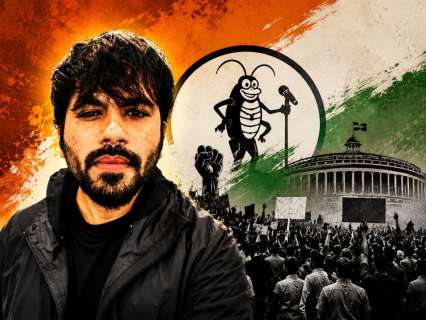
Abhijeet Dipke, 30, is the founder of Cockroach Janata Party. (AI-generated image)
Thousands packed Jantar Mantar today, shouting for Education Minister Dharmendra Pradhan’s resignation. Their anger isn’t just about NEET or CBSE—people have deeper worries about the fairness of exams and the shaky state of India’s education system. Abhijeet Dipke, with the Cockroach Janta Party (CJP), stands front and center. What began as a protest over test irregularities is now a broader outpouring from students stressed and uncertain about their futures.
If you remember the India Against Corruption movement back in 2011, this feels familiar. That protest kicked off at Jantar Mantar too, stirring up huge crowds and pushing the country to talk seriously about corruption—Commonwealth Games, telecom scams, and a laundry list of other controversies. Out of that, Arvind Kejriwal launched the Aam Aadmi Party, and suddenly street protests had turned into political action.
So here’s the real question: can outrage around education, led by Dipke, spark something bigger? Is he aiming for a Kejriwal-like shift from protest to politics?
Dipke is definitely tapping into public frustration, just as Kejriwal did. His focus on exam stress and student grievances has made CJP a unique voice, especially for youth. Both movements start with a core issue. Both challenge entrenched systems. And both channel ordinary anger into collective action.
But there are differences. The IAC movement swelled into a cross-country wave, drawing in students, professionals, the middle class, even chunks of the corporate world. CJP, right now, is rallying mostly online and sticking to education issues. Whether it can break out of that mold and tell a bigger story remains to be seen.
Looking back, the IAC protest had a clear target—corruption—and handed people something solid to rally around. Leadership, energy, and momentum all meshed. It wasn’t long before the AAP was born, and politics in Delhi changed forever. It’s a reminder: if you connect the right grievance with a lasting strategy, protests can morph into powerful platforms.
CJP’s approach is different. Dipke isn’t building a party the traditional way. There are no deep party roots or inherited vote banks. What he does have is a cause—exams like NEET and CBSE, which decide the fate of millions. By zeroing in on education, he touches the middle class where it hurts most—their aspirations tied up in test results, sacrifices, and hopes.
In some ways, it’s reminiscent of Kejriwal’s early push, transforming institutional frustration into mass movement. But the question looms: can CJP take all this emotion and build a lasting force? It’s not easy.
Jantar Mantar has been a launching pad for plenty of protests, but only a handful ever translate their street buzz into real political muscle. That’s the hurdle for CJP now. If their movement keeps growing, maybe it can punch through to a national level. Sonam Wangchuk’s support could help, but will it be enough? Are student anxieties powerful enough to ignite a broader anti-establishment wave?
And, at the heart of it, could Dipke step into the political spotlight like Kejriwal did after IAC?
Right now, these answers are up in the air. But history shows—never say never. Not many saw Anna Hazare’s protest giving birth to a winning political party. Change, when it comes, rarely announces itself in advance.
Also read| Malviya Nagar Hotel Fire: Cook held as probe points to negligence in tragedy that claimed 21 lives