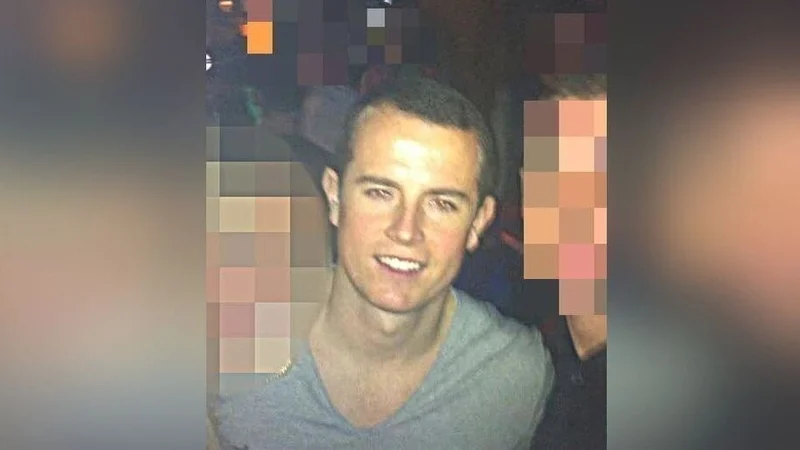
Sean McGovern is the first of the leaders of the Kinahan Organised Crime Group to be extradited from Dubai to Ireland.
He has pleaded guilty to directing the activities of a criminal gang.
Our Crime Correspondent Paul Reynolds examines the life and crimes of the 40-year-old father of two.
The puzzles of McGovern
If books provide an insight into the mind of a person, then the books that Sean McGovern chose for his sentencing hearings, at the Special Criminal Court last month, give some clues to his aptitude, attitude and mindset.
He carried two books to occupy himself in the back of a prison van during the tedious journey, under armed escort from Portlaoise Prison to Dublin, and in the long hours in the dock of Court 11 at the Criminal Courts of Justice.
The 40-year-old concentrated on his book of sudoku puzzles as the evidence against him was outlined to the three judges.
He kept his head down as the details of what he did were laid bare; his trip to Belfast and surveillance there of James ‘Mago’ Gately, as part of the attempt to kill the rival Hutch gang member, and his role in monitoring the tracker on the car of the innocent father and grandfather Noel Kirwan, before directing two gunmen to his home where the 62-year-old was shot dead.
Engrossed in his logic-based number puzzles, one of the leaders of one of the world’s wealthiest and most dangerous organised crime groups behaved as if the proceedings going on around him and about him were irrelevant.
He didn’t engage and appeared disinterested and unconcerned by what was happening in court.
‘A Gentleman in Moscow’
Along with his book of sudoku puzzles, McGovern had a second book, ‘A Gentleman in Moscow’, by Amor Towles.
The novel tells the story of a fictional aristocrat, Count Alexander Rostov, who, in 1922, was charged but refused to confess to being a social parasite because he believes he’ll be sentenced to death.
The Bolshevik Tribunal instead sentences him to be detained for life in the Metropol Hotel, across the road from the Kremlin. He’s forced to move out of his luxury suite into the hotel’s attic.
There are some parallels between the fictional Count Rostov and the reality in which Sean McGovern finds himself today.
Both never worked a day in their lives. Both can be considered social parasites.
McGovern was, after all, a director of one of the largest transnational drugs and firearms trafficking gangs which enforces control through violence, guns and murder.
The count had to move from his luxury suite to the cramped confinements of the attic, much like McGovern’s move from a life of luxury in Dubai, to the more confined space of a prison cell on the A wing in Portlaoise Prison.
And while, in the novel, some senior Bolsheviks may have considered Count Rostov to have been one of the heroes of the struggle against the Tsarist regime in 1920s Russia, it’s highly unlikely that many people today would consider McGovern any type of a hero of modern Ireland.
Who is Sean McGovern?
Sean McGovern grew up in Drimnagh in Dublin.
He was a talented underage soccer player before he became involved with two brothers, Liam and David Byrne, and their gang of young, violent and dangerous drug dealers who were involved in the Crumlin-Drimnagh feud from 2000 to 2009.
Twelve people died during that feud.
McGovern was 14 when the first of those murders took place in March 2000.
He was too young and too attached to his sport to become directly involved.
McGovern was never arrested, questioned or charged with any criminal activity during that time.
However, his friends and neighbours, the Byrnes, were aligned with Freddie Thompson’s side of the feud and that gang morphed into the Byrne Organised Crime Group.
Thompson is serving a life sentence for murder.
Freddie Thompson is serving life in prison for murder
The Byrne gang, of which McGovern was to become a senior figure, evolved into the Dublin branch of the Kinahan Organised Crime Group.
The Dublin gang was rooted in tight friendships and close family relationships, and in the geographical proximity of one part of south Dublin – around Raleigh Square, Windmill Road and Kildare Road.
The members and their families lived beside each other and McGovern became Liam Byrne’s trusted lieutenant.
He never worked but managed to live on the proceeds of crime in a lavishly renovated house on Kildare Road with his partner of 18 years, Anita Freeman.
They met when he was 22 and have two daughters. McGovern’s father-in-law has described him as “a caring and generous” dad.
He was close to his own father, who brought him to soccer training and matches as a child.
His father died while he was living in self-imposed exile in Dubai.
The gang leader did not return to Dublin for the funeral for fear of being arrested and charged.
McGovern has 11 minor road traffic convictions but no criminal convictions.
Sean McGovern (L) with his friend, David Byrne, who was killed in the Regency Hotel shooting
He was in the Regency Hotel in February 2016 when his friend, David Byrne, was shot dead.
McGovern was also shot and injured that day, but like his gang boss Daniel Kinahan, managed to escape the gunmen.
He refused to cooperate with the garda investigation, telling one garda who asked him how he was that day, to “f**k off”.
As the feud escalated and the pressure intensified from the Garda National Drugs and Organised Crime Bureau and the Criminal Assets Bureau (CAB), McGovern, along with other senior gang members, fled the country with his family.
They first joined the rest of the Kinahan gang leadership in Spain, but under pressure from law enforcement there, moved again, before settling in Dubai where McGovern became Daniel Kinahan’s right-hand man.
Dead man walking and the Mule State Foundation
On 24 February 2016, the Mule State Foundation announced that Sean McGovern had died.
Two of the foundation’s three council members signed the following company resolution: “It is noted that the Board of the Foundation have taken a decision to write off the loan of €150,000 provided to Mr Sean Gerard McGovern due to his recent demise”.
The announcement was, to say the least, premature. The gangster had survived the Regency shooting, was, and still is, very much alive.
However, the “loan” that the foundation had provided to him was written off.
The Mule State Foundation was set up for “the educational benefit and wellbeing” of the family of one of the Kinahan gang’s main drug dealers in the UK, James Mulvey.
He’s serving 32 years in prison there.
James Mulvey was a main drug dealer for the Kinahan gang (Pic: National Crime Agency)
The UK’s National Crime Agency was investigating VAT fraud and money laundering by a number of payroll companies in the UK.
It discovered that hundreds of thousands of pounds were transferred to the Mule State Foundation.
While Mulvey was not a director of any of the companies, he was found to be “the controlling mind and shadow director of them”.
In the 10 months between June 2014 and April 2015, £353,000 was transferred to the foundation as part of the gang’s fraud and money laundering operations.
The fraud involved charging VAT on invoices and not paying it to UK revenue, instead moving it in either cash or payments from company bank accounts to people operating under false names.
This disguised the reality that the money was in fact going to members of the Byrne Organised Crime Gang, including McGovern.
The house and the intimidation
In March 2015, the fund gave McGovern a loan of €150,000 from an Investec Bank account in Mauritius.
CAB couldn’t find any evidence of a loan agreement, a repayment structure, or any repayments of this “loan”.
McGovern used the money to buy the house on Kildare Road, which was valued at €270,000.
CAB couldn’t establish where he got the additional €120,000.
The house was extensively renovated with another €247,000 spent on it before Sean McGovern and Anita Freeman moved in.
Forensic analysis of the couple’s assets, including bank accounts, social welfare and revenue profiles, could not establish the source of the money for the renovations.
Anita was also receiving local government rent subsidies which CAB discovered she was paying into Liam Byrne’s bank account.
Daniel Kinahan, who Sean McGovern became the right-hand man of in Dubai
The house was subsequently declared to be the proceeds of crime and CAB seized it, along with Byrne’s home across the road.
While that house, at Raleigh Square, has since been sold, McGovern’s – on Kildare Road – remains boarded up.
Five years after it was seized, Dublin City Council (DCC) said that it has made numerous attempts
to refurbish the home but has been unable to do so because of “intimidation against the contractors”.
It also tried to offer the house to various community groups, but none are prepared to take and use it for the common good.
“It was never DCC’s intention to leave the property idle for so long,” the council said in a statement, adding that “we are now discussing other options”.
McGovern was brought back to Ireland after an Interpol Red Notice was issued for his arrest in 2024.
One of seven senior figures in the Kinahan Organised Crime Group to be sanctioned by the US Treasury Department, he’s the first person to be extradited from the United Arab Emirates.
His gang boss, Daniel Kinahan, is in custody in Dubai facing extradition proceedings.
Professional criminal
Sean McGovern may not have formal education but is clearly computer literate and equipped with organisational, managerial and business skills, skills which he utilised for years in the multi-billion euro business of organised crime.
While the rival Hutch Organised Crime Group was based on family networks and connections, the Kinahan Organised Crime Group had, like the IRA, a sophisticated cell and sub-cell structure, which enabled leaders like McGovern to control and direct the gang’s business of drugs and firearms shipments and sales, money laundering, shootings and murders.
The sub-cells were set up to commit specific crimes. One was established for the attempted murder of James Gately, another for the murder of Noel Kirwan.
Other sub-cells were set up for the various attempts on the life of Patsy Hutch, Gerard Hutch’s older brother, who the Special Criminal Court found “beyond reasonable doubt was centrally involved in the movement” of the weapons used to kill David Byrne at the Regency Hotel.
It also found that Gerard Hutch had control of these guns.
Pretty good phones
The Kinahan Organised Crime Group used an encrypted communications network on modified BlackBerry devices to plan its attacks.
These devices used encryption software which enabled them to be reconfigured to access a closed email criminal network.
The system operated on a traditional email system where threads could be forwarded on.
To gain access to the group – [email protected] – a Kinahan gang sub-cell member had to be admitted by an administrator.
The communications system, known as PGP (Pretty Good Phones), was also used by legitimate businesses.
But for organised crime, Pretty Good Phones, turned out not to be good enough.
Law enforcement, including gardaí, managed to infiltrate the network, access the gang’s messages and identify the names behind the nicknames or handles.
They seized several phones from various members, including two from Sean McGovern.
Handles and messages
Each of the sub-cell members had different handles or nicknames.
McGovern used “knife” and “knifenew”. Peadar Keating was “leg”. David Duffy was “handsome”. Douglas Keating was “Oscar”.
Imre Arakas – the Estonian hitman brought in to shoot James Gately – was known as “the foreigner” and “the butcher”.
The targets also had nicknames.
James Gately was “Mago”. His wife Charlene Lam, who is of Asian descent, was called “Chink”.
Noel Kirwan was referred to as “The Duck”, because of his nickname ‘Duckegg’.
One handle “Cap”, “Bon”, “Bon Neww” or “Bon4” was giving instructions and directions, and is believed to be at the top of the criminal organisation.
That person has yet to be publicly identified but gardaí believe they know who it is.
The attempted murder of James Gately was discussed on an encrypted communications network
“On my baby’s life I’m not stopping mate. They’re desperate,” Cap messaged McGovern, two days after the murder of David Byrne.
“That was their big stand. They wanted to do us all.”
“They targeted us all,” a vengeful McGovern replied. “They wanted you and the rest of us was a bonus. This is personal. On my baby’s life I’m not stopping mate,” he continued.
“Mate, nobody is stopping until they’re all dead,” Cap replied.
Gardaí believe one of the encrypted messages shows that McGovern was so angry after the murder at the Regency that he suggested shooting dead Gerard Hutch’s daughter, referring to the Monk as “Mink”.
“I’m sick over David. It could have been the six of us and they could have wiped out the whole bloodline,” McGovern said.
“Mate I’m fuming, I swear to God. What about doing Mink’s daughter or will that bring too much heat?” he asked.
“Yea, but maybe only Neddy,” Cap replied.
Gerard Hutch’s brother, Eddie, was known as “Neddy”.
The murder of Eddie Hutch
On 8 February 2016 – three days after the murder of David Byrne – Eddie Hutch was shot dead at his home in Dublin, the fourth victim of the Hutch-Kinahan feud.
Gerard Hutch swore vengeance for the death of his brother on secret recordings played during his trial for the murder of David Byrne at the Special Criminal Court.
He said that he was prepared to let the murder of his nephew Gary go, but those who murdered “Neddy” had to be killed.
“I’d like to be able to go out and get these assassins,” he said. “The c**ts who done Neddy have to f**king go.”
Gerard Hutch was found not guilty of the murder of David Byrne at the Regency Hotel on 5 February 2016.
But two and a half weeks after Byrne’s murder, McGovern and the Kinahan gang were targeting the Hutch group again.
They were watching James ‘Mago’ Gately and his partner, Charlene Lam, aka “Chink”.
‘Mago and Chink’
“She’s home very early tonight,” McGovern told BonNeww and Oscar. “In for the night, car hasn’t moved.”
“We need to drop someone as soon as possible,” Cap said, “it’s coming, it’s coming.”
“Sooner the better we drop one of these mate,” McGovern said. “I feel a bit of luck.”
McGovern described Gately as “a weasel” and said that “all weasels get caught out in the end”.
“Ha ha ha yes, we get Mago, we’ll all be laughing,” Bon said.
McGovern gave information and instructions to Peadar Keating on what they all thought was a secure network.
He also sent him the numbers for five tracker devices to track people they had decided to kill.
“Keep that in your phone for the day, in case mine breaks,” he said to him.
The trackers
The GPS trackers transmitted location data on a GSM network. The user signed on to a website, entered a code, and was able to track the targets.
The trackers had a standard setting whereby they sent back location information every hour, but they could also be programmed to send back more detailed information every 30 seconds. This, however, used up more of the battery.
Detective Superintendent David Gallagher, a specialist investigator attached to the Garda National Drugs and Organised Crime Bureau, said that gardaí seized a total of six tracker devices as part of this investigation.
They had been put on the cars of Noel Kirwan, James Gately and his partner, among others.
McGovern monitored the signals on a laptop from his car and from the Kinahan gang’s safe house – an apartment in Beacon South Quarter in Sandyford.
His fingerprints were found on the instruction leaflet hidden behind a mirror there. His DNA was found on the laptop.
Gerard Hutch was found not guilty of the murder of David Byrne (Pic: Collins)
The trackers were bought at The Spy Shop in Leeds and when McGovern needed to find out quickly how to change the signal response, from four hours to 30 seconds, he called the shop.
It enabled him to more accurately track Noel Kirwan as he was driving home from a family meal on 22 December 2016, the day he was murdered. He told the two gunmen waiting to be ready to kill him.
McGovern also sent Peadar Keating pictures of James Gately and his family that had been taken from Instagram.
“Tell the boys to get a look at these pix,” he said, “short another driver, will discuss tomorrow, have one team nearly ready”.
Keating is serving 12 years for his part in this assassination attempt. David Duffy and Douglas Glynn were sentenced to six years, and Martin Aylmer was jailed for five years and four months.
Stephen Fowler, at whose home in west Dublin Imre Arakas was arrested, was sentenced to six years and nine months in prison.
Arakas, the Estonian hitman, was jailed for six years in Ireland before he was extradited to Lithuania where he’s serving a 10-year sentence for the murder of a mixed martial arts fighter.
McGovern is the second last of the sub-cell to be convicted. Gardaí are still pursuing the person behind the handles “Cap”, “Bon”, “Bon Neww” and “Bon4”.
Apology
Sean McGovern is a highly intelligent man. He appears in the dock clean cut, compliant and understated.
There have been no disciplinary problems with him in prison, and he has been an enhanced prisoner since last August.
Once he’d pleaded guilty, he stayed silent at subsequent court appearances.
McGovern didn’t react to the emotional victim impact statement from the daughter of Noel Kirwan.
He never flinched when Donna Kirwan asked him “why”, after he himself had been shot at the Regency Hotel, “would you chose to inflict that pain on us?”
She said: “It was Christmas, you should have been out buying presents for your kids, not
organising the murder of a grandfather. You watched Dad for ten months.”
McGovern never looked up from his book of puzzles.
Noel Kirwan was shot dead at his home in 2016
His defence counsel said that he was sorry, in that he had “expressly instructed that an apology be given to all those who have been impacted and harmed as a result of his actions”.
He didn’t take the stand and apologise in person.
McGovern has been in prison in Ireland and the United Arab Emirates since his arrest in October 2024.
A reduction in his final sentence will have been expected for the time spent in jail in Dubai.
He had asked for extra credit because the time that he served there was “difficult” and “onerous”, particularly because he was “a foreign national”.
However, the State prosecutor here pointed out that the only reason McGovern spent seven months in prison in Dubai was because he’d fought his extradition to Ireland.
‘A Gentleman in Dublin’
Sean McGovern was sentenced to 24 years in prison for two counts of directing the activities of a criminal organisation.
The offences carry a maximum sentence of life imprisonment.
While he’s entitled to a quarter remission for pleading guilty, he was known to have been worried that he could receive consecutive sentences.
The blurb for McGovern’s choice of reading material, ‘A Gentleman in Moscow’, says that Count Ruskov “unexpectedly” finds that his “reduced circumstances provide him a doorway into a much larger world of emotional discovery”.
Whether the confines of Portlaoise Prison open a similarly unexpected “world of emotional discovery”, truth and acceptance for this ‘Gentleman in Dublin’ – one of the country’s most notorious organised crime group leaders – remains to be seen.