The former Marist Brother appeared via audio-video feed last week, days after his 84th birthday and just over one year since his last sentencing in the Auckland District Court.
The new cases also originated with investigations out of Auckland, where Afeaki has faced sentencing for 40 historic child abuse charges on four prior occasions. The latest proceedings – which involve six additional charges and bring the total number of confirmed victims to 11 – were transferred south because two of the three complainants were students at Marist Brothers Primary School in Whanganui when he targeted them in 1977.
Judge Bruce Davidson ordered 18 months to be tacked on to the end of Afeaki’s existing sentence, which started with eight years when he was first sentenced in 1994. With additional sentencings in 2003, 2024, 2025 and now last week, the total amount of time that has accumulated for his offences is 13 years and 11 months.
At this point, the judge noted, it’s up to the Parole Board to decide when it’s safe to release Afeaki. He declined a request from the defence for additional sentence reductions based on Afeaki’s ailing health.
“I hope this recognises the fortitude and bravery of the complainants who have come forward,” Judge Davidson said, noting that the law prevented him from approaching the sentence on a standalone basis.
Judge Bruce Davidson. Photo / NZME
Because the abuse was from the same period as the other offences, he needed to consider the original sentence then decide what additional time the original judge would have allotted had all of Afeaki’s crimes been known then.
“What, for me, emerges … are the lifelong effects of such offending,” the judge said, referring to the three new victim impact statements. “These include significant emotional, financial and psychological damage. These are effects that do not go away, and in many cases compound.”
School camp victims
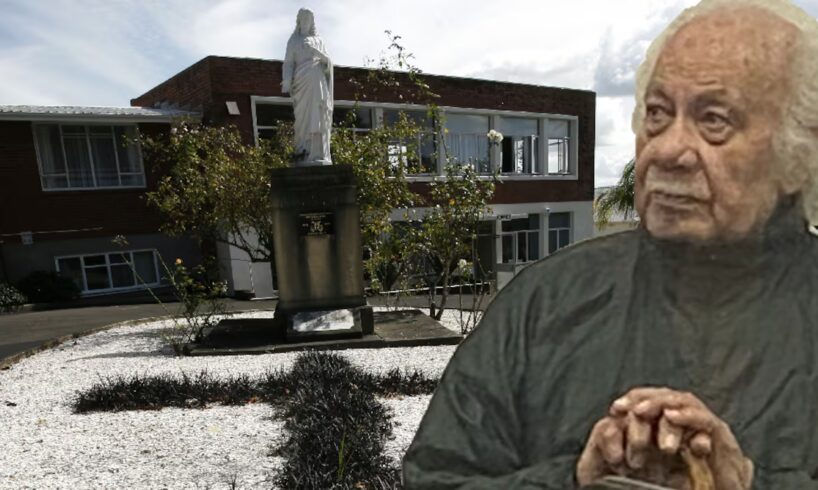
Afeaki, then known as Brother Charles, taught at the now defunct Marist Brothers Primary School in Invercargill from 1973 to 1977, before moving to the Whanganui school and later Auckland to teach at St Paul’s College in Ponsonby.
It was under the guise of discipline, often for alleged minor infractions, that he would inflict sadistic sexual abuse on children.
Two of the latest victims were targeted during a school camp when Afeaki was working in Whanganui. The boys, both 11, got into trouble after performing a prank.
“As punishment, the defendant told [them] they would be sleeping in his bivouac because they could not be trusted,” court documents state.
One of the victims would tell police decades later that as he lay in his sleeping bag that night – facing the wall, with his back to Afeaki – he “could hear something happening between his friend and the defendant but he was scared and did not turn over to look”.
A short time later, he recalled, Afeaki rolled over, away from the friend, and crawled into his sleeping bag with him.
“The victim, feeling scared, had not moved and the defendant positioned himself behind the victim facing his back,” according to the summary of facts Afeaki agreed to. “The defendant put his hand over the victim’s mouth to stop him from crying out, which caused him to struggle to breathe.”
He then sexually violated the boy.
“The following morning, the defendant told the two boys to behave, or he would tell their parents about [the prank],” documents state.
Former Marist Brother and boarding school teacher Charles Afeaki, who sexually abused students in Auckland, Invercargill and Whanganui in the 1970s and 1980s, was sentenced again in the Auckland District Court in June 2025. Photo / Craig Kapitan
The abuse continued during the following nights at camp and later on school grounds.
The two boys never spoke with each other about what had happened to them at the school camp.
But the other victim, the friend, would eventually tell police that he had been targeted by Afeaki for abuse throughout that school year.
“I am your teacher, and I love you,” he recalled the defendant saying as he forced himself on the boy.
As a result of that horror year, the victim said he has suffered lifelong post-traumatic stress disorder that was only recently diagnosed. It got so bad amid the police investigation that he can no longer work, he said, explaining that he had a “total emotional breakdown” after he was asked to provide a witness statement for the other victim and ended up becoming a complainant himself.
“During that year, the abuse was relentless,” he recalled, describing a “systematic campaign of psychological and sexual abuse”.
“Charles Afeaki weaponised my faith and forced me away from the church … The abuse I suffered under Charles Afeaki … resulted in permanent psychological injury.”
The other victim who was in the tent with Afeaki said the abuse has caused “pain and damage” throughout his life, including serious trust issues that prompted him to ruin every relationship. He described himself as a prisoner in his own mind.
‘I know there are more’
The third victim, targeted at St Paul’s College in 1980 when he was 12 years old, was abused on one occasion after he gave Afeaki the finger gesture for a reason he no longer remembers.
Afeaki grabbed the boy and took him to his living quarters, pushing him on to a couch and asking the boy if he knew what the middle-finger gesture meant.
“It means f*** you. You want me to f*** you then?” the defendant said as he pulled his own pants down, forced the boy on to his stomach and tried to pull his pants down as well.
“No, no, please stop!” the boy pleaded, but Afeaki slapped him as he resisted.
St Paul’s College in Ponsonby, Auckland, photographed in 2012. Photo / Garry Brandon
“The victim realised he was about to be sexually violated,” the agreed facts state. “In his final attempt to stop the defendant, the victim started yelling at the top of his voice, abusing the defendant.
“This caused the defendant to stop. The defendant sat the victim up, telling him to sit there until he calmed down.”
The boy was allowed to leave after about 30 minutes.
For decades, the victim didn’t tell anyone about what happened. Then in December 2024, he had a medical episode that he thought he might not survive and decided to tell his wife, not wanting to go to his grave with another man’s shameful secret.
When he read an online Herald article months later outlining Afeaki’s criminal history, he decided he needed to speak out. A Herald reporter helped put him in touch with detectives who were already investigating Afeaki again for the Whanganui school camp incidents.
“I know there are more of Afeaki’s victims out there and I hope they too will find the courage to come forward,” he told the Herald recently after confronting Afeaki in court. “It wasn’t our fault, we did nothing wrong, and Afeaki needs to be held accountable for what he has done to us.
“The penalties imposed may be disappointing, but the satisfaction of him not getting away with it will make it worthwhile and will help give you some peace. I almost didn’t come forward as I believed for 46 years I had been his only victim, along with the fear of not being believed.”
Sentence ‘an insult’
The survivor described the officers who worked with him on the case as “exceptional”, but he left the sentencing last week disappointed in the court system in general.
“Afeaki in the past has sought sympathy for losing a hearing aid, had a hernia operation, his frail declining health and so on but never once fully acknowledged his offending or the harm he has caused,” the victim said.
“These days, if you plead guilty, say sorry and say you had a hard upbringing, you get huge discounts off your sentences. As victims, what do we get? We live in a world where offenders have more rights than their victims.”
Charles Afeaki appeared for sentencing in the Whanganui District Court. Photo / Bevan Conley
He also expressed frustration that Afeaki’s sentence had not grown more substantial as each victim bravely steps forward, describing the 18 months imposed last week as “an insult compared to the lifelong harm he has caused”.
“Why give a serial sex offender like Afeaki any kind of discount?” he asked.
“He had the opportunity years ago to admit to police there were other victims. He could have given the police our names then, rather than wait to see if we would come forward. His cowardly silence has only worked in his favour, not ours.”
In some of the cases he’s been convicted for, Afeaki told authorities he didn’t remember the accuser nor the allegation he had pleaded guilty to, but he accepted he must have done it because it matched so closely how he had victimised other boys.
Comments like that were concerning, the latest complainant said.
“That sounds so unbelievably sick to me,” he explained. “Either he is a pathological liar, or there are just too many of us to remember.”
He said he suspected Afeaki claiming he didn’t remember individual victims was “just his way of further trying to hurt us for coming forward”.
Two monsters, one regret
The victim recalled how he had already fallen prey to another “monster” who repeatedly sexually abused him as a child when he was put into care while his mother, a single parent, was treated for cancer.
“With no one to turn to, my only escape from the abuse was the death of my mother at age 9,” he said, explaining that by the time he ended up at the boarding school in Ponsonby, he was “a silent sufferer, mentally damaged and emotionally screwed up – living in a world of heartache and pain constantly hiding behind a fake smile”.
And Afeaki, he said, managed to rob him of “whatever courage and trust I had left”.
Brother Charles Afeaki was a teacher at various Catholic schools in the 1970s and 80s.
“As a male, I think it’s harder to report sexual abuse when you have been abused by someone of the same sex,” he said. “It’s not just reliving the nightmare. It’s telling people things that you don’t even want to admit to yourself happened to you.
“Like most, I’ve always had a fear of not being believed. I’m ashamed and embarrassed it happened to me. I question why me and what did I do to deserve this.”
As a student at St Paul’s, he was fit and strong, he recalled, wondering still to this day how it could have happened to him.
While it was somewhat disappointing travelling to court only to speak to a TV screen and watching Afeaki get “the equivalent to a smack on the hand”, there would have been a bigger mental toll had he not come forward, he said.
Unfortunately, he said, he knew that from experience.
Multiple times throughout his adulthood, the man recalled, he had sat outside the house of his first abuser but never confronted him or gone to police. It had been about 12 years since he had last done so, when he learned about Afeaki’s other victims. He was finally considering having his voice heard for both matters, but then he found the first abuser’s obituary.
“I sat there stunned, shocked, numb and ashamed I’d kept it a secret – letting him go to his grave without facing justice,” he said. “I know I’ll regret it for the rest of my life.
“He’s haunted my memories for 52 years and will continue to shadow my memories. I know he needed to be held accountable. [The earlier reluctance to come forward] was just not wanting to reveal to anyone the sickening things he did to me.”
He realised too late what he wanted and needed to do, he said.
But for any other possible victims of Afeaki who had not yet been heard, he added, it was not too late.
Craig Kapitan is an Auckland-based journalist covering courts and justice. He joined the Herald in 2021 and has reported on courts since 2002 in three newsrooms in the US and New Zealand.
Sign up to The Daily H, a free newsletter curated by our editors and delivered straight to your inbox every weekday.