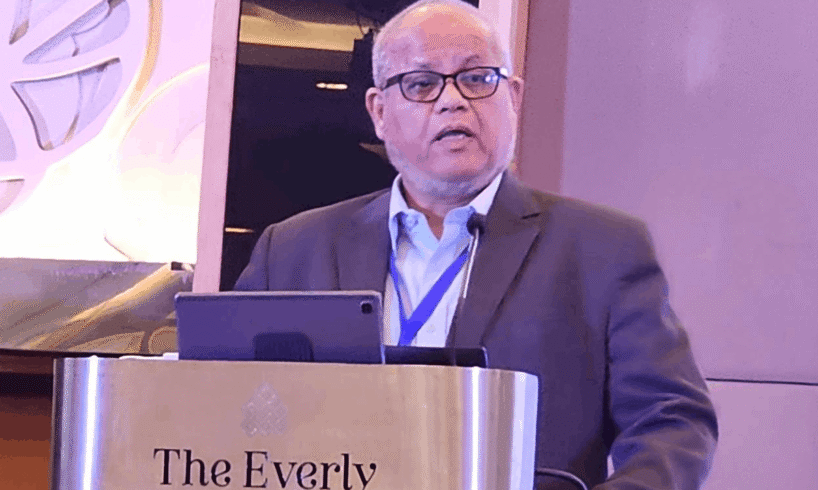
KUALA LUMPUR, July 21 — Health financing doyen Prof Emeritus Dr Syed Mohamed Aljunid Syed Junid has excoriated the government’s proposed MediAsas in a reversal of his initial support last January.
He compared Malaysia’s use of MediAsas, a private health insurance product designed by the government as a health financing solution, to the United States (US) with high health spending and low coverage.
The professor of health economics, policy and management at IMU University noted that the US is the only country in the world that relies heavily on private health insurance, which has nearly “wrecked” America, to fund the country’s health care needs.
“So are we going toward the situation that the US is facing now, where they spend nearly about 17 per cent of their GDP (gross domestic product) [on health], while nearly 25 per cent of the population doesn’t have any coverage?
“We are now focusing on private health insurance, which the government renamed as MediAsas, to solve the problem of our health financing needs,” Dr Syed Aljunid told a webinar on ageing that was organised by Universiti Teknologi MARA’s (UiTM) Faculty of Dentistry and officiated by Deputy Health Minister Hanifah Hajar Taib yesterday.
Last January, shortly after Bank Negara Malaysia (BNM) published a White Paper on the government’s voluntary base medical and health insurance/takaful (MHIT) product, now named MediAsas, Dr Syed Aljunid reportedly told RTM that the base MHIT was the right measure to curb rising private health care costs.
The Ministry of Health (MOH), Ministry of Finance (MOF), and BNM are planning to pilot MediAsas by the end of this month in the Klang Valley, ahead of a nationwide rollout in January 2027.
MediAsas will be offered by at least six private insurance and takaful operators (ITOs), with premiums paid by policyholders and claim payouts made by participating ITOs, without a sen of government funding for either premiums or claim payouts.
In a July 6 press release on the MediAsas branding for the government’s Base MHIT product, the MOF said the Joint Ministerial Committee on Private Healthcare Costs (JBMKKS) – co-chaired by Finance Minister II Amir Hamzah Azizan and Health Minister Dzulkefly Ahmad – was guided by a Consultative Council comprising key stakeholders to “ensure comprehensive support” for its Reset framework to address rising private health care costs and medical inflation.
When contacted for clarification on his membership in the Consultative Council, Dr Syed Aljunid told CodeBlue that he had “nothing to do with the Council or the Committee.”
In the UiTM webinar yesterday, the health financing expert opined that MediAsas won’t solve the country’s health financing problems because only 7 to 9 per cent of Malaysia’s total health expenditure comes from private health insurance.
“When the government wants to propose this as a solution, we’re not going to actually gain much because we’re probably talking about 9 to 10 per cent of the population. With premiums that are unaffordable for most of the population, it will create a lot more havoc on the ground,” said Dr Syed Aljunid.
He said proposed MediAsas premiums of RM500 to RM600 monthly for elderly people would be unaffordable for most Malaysian senior citizens, much higher than the cheapest RM60 monthly premium for young adults.
The health economist pointed out that the introduction of MediAsas would further fragment Malaysia’s pool of resources for health care financing, amid other existing social insurance schemes like the Social Security Organisation’s (Socso) Lindung 24/7 that is now optional after mandatory contributions were initially legislated.
Lindung 24/7 covers accidents outside working hours.
Dr Syed Aljunid explained that social health insurance must be mandatory because otherwise, only high-risk people will contribute to the scheme, making it unsustainable.
“The more private insurance or unsustainable schemes are introduced, it will break up more of this pooling of resources.”
Dr Syed Aljunid, who worked in Indonesia from 2012 to 2014, noted that the country combined more than 10 public insurance programmes into a single national health insurance (NHI) scheme.
“In Malaysia, instead of going towards harmonisation of different packages, we are breaking up the pool much much more. This is not good for the national health financing situation,” he said.
“My worry is that maybe 10 years down the line, we are going to become like the US where 30 to 40 per cent of the population won’t be covered and where money is spent on private health insurance and controlled by a few private health insurers. They are the main winners; took a lot of profit and became a dictator for the whole financing scheme.”
Dr Syed Aljunid characterised MediAsas as a “wrong step”, urging the Madani government to ignore critics who claim that introducing an NHI scheme will cost it the next general election.
“If they lose the election, it won’t be because of national health insurance; there’s many other issues.”
In February 2025, Dzulkefly told a Public Accounts Committee (PAC) inquiry into rising health insurance premiums and private hospital charges that the Madani administration has decided not to introduce NHI because it isn’t “politically right”, saying the government wants to mainstream private health insurance instead.
Dr Syed Aljunid said now is actually the best time to introduce an NHI scheme due to escalating private health care costs. “Nothing much is being done to control this.”
MediAsas includes a phased implementation of the diagnosis-related groups (DRG) reimbursement system in participating private hospitals that have yet to be named by the government. Last July 6, Dzulkefly touted MediAsas as providing a “strong foundation” to support long-term health financing reform.
Dr Syed Aljunid cited a study he ran in 2019 or 2020 that found 95 per cent of the Malaysian population were willing to contribute 1 to 2 per cent of their income to an NHI scheme because “they know they can’t depend on other forms of funding, especially private health insurance, which is being proposed now as one of the solutions.”
He explained that a mandatory NHI scheme isn’t intended to replace funding for the public health care system via general taxation, but to act as a top-up. He noted that European countries with NHI continue to use general taxation to finance health care to cover people who can’t contribute to NHI, such as the poor or unemployed.
The health economist cited Singapore and Japan as countries with long-term care insurance for the elderly, in which contributors need to contribute for at least 10 years before they’re eligible for coverage in their aged years.
“In term of health financing, unfortunately Malaysia is not prepared for that. We’re focusing on other parts of the population. The health financing people planning for Malaysia are taking a simplified approach in trying to solve these issues on health care financing; they call it ‘low-hanging fruit’.
“But we cannot be talking about low-hanging fruit all the time. Low-hanging fruit will not be a good source of policy to address the aged population.”
Dr Syed Aljunid complained about the abandonment of the Health White Paper (HWP) that was passed in Parliament in 2023 under then-Health Minister Dr Zaliha Mustafa. Work on the HWP project began under Dr Zaliha’s predecessor, Khairy Jamaluddin, in Prime Minister Ismail Sabri Yaakob’s administration.
“The government at that time – this Health White Paper comes from MOH – suggested that the government allocate at least 5 per cent of GDP to health services in the public sector. If combined with private health expenditure, it’ll boost to 7 per cent,” he said.
“But as we know today, the Health White Paper has been forgotten; not much activities are carried out to address the four pillars in the health financing aspect.”
Galen Centre for Health and Social Policy chief executive Azrul Mohd Khalib, who was a panellist at yesterday’s UiTM webinar, said countries with NHI or long-term care insurance were mostly high-income countries – such as South Korea, Taiwan, Singapore, Japan, Australia, and New Zealand – unlike Malaysia that is an upper middle-income economy.
“It’s a different level of affordability to contribute into this pool that we need to finance and to sustain an aged care infrastructure,” he told the webinar.
“We can’t just copy and paste these remedies and put them into the Malaysian context because they must fit what we have.”
Azrul stressed the need for better communications on the concept of solidarity in social health insurance. Although contributions may not benefit us immediately today, these help someone else who is at that point in their life to receive the care that they need, besides funding the care that we ourselves need decades later.
“In some of these countries, they start contributing at the age of 40. The idea is that you contribute for at least 20 years, so that the contribution then funds you once you decide to retire at the age of 65. That is what pays for that care later on. It’s not an airy fairy hope, somebody-will-pay-for mechanism, but it’s you yourself investing in that.”