(July 25, 2026 / JNS)
As Israel continues to grapple with one of its most divisive domestic issues—the enlistment of Haredi men into the Israel Defense Forces—the public conversation has become increasingly dominated by confrontation rather than constructive debate.
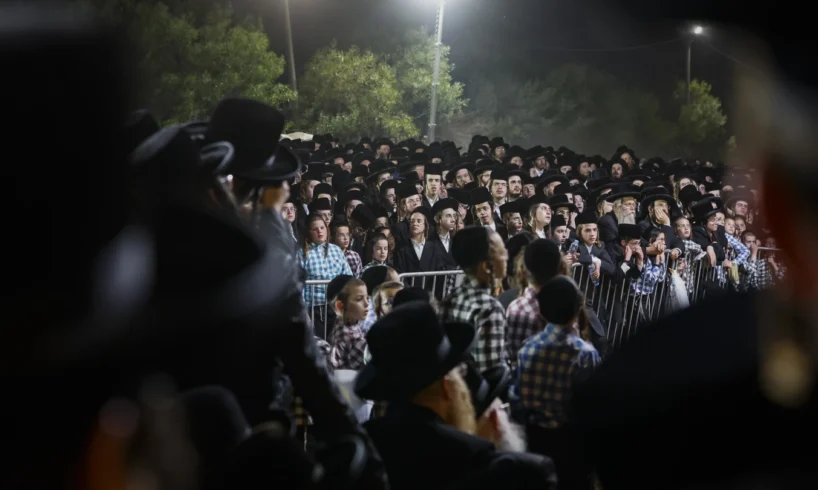
In recent months, highly publicized demonstrations have included highway blockages, clashes with police and protests over the arrests of draft-age yeshivah students. Separate demonstrations targeting businesses operating on Shabbat have further fueled public perceptions of a community increasingly at odds with the broader Israeli public.
Yet these images tell only part of the story.
The overwhelming majority of Israel’s Haredi population does not participate in these protests. Nevertheless, a relatively small but highly visible group has come to represent an entire community in the eyes of many Israelis. Television cameras naturally gravitate toward dramatic confrontations, but the result is a public perception that often overlooks the diversity of opinion within the Haredi world.
It raises an important question: Who benefits when the debate is framed this way?
The dispute over Haredi military service has become more than a policy disagreement. It has evolved into a potent political issue, particularly as Israel continues fighting a prolonged war that has placed extraordinary demands on reservists and active-duty soldiers. Critics argue that the government’s inability to produce a comprehensive enlistment framework reflects a broader failure of leadership. Supporters counter that integrating a community with distinct religious, educational and cultural institutions into military service cannot be accomplished through political slogans or judicial deadlines alone.
Both perspectives reflect legitimate concerns.
Many Israelis who have served multiple rounds of reserve duty believe the burden of national defense must be shared more equally. The frustration is understandable, particularly at a time when the country’s security challenges remain significant. At the same time, any lasting solution will require more than legislation or enforcement measures.
The Haredi community has spent decades building an educational and religious framework centered on full-time Torah study. Changing that reality involves far more than issuing draft notices. It requires creating military programs that accommodate religious observance, building trust between the state and community leaders, and ensuring that enlistment does not come at the expense of deeply held religious values.
History suggests that lasting social change rarely occurs through coercion alone.
The recent arrests of draft-age Haredi men have only intensified tensions. While supporters of stricter enforcement argue that the law must apply equally to all citizens, opponents contend that highly publicized arrests risk hardening resistance rather than encouraging cooperation. Escalation often produces further escalation, making compromise increasingly difficult.
For a country already facing immense external security threats, growing internal polarization serves few people’s interests. The debate has also created an unusual political dynamic.
For elements of Israel’s political opposition, the enlistment issue has become a powerful tool for criticizing the current right-wing coalition and highlighting what they describe as the government’s dependence on Haredi political parties. The controversy has allowed opponents to frame the government as unwilling—or unable—to resolve one of Israel’s most contentious domestic disputes.
Whether that criticism is entirely fair is open to debate. What is clear is that the draft controversy has become a symbol of broader disagreements over religion, state and the future character of Israeli society.
Many within the Religious Zionist community also support expanding Haredi enlistment. They point out that thousands of religious Zionist men and women serve in the IDF while maintaining observant lifestyles, demonstrating that military service and religious commitment are not mutually exclusive.
Those arguments deserve serious consideration.
At the same time, some observers caution that the broader ideological struggle extends beyond military service itself. They argue that tensions over the Haredi draft are part of a wider debate about the role of religion in Israeli public life. From this perspective, concerns among some Haredim are not limited to enlistment but also reflect fears about preserving the religious character of their communities and concern that greater integration could gradually reshape the identity of both the community and, potentially, the military itself.
Whatever one’s position, reducing the discussion to slogans risks overlooking meaningful developments taking place beneath the surface.
While protests receive extensive media coverage, quieter stories often receive far less attention.
In recent weeks, reports have highlighted members of the Karlin-Stolin Chassidic community taking meaningful steps toward military service through frameworks designed to accommodate their religious lifestyle. Such developments suggest that gradual progress is possible when dialogue replaces confrontation.
These initiatives may not generate dramatic headlines, but they arguably represent a more sustainable path forward.
Across Israeli society, there is broad recognition that some form of increased Haredi participation in national service will ultimately be necessary. The remaining question is not whether change will occur, but how it will be achieved.
Will progress come through public pressure, legal enforcement and political confrontation? Or will it emerge through negotiation, trust-building and the gradual development of frameworks that respect both Israel’s security needs and the religious commitments of the Haredi community?
The answer may determine not only the future of military enlistment but also the strength of Israeli social cohesion.
Israel has weathered countless external threats by maintaining a sense of shared national purpose. Preserving that unity during periods of internal disagreement is no less important.
Public discourse that paints an entire community with a broad brush risks deepening divisions rather than encouraging solutions. Political campaigns and media narratives may dominate the daily news cycle, but they are not the ultimate measure of success.
Lasting change is measured by practical results: more enlistment, greater mutual understanding and policies that strengthen both Israel’s security and its social fabric.
If respectful engagement continues to produce gradual increases in Haredi military service, those achievements will ultimately carry more weight than the images of protest that dominate today’s headlines.