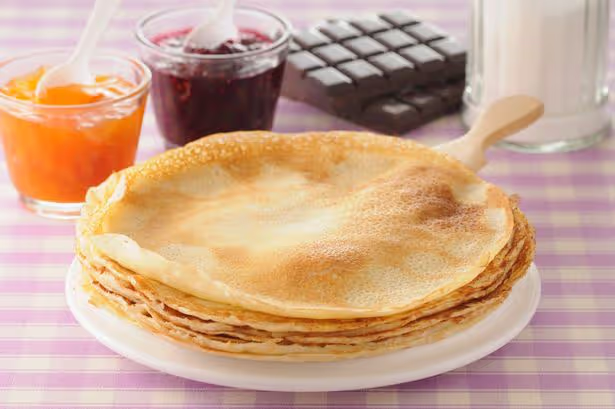
While most people are ready with their batter and toppings for Shrove Tuesday, not as many remember what they should be eating a day earlier
Elaine Blackburne Network Content Editor
10:31, 15 Feb 2026Updated 10:31, 15 Feb 2026
Pancakes are traditionally eaten on Shrove Tuesday(Image: Getty)
Pancake day remains one of Britain’s most popular traditions, observed for hundreds of years. Taking place on the eve of Lent in the Christian calendar, it’s when households across the country attempt their pancake-making skills before enjoying them with various sweet and savoury accompaniments.
The practice traces its roots to the 16th century, when communities would indulge in hearty meals before commencing the then austere 40-day Lenten fast. This period, reflecting Jesus’ own period of fasting in the wilderness before he started his ministry, traditionally prohibited foods including meat, eggs, cheese, and milk.
Consequently, the days preceding Lent became crucial for using up perishable items that wouldn’t survive the lengthy fast. Shrove Tuesday, or Pancake Day as it’s commonly known, emerged as the ideal occasion to consume remaining eggs and fats – with pancakes proving the perfect solution.
Pancake day is often a family affair
This custom has persisted through the centuries, with people not only enjoying their home-cooked pancakes but also taking part in village pancake races for entertainment. Yet, there’s a less familiar tradition observed the previous day.
Collop Monday, deriving its name from thin meat slices called ‘collops’, is two days before the start of Lent. Historically, this was when households would finish any leftover meats, typically lean varieties such as bacon, reports the Mirror.
When do Collop Monday and Shrove Tuesday fall in 2026?
Similar to Easter, Shrove Tuesday moves around the calendar annually due to its connection with the lunar cycle rather than being fixed to a specific date. According to English Heritage, prior to the 7th century, two different methods existed for working out when Easter should fall.
The first approach came from Roman missionaries, whilst the second was rooted in Irish (or Celtic) tradition. Although both systems were based on lunar calculations, they employed different formulas, leading to two distinct Easter dates each year.
This caused significant confusion amongst early Christians, prompting religious leaders to convene at Whitby Abbey in Yorkshire in AD 664 for the Synod of Whitby. They reached an agreement to use the Roman calculation method moving forward – a system the Church of England continues to follow today when determining Easter and Shrove Tuesday dates.
Looking ahead to 2026, Good Friday, commemorating Jesus’s crucifixion, will fall on April 3. Easter Sunday, celebrating Jesus’s resurrection, arrives on April 5, followed by the Easter Monday bank holiday on April 6.
Ash Wednesday, signalling the beginning of Lent, is scheduled for February 18. This means pancake day will be on February 17, with Collop Monday on February 16.
Traditional pancake recipe
English Heritage has provided a classic Victorian pancake recipe. Here’s what you’ll require and the steps to prepare them.
Ingredients:
3 tablespoons of flour142ml (a quarter pint) of milk3 eggsButter, for the pan
Method:
Thoroughly beat the eggs, then add the milk and whisk the mixture together. Slowly incorporate the flour, adding one tablespoon at a time whilst whisking each addition thoroughly to ensure no lumps remain.
Heat a frying pan until it’s piping hot over a high flame, then add a knob of butter and allow it to melt, coating the entire surface. Add a ladleful of your pancake mixture and gently tilt the pan to create an even layer.
Allow it to cook for roughly a minute on one side before flipping to cook the reverse. Serve your pancakes whilst they’re still hot with your preferred toppings. Then dig in!