;
Missile-maker Fire Point promised the Flamingo would add heft and reach to Ukraine’s deep strikes, but production has been slow to ramp up
After months of disappointment, Ukraine may finally have gotten some real results from its giant Flamingo cruise missile
A 20 February Flamingo raid may have inflicted major damage on a Russian missile factory in Votkinsk
The attack could cause a ripple of delays in Russian missile production
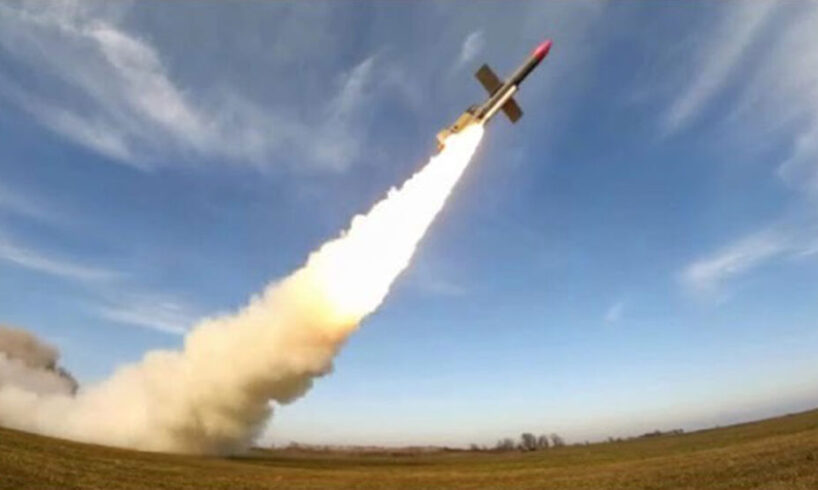
Ukraine has finally put its giant Fire Point FP-5 Flamingo cruise missiles to good use. On the night of 20 February, at least one of the six-ton Flamingos blasted a hole in the roof of a missile workshop in Votkinsk, in western Russia 1,400 km from the front line.
The strike, which came six months after Ukrainian firm Fire Point dramatically revealed the jet-propelled, largely fiberglass Flamingo to reporters, may have significantly damaged the Votkinsk missile plant. Votkinsk apparently produces components for many of Russia’s most powerful missiles, including the Oreshnik, Kinzhal, and Iskander-M.
The February strike is a possible win for Fire Point as critics question the company’s early claims regarding the Flamingo. More importantly, it’s a win for Ukraine as it struggles to blunt Russia’s relentless campaign of drone and missile strikes targeting Ukrainian cities and power plants. The missiles Votkinsk helps produce have inflicted widespread damage in Ukraine.
Meanwhile Fire Point co-founder Denis Shtillerman, the company behind the Flamingo missile, posted a teaser video. “A short video. No context. Context to follow” he said. https://t.co/E4Lu0xUXMm pic.twitter.com/yXJ9C3Dk68
— WarTranslated (@wartranslated) February 20, 2026
The Flamingo’s developers face deep skepticism. Last fall, Fire Point insisted it would massively scale up production of the FP-5 and quickly boost annual output to more than 2,000 missiles. But in the nine months since the first secretive combat trials of the ramp-launched FP-5, the Ukrainians have fired only about 16 missiles in seven raids, resulting in just four damaging hits.
The low pace of Flamingo strikes points to a proportionally low production rate. The slow ramp-up in missile production may not be entirely Fire Point’s fault, of course. Ukrainian Pres. Volodymyr Zelensky recently revealed that a Russian strike on the Flamingo assembly line forced the firm to repair and relocate the line.
The Votkinsk raid represents a comeback for Fire Point and its giant missile. It was by far the most successful of the few verifiable Flamingo attacks.
Footage of a Ukrainian Flamingo cruise missile slamming into Russia’s Votkinsk missile plant over the weekend.
Seen here, after traveling over 900 miles, the missile dives through the roof of workshop 22, with its 2500-pound warhead detonating inside. pic.twitter.com/XZjPaLsxxc
— OSINTtechnical (@Osinttechnical) February 25, 2026
Towering fireball
OSINT group Cyberboroshno reports, analyzing a satellite image of the damage, that Ukraine’s FP-5 Flamingo missiles struck the Votkinsk plant, blowing a 30×24m hole in the roof of Workshop No. 19—the galvanic-stamping facility where missile body casings are shaped, stamped, and coated. Damage patterns indicate the explosion occurred inside the building, likely gutting the interior. This workshop handles core structural fabrication for missile bodies, meaning the strike could critically disrupt the plant’s entire production cycle.
A video montage depicting nighttime missile launches seems to indicate the Ukrainians fired several FP-5s at Votkinsk on 20 February. Meanwhile, a video from the Russian facility shows that only one of the Flamingos got through Russian air defenses.
But given that each Flamingo packs an enormous, 1,150-kg warhead, one may have been enough. The Russian video depicts the subsonic FP-5 blasting through the roof of Votkinsk’s Workshop 19 and exploding in a towering fireball.
Missile expert Fabian Hoffmann assessed the possible impact on Russian missile production if, as seems likely, the Flamingo wrecked all or most of Workshop 19. “The building reportedly houses a galvanizing and metal-forming shop that performs electroplating, stamping, and surface treatment of structural components prior to final assembly,” Hoffmann wrote.
Ukraine fired a barrage of Flamingo missiles at Russia’s Oreshnik missile base—and apparently missed
The Votkinsk plant’s “role lies upstream in the production chain, preparing airframe sections, fasteners and possibly electronic housings used across several missile programs,” Hoffmann added. “Even limited damage could therefore slow multiple assembly lines at once if relevant components become unavailable for an extended period.”
Uncertainty abounds. “The short-term impact,” Hoffman stressed, “depends on existing stockpiles or the availability of alternative subcontractors. Given that Russian missile plants appear to operate continuously in three shifts (indicated also by the reported casualties during the night attack), it is plausible that substantial inventories of upstream components exist within the supply chain.”
“The medium- to long-term impact will depend on how quickly equipment that could have been destroyed can be replaced,” Hoffmann concluded. He stressed that Russia still imports many of its precision milling equipment. Western suppliers are increasingly constrained by sanctions, so replacements for the damaged equipment at Votkinsk may have to come from China.
If just one successful Flamingo strike can cause rippling delays in Russian missile production, imagine what dozens of successful Flamingo strikes a month could achieve. That pace of strikes would require Fire Point to actually do what it promised to do, however: produce 200 missiles a month.
Ukraine dominates the drone war at the front—but Russia owns the sky behind it
Source