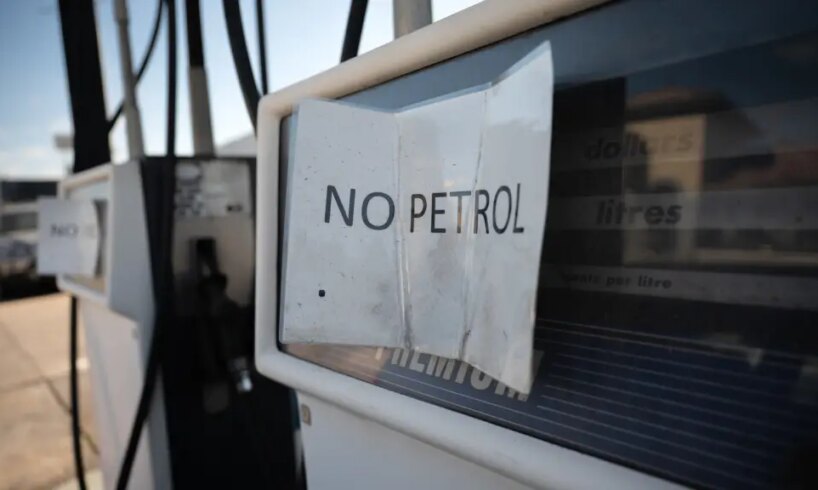
The federal government has released its national fuel security plan, which outlines a staged response to worsening supply disruptions that could escalate from voluntary behaviour changes to more coordinated intervention.
Prime Minister Anthony Albanese said the plan was designed to provide a consistent national response, describing it as “one plan, not nine” across federal and state governments.
Related Article Block Placeholder
Article ID: 333872
The plan, agreed on by the national cabinet, is designed as a four-step flexible framework that allows governments to move up or down through different levels depending on supply conditions. Operational plans will also be prepared in advance if conditions worsen.
Alongside the plan, the national cabinet also agreed to a broader package of immediate measures to ease pressure on households and industry.
These include a temporary 50% cut to the fuel excise for three months, the removal of the heavy vehicle road user charge, and new powers to secure additional fuel imports.
Smarter business news. Straight to your inbox.
For startup founders, small businesses and leaders. Build sharper instincts and better strategy by learning from Australia’s smartest business minds. Sign up for free.
By continuing, you agree to our Terms & Conditions and Privacy Policy.
Fuel plan level one: Normal fuel supply and monitoring conditions
At the lowest level, fuel supply operates as normal, with governments monitoring global conditions and working with industry to track potential disruptions.
At this level, fuel availability and pricing remain largely driven by global markets, with minimal direct intervention.
For most sectors, this phase means business as usual, with exposure to fuel costs driven primarily by global price movements rather than domestic policy changes.
Albanese said Australia has already moved beyond this stage as pressures begin to emerge in global supply chains.
Fuel plan level two: “Keeping Australia moving” as supply tightens
Australia is currently operating at level two, where supply continues to function but localised disruptions are beginning to appear.
Related Article Block Placeholder
Article ID: 332899
“Fuel supply continues to operate effectively, but localised supply disruptions occur,” Albanese said.
He also stressed the importance of “keeping Australia moving”.
At this stage, federal and state governments are taking precautionary steps to firm up supply. This includes underwriting additional fuel cargoes and other strategic reserves such as urea and plastic resins, managing reserves under the minimum stockholding obligation, and working with industry to redirect fuel where needed.
The plan also allows for changes to fuel standards to divert supply toward the domestic market if required, while governments increase monitoring of imports and distribution across the supply chain and work to ensure fuel is allocated fairly across jurisdictions.
States and territories may also introduce regulatory changes to improve freight efficiency, including longer trailers and extended delivery hours.
Consumers and organisations are also being asked to play a role in easing pressure on the system.
“Only buy the fuel you need,” Albanese said, urging Australians to make voluntary choices to reduce consumption.
In practical terms, this phase is likely to mean tighter supply conditions, more active management of fuel distribution, and closer scrutiny of usage, even as supply continues to flow.
Fuel plan level three: Targeted action, fuel prioritisation and demand reduction
Related Article Block Placeholder
Article ID: 333849
If supply conditions deteriorate, the plan allows for a shift toward more coordinated intervention across the economy.
“Ongoing supply disruptions mean we’ll focus on getting fuel to where it’s needed most,” Albanese said.
At this stage, governments would prioritise fuel for critical sectors and introduce nationally consistent measures to reduce demand, alongside further efforts to secure supply from international partners.
This includes further releases from reserves under the minimum stockholding obligation and clearer guidance on how households and industry can help ensure fuel reaches priority uses.
States and territories may also expand road usage changes to improve efficiency, including longer operating hours for freight and additional measures to reduce fuel consumption.
While the plan does not explicitly reference working from home, the move toward coordinated demand reduction opens the door for policies that could reduce commuting and fuel use at scale.
For many sectors, this phase would likely bring a mix of support and constraint, with some activities prioritised for fuel access while others may be expected to scale back consumption.
Fuel plan level four: Protecting critical services and allocating fuel supply
Related Article Block Placeholder
Article ID: 333652
At its most critical stage, the plan outlines a shift toward protecting critical services while keeping the broader economy operating.
“Ongoing supply disruptions require government action to ensure critical users are protected and the economy remains open and operating,” Albanese said.
This would involve a nationally consistent framework to allocate fuel to essential users, including emergency services, utilities and other life-supporting infrastructure.
The plan also flags clear conditions for when these measures could be relaxed once supply pressures ease.
At this point, access to fuel would depend on sector priority, with essential services protected while broader commercial activity would face tighter constraints.
You can read the full plan here.