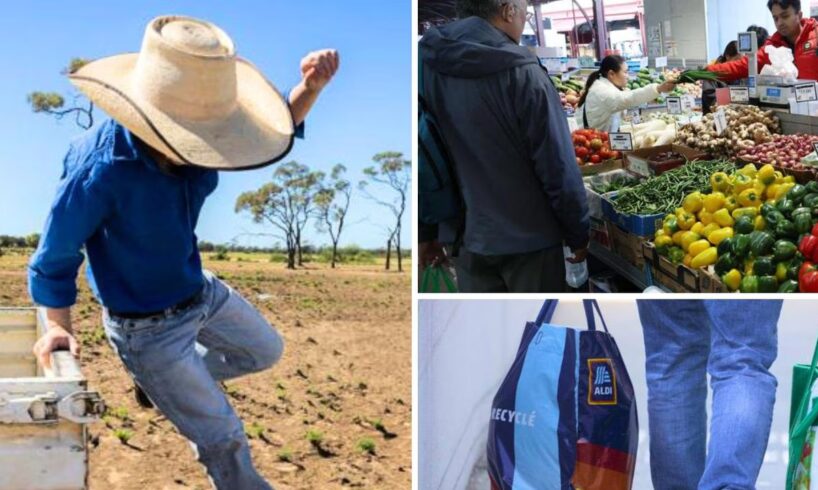
Even as petrol and diesel prices fall, Australia’s fertiliser supply issues throw up a worst-case scenario of 40 per cent less winter crops from the most fertiliser-dependent farms.
Analysis by a biology professor and an agriculture supply chain expert from La Trobe University shows while Australia’s petrol and diesel supply has somewhat stabilised since the Strait of Hormuz closed eight weeks ago, the country’s fertiliser stocks stand in stark contrast.
Associate Professor Sean Arisian and Professor Phil Brewer say closure of the Strait, cutting off a large chunk of fertiliser supply, leaves Australian farms in limbo.
“The fundamental distinction between Australia’s liquid fuel and fertiliser exposures continues to hold, but both markets have moved in ways that sharpen the comparison,” they say.
“A tractor can be idled until diesel arrives. A crop cannot wait for nitrogen without consequence.
“Early indications from agronomic modelling suggest … (crop) yield penalties in the range of 10 to 25 per cent for Australian winter cereals, with losses under a worst-case scenario climbing toward 40 per cent on the most nutrient-deficient soils where growers have no residual (nitrogen).”
Australian farms are now in the peak of fuel and fertiliser use amid the winter sowing window.
Western Australia’s Wheatbelt and South Australia’s Eyre Peninsula in particular host ancient, nutrient-deficient soils that need a lot of nitrogen fertiliser. T
he WA grain peak body is forecasting 14 per cent fewer hectares of wheat, down to 3.68 million hectares.
“The horticultural sector is under continued duress,” the La Trobe academics say.
A survey from Riverina-based FarmLink shows 90 per cent of growers do not have urea (high-nitrogen fertiliser) supplies on-farm less than a week out from the traditional autumn sowing start, and only one-third have a confirmed delivery contract.
A survey from peak vegetable, potato and onion growers group AUSVEG released this month found that half of surveyed growers hold less than three weeks of fertiliser supply, with many scaling back production ahead of the June-July top-dressing window.
“As a 52-week-per-year industry, vegetable growers make daily or weekly decisions about what and how much to plant,” an AUSVEG spokesperson said.
“Grower decisions to pause or reduce plantings made today can take weeks or months to flow through in the form of reduced supply available for consumers.”
The link between food prices and fuel costs will likely be spelt out on April 29 when national consumer price index data will give a substantive inflation reading.
Last week, the sprawling fleets of subcontracted drivers hired by supermarket giants won an emergency case at the Fair Work Commission, which ordered the corporates at the top of food supply chains to pay the heightened diesel bills facing truck drivers.
While so much attention has been placed on Australia’s petrol and diesel bowser prices and how many days of fuel is held in reserves, the nation has no such fertiliser holds.
The La Trobe academics say the crop yield shortfall will rear its head at the end of 2026 and into 2027.
The Strait of Hormuz is a crucial oil shopping route, but ships also carry about one-third of the world’s fertiliser through its waters. Saudi Arabia, the UAE and Qatar are major exporters.
Amid shaky prospects of a ceasefire between the US and Iran, Anthony Albanese announced on April 17 that Indonesia had agreed to supply 250,000 tonnes of urea, which “facilitates around 20 per cent of the remaining fertiliser needed for the current season”, the Prime Minister said.
That deal was between private entities in both countries but facilitated by the respective governments.