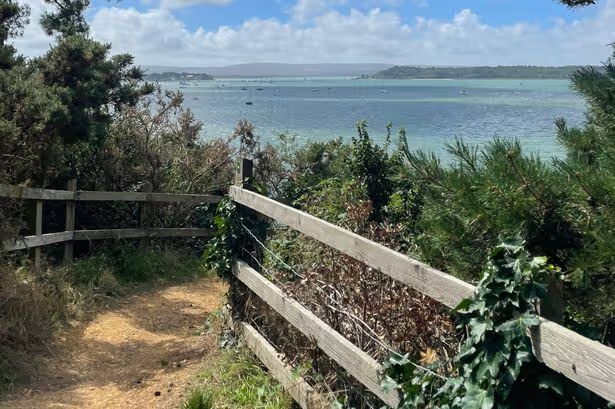
It strikes a balance between nature and development, energy and calm
The views were absolutely stunning(Image: Laura Zilincanova)
Frequently overlooked as merely a stepping stone to Dorset’s better-known seaside destinations, Poole discreetly boasts one of Britain’s most remarkable natural treasures – an expansive, protected harbour of such magnitude it resembles an inland sea rather than a conventional coastline.
The town also stands as one of the nation’s most desirable waterfront locations, especially around the prosperous Sandbanks area, often dubbed the ‘millionaires’ playground’, where house prices consistently feature amongst the steepest beyond the capital.
My journey commenced with a pause on the high street, where the town exuded a refreshingly relaxed character. A brief bus journey then transported my companions and me to an entirely contrasting environment – a more tranquil residential and maritime enclave where towering pine trees loom over modern dwellings, and the atmosphere takes on a distinctly coastal quality.
The shift from an unpretentious high street to a sophisticated shoreline represents one of Poole’s most compelling – yet somewhat melancholic – characteristics. Upon arriving at our Airbnb, we made our way to the Salterns Marina situated on the northern edge of Sandbanks, overlooking Poole Harbour.
With origins tracing back to the Iron Age and Roman times, it stands as Britain’s largest natural harbour and ranks among the world’s most expansive, comprising a sweeping area of shallow waters peppered with islands, sailing channels and conservation zones.
The marina is bordered by sophisticated waterfront properties and seemingly endless lines of moored vessels stretching across the harbour.
There’s a refined, almost continental atmosphere in certain spots, enhanced by the luminosity and concentration of yachts, while retaining its distinctly English essence.
Sandbanks has earned its reputation as one of Britain’s premier watersports destinations, especially for kitesurfing and windsurfing, owing to its reliable winds and exposed coastal location.
After enjoying some excellent seafood, we took a brief ferry journey across the harbour entrance to Studland, heading directly towards the striking chalk stacks of Old Harry Rocks, which form part of the Jurassic Coast World Heritage Site.
Studland’s expansive beaches and heath-fringed dunes possess a far wilder character, sculpted by natural forces rather than human intervention. Beyond there, the coastal path towards Swanage presents some of Dorset’s most spectacular seaside rambling.
The ascent towards the cliffs is gradual yet fulfilling, winding through tranquil lanes, verdant hillsides and quintessential rural landmarks, including a modest graveyard and a village pub boasting spectacular vistas that seems ideally positioned for a breather.
The Poole cliffs are part of UNESCO World Heritage(Image: Laura Zilincanova)
From the summit, we were met with rocky precipices plunging into the ocean, which was genuinely amongst the most striking clifftop panoramas I have witnessed.
At intervals, we found ourselves jogging along the grassy cliff edges, pausing frequently simply to capture photographs and savour the scenery, reports the Express.
Poole’s charm stems from its diversity. It serves simultaneously as a functioning maritime settlement, an entry point to the Jurassic Coast, a centre for sailing and water-based activities, and location of some of Britain’s most sought-after coastal properties.
Yet it also encompasses peaceful pine-bordered pockets, expansive sandy shores and stretches of coastline that feel entirely untouched.
It is this balance between nature and development, energy and calm, that, in my view, makes it such a compelling place to visit.