President Lula’s administration has been consulting lawmakers on support for repealing the tax on low-value international online purchases, which imposes import duties on purchases of up to $50.
The issue still faces resistance within the government’s economic team, but officials increasingly believe the measure could move forward if Congress backs the proposal.
China tightens grip on Brazil’s car market, triples exportsChinese investment in Brazil jumps 45% to $6.1bn in 2025
Valor has learned that members of the presidential palace support issuing a provisional presidential decree to revoke the tax, but the Finance Ministry and the Ministry of Development, Industry, Trade, and Services remain opposed to the idea. Neither the presidential palace nor the ministries responded to requests for comment.
The economic team argues that the “Remessa Conforme” program—which regulates and taxes low-value international shipments—is important for both customs oversight and protecting Brazil’s domestic industry and retailers, which had been facing competition from largely uncontrolled imports, especially from China.
Government officials interviewed by Valor described the fiscal impact of repealing the tax as “limited.” The government collected R$5 billion from the measure in 2025, up from R$2.8 billion in 2024.
There is, however, growing doubt over whether the economic team will be able to stop Congress from overturning the tax.
When the measure was created, then-Finance Minister Fernando Haddad and then-Lower House Speaker Arthur Lira personally defended it amid a wave of social media criticism and pressure from retail and consumer groups.
The political landscape has since changed, and pressure is mounting for measures that could boost Lula’s approval ratings during an election year.
Valor has learned that current Lower House Speaker Hugo Motta has already signaled to the government that it would be difficult to contain the issue in Congress during an election year if the executive branch formally submits a proposal to repeal the tax.
People close to Motta say support within the government for revoking the measure has grown stronger.
Allies of the Lower House speaker said he has been gauging the political mood in Congress before advancing discussions and plans to speak with party leaders as well as representatives of Brazil’s retail and manufacturing sectors.
Motta has reportedly argued in private conversations that it is politically difficult for Congress to defend taxes on low-cost consumer purchases during an election year because the measure directly affects lower-income consumers.
According to allies, Motta believes that if the government officially embraces repeal of the tax, it is likely to find a receptive environment in Congress—though he considers it essential to calibrate the impact on domestic production.
The Lower House speaker has also cited, in private discussions, examples of how cheaper Chinese imports have affected traditional manufacturing hubs in Brazil.
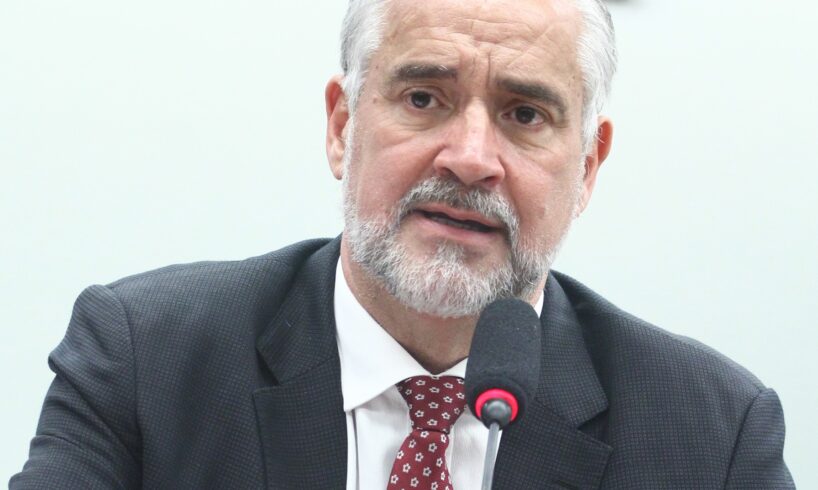
Government leader in the Lower House, Congressman Paulo Pimenta, told Valor that there is still no final consensus within the government over repealing the tax and acknowledged that opinions remain divided.
Even so, he personally defended ending the measure and criticized what he described as unequal treatment between low-income consumers and travelers returning from abroad.
“It makes no sense that someone who travels overseas can arrive at the airport and bring back everything they want without paying anything, while a poorer citizen, whose only option is buying online, is forced to pay a tax,” he argued.
Pimenta noted that travelers returning from abroad currently enjoy an exemption of up to $1,000, while consumers making much smaller online purchases are required to pay import duties.
“So at the very least we should have equivalent treatment, because today this logic only applies to poor people,” he said.
The tax applies a 20% import duty to international purchases of up to $50 and was created primarily to reduce tax asymmetries between foreign e-commerce platforms and Brazil’s domestic manufacturers and retailers.
The measure received strong backing from Brazil’s textile and retail sectors.
According to a study by Brazil’s National Confederation of Industry, the tax prevented R$4.5 billion worth of imported products from entering the country. It helped preserve more than 135,800 jobs and R$19.7 billion in economic activity.