I’m about to start my 30-minute treadmill session when I open Apple Music and scroll for something to jam to. Naturally, I turn to the pop girlies. I never used to stop and think before pressing play. Now I do.
That hesitation is new — and it’s not just mine. For many consumers, engaging with pop culture now comes with an added layer of scrutiny. What artists say, what they don’t say, and how they respond to global crises increasingly shape how their work is understood.
And that raises a larger question: when celebrities speak on complex conflicts, what are they actually contributing — and what are they leaving out?
Olivia Rodrigo is an especially revealing case, particularly as she prepares to release her third studio album, “you seem pretty sad for a girl so in love,” this June.
A former Disney star and three-time Grammy winner, Rodrigo has been public about her politics from the start, whether on COVID-19 vaccination, presidential elections, or reproductive rights. I never particularly cared. Her songwriting and skill as a recording artist were far more compelling to me; I’ve been following her since “All I Want” from “High School Musical: The Musical: The Series” (2019).
That changed when she finally spoke about the Israel-Hamas War.
More than a year and a half after the October 7, 2023, attacks in Israel, Rodrigo posted the following statement to her Instagram Story:
“there are no words to describe the heartbreak I feel witnessing the devastation that is being inflicted upon innocent people in Palestine. mothers, fathers, and children in gaza are starving, dehydrated, and being denied access to basic medical care and humanitarian aid. there is no child in Israel, Palestine, or anywhere in the world who deserves to suffer through what we’re seeing these children have to endure. it is horrific and completely unacceptable. to give up on them is to give up on our shared humanity. I have made a donation to @unicef to help support the victims of this horrifying situation and encourage you to do the same if you have the means. 🇵🇸” (July 2025; Instagram: @oliviarodrigo)
A few things stood out immediately.
The statement is notably vague about who she believes is responsible for the suffering she describes in Gaza. The source of that suffering is left largely unspoken, striking for someone with a platform of that size, especially in a conflict where public language is rarely accidental. In subsequent reposts, her messaging continued to focus on Gaza, without additional acknowledgment of Israeli victims or the hostages.
To Rodrigo’s credit, she does acknowledge that Israeli children are suffering. But that acknowledgment is immediately broadened into a universal line about children everywhere, which has the effect of diluting specificity at the very moment specificity would matter most. It is a pattern that feels familiar whenever antisemitism is addressed in public discourse: Jews are mentioned, then quickly folded into a larger, more comfortable abstraction.
Her statement gestures toward humanitarian concern but is more limited in its material expression. Rodrigo ends the post with a UNICEF donation link supporting children in Gaza. I could find no public record of a comparable targeted donation to Israeli victims, including Israeli children orphaned by October 7. The sympathy is broad; the support is not.
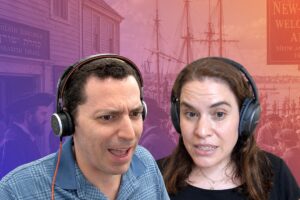
Rodrigo has since expanded on her reasoning. In a recent interview on The New York Times’ Popcast, she pushed back on the idea that artists should only speak when they possess expert-level knowledge. “I’m not like a geopolitical scientist,” she said, explaining that she views her comments through the lens of artistic expression rather than political expertise. As she put it, her job is to communicate what she feels, and remaining silent about a humanitarian crisis that left her “heartbroken” would have felt disingenuous. She even compared speaking about Gaza to writing a song about a breakup: different subject matter, but, in her view, the same emotional impulse.
I actually appreciate the honesty of that explanation. Rodrigo is not presenting herself as a policy expert or foreign affairs analyst. She is presenting herself as an artist responding emotionally to suffering. But for public figures with audiences as large as hers, the distinction is not always so clean. An emotional response can still shape how millions of people understand a conflict. The issue isn’t whether Rodrigo is qualified to comment on geopolitics. The issue is that when celebrities enter these conversations, their framing often shapes how audiences interpret what happened, who suffered, and whose stories remain visible.
And that makes the omissions all the more significant.
What’s missing is just as important as what’s included. Rodrigo does not specifically condemn the October 7 attacks or mention the hostage crisis that followed. At the time of her post, 50 hostages taken from Israel were still being held in Gaza — 20 believed to be alive and 30 presumed dead. Missing, too, is any acknowledgment of the Thai, Nepali, and Filipino victims of October 7. Thai nationals were the largest group of foreign hostages, while Nepali and Filipino civilians were also among those killed or kidnapped.
That absence is especially notable given Rodrigo’s Filipino heritage and her visible connection to the Philippines, including performing there in 2025. It also points to a broader issue: the victims of October 7 were not limited to any single community. Non-Israeli and non-Jewish civilians — including Arab and Muslim victims — were also affected, a reality that is often overlooked in public discourse. To be fair, that blind spot is not limited to celebrities; even within pro-Israel spaces, these victims are sometimes under-acknowledged. Naming that gap matters.
What stands out right away is the language itself. The statement is notably vague about who she believes is responsible for the suffering she describes in Gaza. The source of that suffering is left largely unspoken — striking for someone with a platform of that size, especially in a conflict where public language is rarely accidental. In subsequent reposts, her messaging continued to focus on Gaza, without additional acknowledgment of Israeli victims or the hostages.
There is also a shift from specificity to universality. To Rodrigo’s credit, she does acknowledge that Israeli children are suffering. But that acknowledgment is immediately broadened into a universal line about children everywhere, which has the effect of diluting specificity at the very moment specificity would matter most. It is a pattern that feels familiar whenever antisemitism is addressed in public discourse: Jews are mentioned, then quickly folded into a larger, more comfortable abstraction.
The issue isn’t just what is said, but how those statements shape what audiences come to understand — and what they don’t.
That same tension appears in the gap between symbolic and material support. Her statement gestures toward humanitarian concern but is more limited in its material expression. Rodrigo ends the post with a UNICEF donation link supporting children in Gaza. I could find no public record of a comparable targeted donation to Israeli victims, including Israeli children orphaned by October 7. The sympathy is broad; the support is not.
What’s missing is just as important as what’s included. Rodrigo does not specifically condemn the October 7 attacks or mention the hostage crisis that followed. At the time of her post, 50 hostages taken from Israel were still being held in Gaza — 20 believed to be alive and 30 presumed dead. Missing, too, is any acknowledgment of the Thai, Nepali, and Filipino victims of October 7. Thai nationals were the largest group of foreign hostages, while Nepali and Filipino civilians were also among those killed or kidnapped.
That absence is especially notable given Rodrigo’s Filipino heritage and her visible connection to the Philippines, including performing there in 2025. It also points to a broader issue: the victims of October 7 were not limited to any single community. Non-Israeli and non-Jewish civilians — including Arab and Muslim victims — were also affected, a reality that is often overlooked in public discourse. To be fair, that blind spot is not limited to celebrities; even within pro-Israel spaces, these victims are sometimes under-acknowledged. Naming that gap matters.
What makes Rodrigo’s response worth examining isn’t just what she said, but what her statement reveals about the limits of celebrity activism in this moment. And once you start looking at those limits, another pop star offers a useful point of comparison: Selena Gomez.
Another former Disney star — and one of the most influential figures in the world — Gomez took a notably different approach to the October 7 attacks and the war that followed.
Shortly after the October 7 attacks, Gomez released this statement through her Rare Beauty Foundation on November 6, 2023, less than a month later. In it, she acknowledged both Israeli and Palestinian suffering, condemned the October 7 attacks, and directed financial support to humanitarian organizations serving both populations, including Israel’s national emergency service, Magen David Adom, alongside the Palestinian Red Crescent Society and UNICEF.
This wasn’t Gomez’s first time navigating this territory. In 2014, Gomez posted a simple “Pray for Gaza” message during an earlier conflict, only to delete it after backlash.
Almost 10 years later, Gomez’s response didn’t just shift in tone; it reflects a different model of what celebrity responsibility can look like: faster, more specific, and materially distributed across affected groups.
Taken together, these differences reveal a structural divide: speed versus delay, specificity versus abstraction, and material support versus symbolic gesture.
While Rodrigo eventually spoke out, her intervention was late, Gaza-focused, and largely symbolic, with no documented acknowledgment of October 7 victims, hostages, or foreign nationals in her public statement. Gomez, while less vocal politically, took a materially different approach, directing funds to both Palestinian and Israeli humanitarian organizations, including Israel’s national emergency service Magen David Adom. That approach is, in my view, far more responsible.
The contrast points to a larger problem in celebrity activism. Public statements are rarely made in a vacuum. They are shaped by audience expectations, PR caution, social media pressure, and the fear of saying the wrong thing. For many celebrities, the safest path is often the most emotionally legible one: condemn suffering in broad terms, avoid politically risky specificity, and align with the narrative most likely to be rewarded online. To be fair, many celebrities avoid specificity entirely, arguing that any statement risks inflaming rather than clarifying. But that safety has consequences. It can make some victims easier to name than others.
The contrast highlights a broader issue in celebrity activism. Public statements like these don’t exist in a vacuum — audience expectations, PR instincts, and the pressure of social media shape them. The safest approach is often the most emotionally legible one: speak in broad terms, avoid specifics that might invite backlash, and align with whatever narrative is most likely to be rewarded online. But that safety has a cost. It determines which victims are named, and which are left out.
You might be wondering: What does this have to do with me?
I don’t approach this as a casual observer. I run Hot Jewish Energy, a platform that analyzes pop culture, trends, and social commentary through a Jewish lens, exploring how they intersect with Judaism, Israel, Zionism, and identity. I’ve also been immersed in pop culture for as long as I can remember, following how artists’ narratives are shaped and received.
If you’re reading this, you’re likely at least a casual consumer of social media, news, and pop culture. Rodrigo is a major force, particularly among Gen Z and Gen Alpha audiences. When she takes public stances as she did on Gaza, it doesn’t just shape the values associated with her and her art; it also influences how some fans interpret the issue, at times accepting her framing uncritically while alienating those who don’t share it.
This opens up a broader conversation about selective empathy in celebrity activism, as well as the difference between symbolic and material support. Rodrigo may be a trendsetter in the music industry, but her activism often appears reactive rather than deeply informed, aligning with broader trends rather than leading them. There is also no public indication that her advocacy has extended to direct engagement with victims of October 7, including bereaved families or former hostages.
If you’re reading this, you’re likely at least a casual consumer of social media, news, and pop culture. And whether you realize it or not, voices like Rodrigo’s play a role in shaping how these issues are understood, especially among Gen Z and Gen Alpha, for whom these conversations are often formative.
When a pop star of that magnitude speaks, it doesn’t just reflect public sentiment — it helps organize it. It also attaches a set of values not only to the artist themselves, but to their work, shaping how both are interpreted moving forward. For some fans, that means taking their framing at face value. For others, it creates a disconnect. Either way, it influences how the conversation moves.
Celebrity activism doesn’t just signal values; it helps determine which stories gain traction and which ones don’t. It can elevate certain forms of suffering while leaving others less visible — not necessarily out of malice, but because of how these narratives are constructed and circulated.
The distinction between symbolic and material support becomes especially important here. What is said — and what is funded — doesn’t always align, and that gap has real implications for how audiences understand the full scope of a crisis.
Do I still listen to Olivia Rodrigo? Yes, occasionally. Not as much as I used to, but I haven’t written her off entirely. Will I listen to her third album? Probably.
In some cases, I’m able to separate the artist from the art, even when I strongly disagree with their public statements, and Rodrigo is one of them.
She’s not dangerous. She’s a 23-year-old American pop star, not an expert on Middle East geopolitics. She sees people suffering and responds with statements that feel emotionally sincere, even if it is ultimately surface-level.
But in a global tragedy, some victims become visible, and others disappear. Celebrity activism doesn’t just reflect that imbalance — it helps create it. This selective activism too often prioritizes optics over substance, and that imbalance shapes whose stories are seen and whose are left behind.