
d
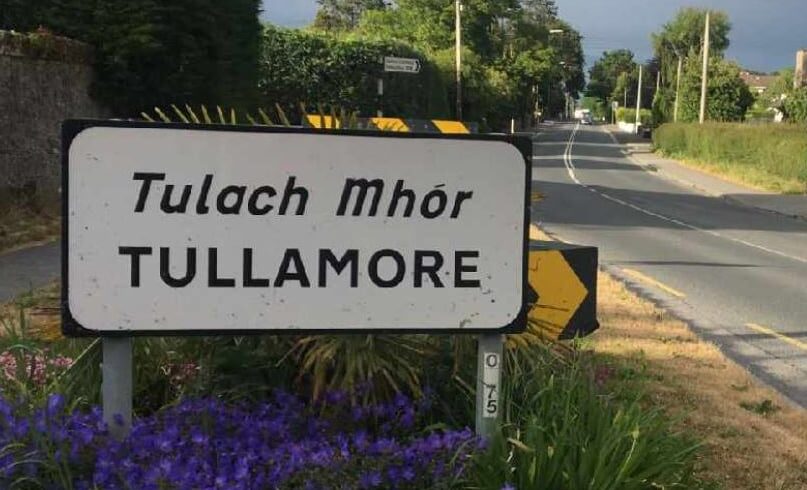
Town councils had their own dedicated budgets which were put to good use by councillors and officials in Tullamore, Birr and Edenderry in the past
IRELAND has always been one of the most centralised states in Europe.
This situation accelerated dramatically since 2011 when the then Fine Gael/Labour administration was forced to take drastic measures to bring the public finances back under control.
Under local government reform measures all the country’s town councils, including three such bodies in Offaly, were abolished while court service changes resulted in the closure of many district courts, including those at Birr and Edenderry.
Details of these changes are graphically illustrated in a study entitled ‘Local and Regional Bodies in Ireland 2012-2016’, published by the Institute of Public Administration.
The study finds that agency rationalisation and alignment programmes mean that the number of local and regional bodies has been cut in half between 2012 and 2016.
Using a database of local and regional non-commercial public bodies compiled by the Institute of Public Administration in 2007 as the baseline, the study identifies 130 local and regional public bodies currently in operation in Ireland, down from 360 in 2007.
The number of local authorities have been reduced from 114 to 31 (mainly due to the abolition of town councils).
Eight regional authorities and two regional assemblies have been replaced by three new regional assemblies.
At the local level, the alignment of community and economic development functions with local authorities has resulted in significant changes to the systems of local governance, with City and County Development Boards and City and County Enterprise Boards being abolished.
Local Community Development Committees and Local Enterprise Offices now operate within each local authority.
At the regional level, organisations have been subsumed by their parent departments or agencies.
Many of these changes are welcome and have resulted in greater efficiencies particularly in the areas of tourism and enterprise promotion at county level.
However, other so-called reforms, in particular the abolition of town councils, have resulted in a dilution of local democracy while saving the taxpayer very little money,
Virtually everyone can agree that the citizens of Offaly were served well by their town councils and their elected members over the course of their century long existence.
Their abolition has also had an economic impact on the towns affected as also has the closure of district courts.
These developments particularly impact on towns such as Birr and Edenderry which now much look exclusively to the county town for their local government and court services.
One could but not ask if it is unstated Government policy to concentrate services in larger urban areas and county towns to the detriment of other urban areas.
If so, the decline of once thriving towns and villages throughout the country will continue, changing the urban landscape of Ireland dramatically.
Since their abolition many voices, including Fianna Fail and the Labour party, have called for the restoration of Town Councils to no avail.
The abolished town councils were nominally replaced by 137 Municipal Districts which are but sub-committees of County Councils, with certain delegated functions.
Their abolition has also had a negative impact on the economics of the affected towns.
Town councils had their own dedicated budgets which were put to good use by councillors and officials in Tullamore, Birr and Edenderry in the past.
Municipal Districts cover very large rural areas in most cases and county councillors on those bodies are often more focused on rural and county-level issues than the problems besetting towns.
It seems to be the case that Municipal Districts are slower to respond to the needs of towns than the old town councils.
Town councils had nine members, drawn from a variety of political backgrounds, who were keenly aware of the issues in their own towns. The same can be said of the dedicated town council staff.
But unfortunately it seems the decline of once thriving towns and villages throughout the country will continue, changing the urban landscape of Ireland dramatically.
Continue Reading