New Delhi: India’s air defence shield is set to grow stronger. The delivery timeline of the fourth squadron of the S-400 air defence system is now clearer. It proved its strength in real combat conditions during Operation Sindoor by intercepting Pakistani attacks. Attention is now on where the next deployment will take place. The focus is on the China and Pakistan borders.
The system became a familiar name post May 2025 military offensive against the neighbour following the deadly terror attack in Pahalgam in Jammu and Kashmir. After India terror launch pads in Pakistan and Pakistan-occupied Kahmir and later their military airbases, Islamabad responded with missiles and fighter jets. Every major strike attempt failed as the S-400 intercepted incoming threats. Enemy aircraft were tracked and targets were neutralised in the air.
At present, India operates three S-400 squadrons. These units guard sensitive western and northern sectors. Russia is preparing to deliver the fourth squadron by the end of May 2026. Defence sources link this delivery to the 2018 India-Russia agreement worth around $5 billion. The contract covers five S-400 squadrons in total.
Add Zee News as a Preferred Source
Delays followed due to the Russia-Ukraine war. Production lines faced pressure. Logistics slowed across defence factories. Russian officials later assured India on timely completion. That assurance now appears to be turning into action. The remaining two squadrons are also expected to reach the country as promised.
Defence analysts say Russian production stabilised by late 2025. Output capacity expanded across missile and radar systems. Priority partners like India now receive advanced systems on schedule. This progress explains the expected arrival of the fourth squadron within months.
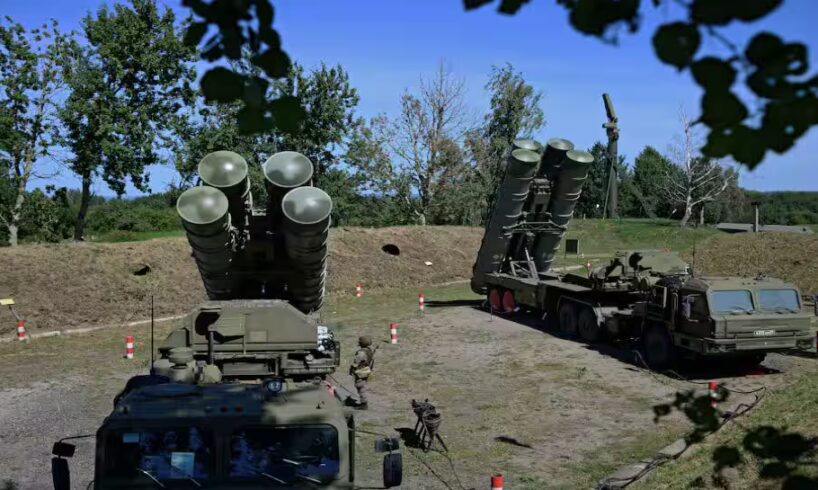
The S-400 stands at the core of India’s long-range air and missile defence. The system tracks aircraft, detects cruise missiles, counters ballistic missiles and identifies drones at long distances. Each squadron carries powerful radar units. Command and control vehicles form the operational brain. Interceptor missiles cover ranges up to 400 kilometres.
The system originates from Russia. Global defence experts rate it among the most advanced air defence platforms. India inducted the S-400 to secure its airspace against modern threats such as stealth fighters, long-range weapons and hypersonic missiles.
The biggest strength is its long reach and flexibility. The missiles can hit targets at short range as well as very long distances. Enemy aircraft or missiles can be destroyed even before they enter Indian airspace.
The system tracks nearly 300 aerial targets at once. It can engage more than 36 targets simultaneously. This capability gives it multi-target dominance during saturation attacks.
India’s geography adds urgency. Pakistan lies to the west. China dominates the eastern frontier. Both neighbours operate advanced air forces. Border deployment limits hostile movement. Strategic assets gain continuous protection.
Global militaries call the S-400 one of the deadliest air defence systems. Advanced radar detects stealth platforms. High-speed missiles strike with precision. Electronic warfare resistance ensures performance during conflict.
India has already deployed three squadrons along sensitive zones. The fourth squadron will strengthen layered air defence coverage. High-risk regions will benefit most. Stand-off attack threats will face tighter control.
Talks are underway for additional interceptor missiles. Around 280 units are under discussion with Russia. These missiles will replenish stocks used during recent military engagement with Pakistan. Indian air defence systems destroyed several high-value targets during that confrontation.
Operational assessments highlight the S-400 role. One Pakistani high-value aerial platform fell at nearly 314 kilometres. A JF-17 fighter jet was intercepted around 200 kilometres. These figures reflect long-range precision. Command integration performed smoothly.
The upcoming delivery will complete the original contract. Parallel plans include maintenance and repair facilities in India. Local MRO units will reduce downtime, long-term costs will decline and system readiness will improve.
For the Indian Air Force, the S-400 is a cornerstone. Future conflicts demand layered defence. Neighbours continue to upgrade offensive capabilities. It will remain central to India’s security strategy.