2026-01-21T07:33:43+00:00
font
Enable Reading Mode
A-
A
A+
Shafaq News
Iraq is not expected to face immediate difficulties in
paying public-sector salaries or pensions in early 2026, according to
government advisers and economists. However, continued payments remain closely
linked to oil prices staying within a limited range, leaving public finances
vulnerable to external market shifts.
Oil revenues account for more than 90% of Iraq’s state
income, making fiscal stability highly sensitive to fluctuations in global
crude prices. Monthly operational spending —primarily salaries, pensions, and
social welfare— absorbs the bulk of government expenditures, reducing
flexibility in the event of a downturn.
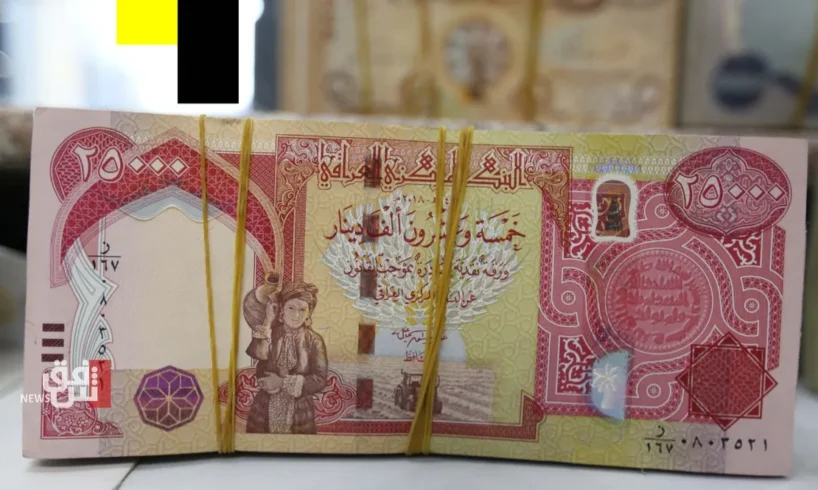
The Prime Minister’s financial adviser, Mudhhir
Mohammed Saleh, said that Iraq’s fixed monthly obligations amount to
approximately 8 trillion Iraqi dinars (around $6.1 billion), excluding
subsidies, debt servicing, and outstanding contractual payments. In comments to
Shafaq News, he noted that oil revenues can cover these commitments provided
the annual average oil price remains above $60 per barrel, assuming exports of
about 3.4 million barrels per day.
*Economists caution that this benchmark reflects
structural fragility rather than financial resilience.* Ahmed Abd Rabbo, an
economic analyst, said salary payments may remain secure in the short term but
warned that the underlying imbalance persists. He pointed to the steady
expansion of the public wage and pension bill over the past decade, alongside
limited growth in non-oil revenues. “The issue is not an immediate inability to
pay,” he said, “but prolonged exposure to oil-market volatility without sufficient
reform.”
Official data highlight the scale of the challenge. The
Eco Iraq Observatory reported that Iraq’s fiscal deficit reached 24.68 trillion
dinars (about $18.8B) by October 2025. Current expenditures accounted for
roughly 75% of total spending, while non-oil revenues totaled less than 10
trillion dinars, compared with oil revenues of nearly 93 trillion dinars during
the same period.
Central Bank figures further show that salaries and
service-related spending reached about 96 trillion dinars, representing close
to 90% of overall expenditure, leaving limited room to absorb revenue shocks or
expand investment.
Read more: The $55 floor: Iraq’s salary safety net under
Nawar al-Saadi, a professor of international economics,
said the main concern is the absence of a stabilizing mechanism. “Oil revenues
are sufficient to fund current spending,” he told Shafaq News, “but they are
not being channeled into economic diversification or a functioning
stabilization fund. Any sudden price decline or unplanned obligation
immediately turns salaries into a sensitive financial and political issue.”
Another economist, Mustafa al-Faraj, estimated that
salary payments remain manageable if oil prices stay above $55 per barrel,
warning that sustained prices below that level would impose significant
constraints unless spending is adjusted. He argued that reforms should focus on
expenditure discipline, including reviewing high-level salaries, addressing
duplicate salary payments, and reassessing legacy compensation schemes,
alongside efforts to activate non-oil sectors such as tourism.
The government of Prime Minister Mohammed Shia
al-Sudani, whose term has recently ended, introduced limited deficit-control
measures, including the sale of unused government vehicles and equipment, a 50%
reduction in fuel allocations, and a freeze on recognizing additional academic
degrees for salary and promotion purposes from January 2026.
Economists say that while these measures may save about
$2 billion annually, and ease pressure in the short term, they remain modest
relative to the overall deficit. Without broader structural reforms targeting
spending rigidity and revenue diversification, Iraq’s ability to sustain salary
payments will continue to depend largely on favorable oil market conditions.
Written and edited by Shafaq News staff.