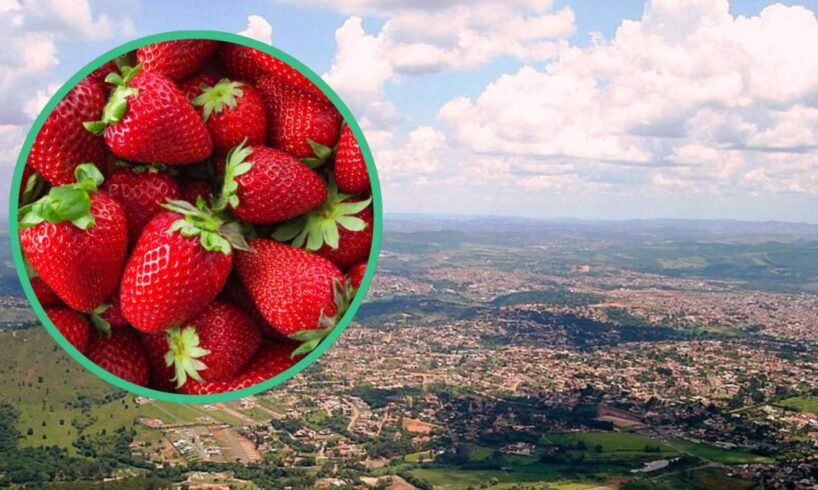
Atibaia, in the interior of São Paulo, has consolidated a historical relationship with strawberries that today combines large-scale agricultural production, official recognition, and a calendar of events that attracts visitors interested in gastronomy and rural tourism.
The municipality, located approximately 65 km from the capital, records an annual harvest of around 3 thousand tons and hosts a traditional festival that brings together flowers, Japanese culture, and recipes featuring the fruit, which have once again gained prominence on social media.
The recent explosion of sweets that use strawberries, such as the so-called “love strawberry,” has helped to put the city back in the spotlight, but the local connection to the fruit’s culture predates its viral spread.
— ARTICLE CONTINUES BELOW —
Production spans decades, has been part of families’ lives, and remains connected to the municipality’s economy, with crops that have become a regional benchmark.
Strawberry cultivation in Atibaia since the 1950s.
Atibaia is the National Strawberry Capital, producing 3 tons per year and attracting tourists with its traditional festival, mild climate, and rural tourism.
Cultivation began in the 1950s, when families of Japanese immigrants started planting strawberries as an alternative source of income in the region.
Over time, work in the fields ceased to be purely artisanal and began to incorporate productive organization and more structured techniques, which helped to keep the activity relevant in the city.
Milder weather conditions and careful management also appear to be factors associated with the growth of strawberry cultivation in Atibaia.
With continued cultivation across generations, the fruit gained prominence in local daily life and became integrated into fairs, commerce, and festivities, reinforcing an identity that is now used by both the productive sector and tourism.
National Strawberry Capital and Law 14.383
National recognition came through federal law.
Em June 27th, 2022, 14.383 Law officially conferred upon the municipality of Atibaia the title of National Strawberry Capital, formalizing an association that was already known in the state and in parts of the country.
The text of the law establishes the title and records its entry into force upon publication.
In practice, the title does not replace actual production nor does it, in itself, create new obligations, but it functions as an institutional milestone for an activity that already had cultural and economic significance in the municipality.
The legal mention reinforces Atibaia’s image as a strawberry-producing hub and is often cited in promotional materials and news reports on the subject.
Production of 3 tons and rural tourism featuring strawberries.
Annual production around 3 thousand tons This is cited in reports and materials about the sector as one of the figures that help explain Atibaia’s visibility on the strawberry map.
During peak harvest periods, the daily output of fruit from the fields tends to increase, which boosts direct sales, regional supply, and visitor interest in purchasing locally sourced fruit.
With this movement, rural tourism gained ground as a complement to agricultural activity.
Part of the public seeks to visit plantations, purchase fresh products, and try recipes with the fruit in a rural setting, with mountain landscapes and more pleasant temperatures compared to more urbanized areas.
This interest is coupled with a travel profile that typically includes gastronomy, shopping, and contact with nature.
Even within this context, a sense of tranquility frequently appears in how visitors describe their experience in the city and in the motivation of those who opt for short getaways from the capital instead of long commutes.
However, the data is more closely linked to the reputation and reputation of the destination than to a single indicator, which can vary depending on the period and scope of the analysis.
Flower and Strawberry Festival and recipes that went viral
The connection between Atibaia and strawberries is also expressed in Flower and Strawberry Party, a traditional event in the municipality.
The program typically combines elements associated with Japanese culture, performances, and gastronomy, with a focus on preparations made with the fruit, such as sweets, jams, and desserts that are presented in different versions throughout the editions.
In 2025, the festival was announced as the 43ª edition, taking place between September 5 and 28, in the Ecological Park, concentrating activities on specific days of the week, according to the event’s organization.
By bringing flowers and strawberries together in the same space, the festival also serves a memorial purpose, as it recalls the beginning of cultivation in the region and the journey of farmers who helped consolidate production.
The presence of recipes that have resurfaced strongly on social media, such as “love strawberries,” tends to increase demand for certain items, but the event’s core remains anchored in a tradition that has been maintained year after year.
Mild climate, beautiful landscapes, and quality of life in the interior of São Paulo state.
Besides strawberries, Atibaia is often associated with mountainous landscapes and a milder climate, characteristics that influence the type of tourism sought in the region.
The municipality often appears as an alternative for those who want to escape the pace of the capital and prioritize short trips, with a program focused on food, shopping, and outdoor activities.
This set of factors helps to explain why the city sustains itself both as an agricultural hub and as a weekend destination.
In this context, the fruit functions as both a symbol and a gateway.
Some visitors come because of the strawberries they saw on social media, but they find an itinerary that includes traditional strawberry production, themed festivals, and experiences connected to the countryside.
With harvests, events, and new gastronomic “fads” alternating over time, to what extent will Atibaia be able to maintain production and tourism growth without losing the rural identity that attracts so many people?