Shafaq News
On an autumn day in 1993, the road to Barzan became a road
of return. A slow funeral convoy wound through the mountains, carrying the
remains of Kurdish leader Mullah Mustafa Barzani and his son Idris, ending
decades of burial in exile and closing a chapter that had long shaped Kurdish
political memory.
People lined the route not only to receive two coffins, but
to witness a moment heavy with meaning. The reburial came two years after the
1991 uprising and reflected a wider transformation, as Kurdistan began
reclaiming figures whose lives and deaths occurred far from home.
Before the convoy reached the interior, crowds gathered at
the Bashmakh border crossing near Al-Sulaymaniyah. Kurdish leaders stood
alongside ordinary citizens, including Jalal Talabani and current Kurdish Nechirvan
Barzani, Idris’s son, together with figures from the Kurdish liberation
movement. The scene conveyed a shared message: Kurdistan could bring its
history back from exile.
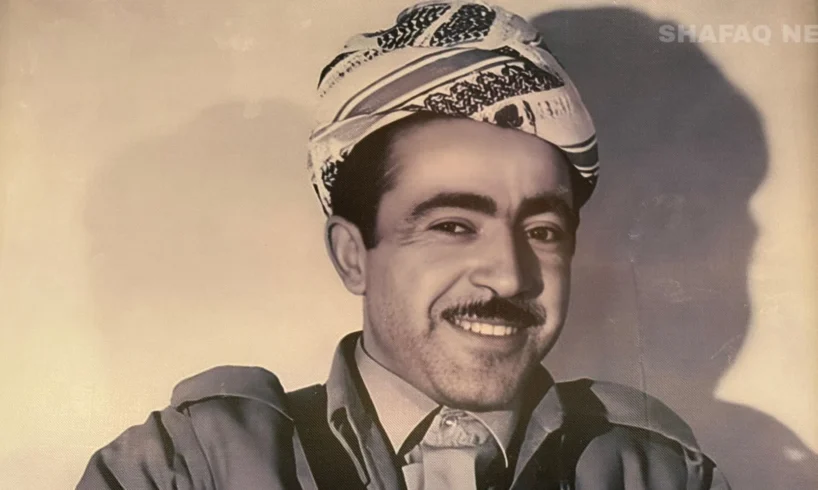
On January 31st, 2026, Kurds mark the 39th anniversary of
the death of Idris Mullah Mustafa Barzani, a figure whose name returns whenever
questions arise about unity, political compromise, and the balance between
armed struggle and negotiation.
Frontline Formative Years
Idris Barzani was born in 1944 in the Barzan area into a family
where politics was not an abstract idea, but daily reality. His childhood
formed amid displacement and uncertainty, conditions that molded a generation
raised under pressure.
In 1961, he joined the Kurdish armed forces, Peshmerga,
during the September Revolution against Baghdad. His early years featured
front-line involvement, including the 1966 battle at Mount Handrin, often cited
by Kurdish sources as a moment that lifted morale at a difficult stage of the
conflict.
When Baghdad and Kurdish leaders reached the March 11, 1970
autonomy agreement, Barzani became active on both political and military
tracks. The deal promised self-rule within four years, but delays and mutual
suspicion quickly eroded confidence.
He followed negotiations closely while remaining present in
the field when political channels stalled. In late 1970, he survived an
assassination attempt during a visit to Baghdad connected to arrangements
linked to implementation and border security, an episode that exposed the
fragility of the process.
By 1974, the autonomy project had collapsed and fighting
resumed. Arabization policies expanded in areas such as Kirkuk and Khanaqin.
While Barzani operated on several fronts, including the Rawanduz Valley, the
following year brought a major setback for the Kurdish movement, triggering
mass displacement and a new wave of exile.
Read more: A Guiding Light Extinguished: remembering IdrisBarzani on the anniversary of his passing
Architecting the Revival
After 1975, Barzani’s role shifted increasingly toward
organization rather than battlefield command.
Working with Leader Massoud Barzani, he helped form a
provisional leadership and coordinated the dispatch of early units associated
with the Kulan uprising, which sought to revive armed activity inside Iraq.
Supporters view this period as a turning point that blocked
defeat from hardening into collapse and restored a sense of continuity at a
moment when many believed the Kurdish movement had reached its end.
In the late 1970s and early 1980s, Barzani also took part in
efforts to narrow divisions among Kurdish factions and promote broader
coordination, steps that later contributed to the creation of the Kurdistan
Front.
Idris Barzani died near Urmia, Iran, on January 31, 1987,
after suffering a heart attack. He was 43.
How Historians View Him
Shwan Hamdamin Khushnaw, head of the history department at
Salahaddin University, portrays Barzani as a leader distinguished by strong
communication skills and a persuasive presence, combining battlefield awareness
with political acumen.
Speaking to Shafaq News, Khushnaw describes Barzani as a
capable diplomat with a wide-ranging vision, able to connect with audiences spanning
Peshmerga fighters, displaced civilians, to senior political figures.
He links Barzani to oversight of key fronts at Mount Handrin
and Zozik, where military advances bolstered Kurdish leverage ahead of the June
29, 1966 political statement and subsequent negotiations that paved the way for
the 1970 autonomy accord.
Presenting Barzani as a steady proponent of Kurdish unity
and reconciliation, Khushnaw credits him with cultivating a reputation as an
“engineer of reconciliation,” a role that helped shape later Kurdish political
frameworks.
A Living Lineage
For many Kurds, Idris Barzani’s legacy lies in his effort to
balance armed struggle with political engagement, and in his conviction that
negotiations without strength on the ground remain inherently fragile.
His experience continues to resonate whenever the Kurdistan Region confronts familiar dilemmas between compromise and confrontation, symbolism and
governance.
Barzani also occupies a central place within the broader
Barzani family legacy that still shapes Kurdish politics. As the father of
Kurdistan Region President Nechirvan Barzani, the brother of Leader Massoud
Barzani, and the uncle of Prime Minister Masrour Barzani, his personal story
remains closely intertwined with the lineage that underpins much of today’s
Kurdish leadership.
Written and edited by Shafaq News staff.