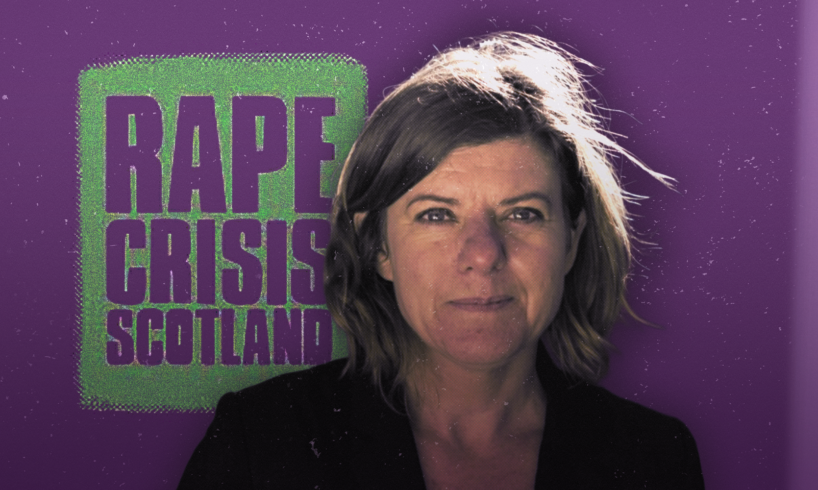
Sandy Brindley’s resignation from Rape Crisis Scotland has been a long time coming.
Rape Crisis Scotland exists to support female survivors of sexual violence and to command trust from the public and the women it supports in doing so.
The charity supports more than 6,000 survivors each year but sustained controversy has overshadowed its mission.
There can be no doubt that the chief executive made a significant, positive impact on the organisation’s legacy, using her influence to raise awareness of sexual violence for over 20 years.
She was unsuccessful in her legal attempt to block boxer Mike Tyson – previously convicted of rape in 1992 – from entering the UK in 2000, but that challenge put the organisation on the map for standing up for women’s rights in the process.
But in recent years, her leadership has been embroiled in controversy.
The calls for Brindley to resign have lingered since September 2024, when an independent report found Edinburgh Rape Crisis Centre (ERCC) did not “protect” women-only spaces, and had not provided single-sex spaces for 16 months.
It found that Edinburgh’s chief executive at the time, Mridul Wadhwa, did not prioritise the needs of rape survivors.
Read more from Unspun:
Brindley had repeatedly backed Wadhwa – a transgender woman – in the role until she resigned in the wake of the independent report.
In a statement, the ERCC said of the leadership change: “The time is right for a change of leadership… we are committed to delivering excellence while taking the recommendations from the independent review to ensure we place survivors’ voices at the heart of our strategy.”
The role held by Wadhwa was reserved only for women, with Brindley stating she had no concerns over the appointment because Wadhwa had significant experience working in the sector.
She said there was no reason why transgender people could not work in rape support centres.
While the Edinburgh centre recognised a “change of leadership” was the best way forward following the damning report, the national organisation was resolute that Brindley would remain in post.
The tribunal was conducted after an employment tribunal found Roz Adams, a counsellor working with the Edinburgh centre, had been unfairly constructively dismissed expressing her belief that service users had the right to know the sex of the staff handling their case.
Ms Adams had advocated for a survivor who wanted to know the sex of a non-binary support worker.
But the tribunal heard that Ms Wadhwa had appeared to form a view that Ms Adams was transphobic, leading to a “completely spurious and mishandled” disciplinary process.
In the aftermath of the controversy, Ms Brindley apologised to survivors whose experience of using rape crisis services had been impacted, but she dismissed calls for her to resign.
Almost two years may have passed since the controversy, but it still looms over Rape Crisis Scotland.
The controversy led to the national organisation’s relationship with the Glasgow and Clyde Rape Crisis (GCRC) being severed.
The Glasgow service withdrew its membership in October 2024, citing the need to uphold “single-sex spaces” and an “all-female workforce”.
The findings of the report significantly damaged the reputation of Rape Crisis Scotland and Brindley’s resignation back in 2024 would have given the organisation a chance to move on.
Now Brindley is stepping down, Rape Crisis Scotland, and the thousands of women it supports, can finally move on from a damaging few years.