2026-02-03T14:35:45+00:00
font
Enable Reading Mode
A-
A
A+
Shafaq News- Gaza
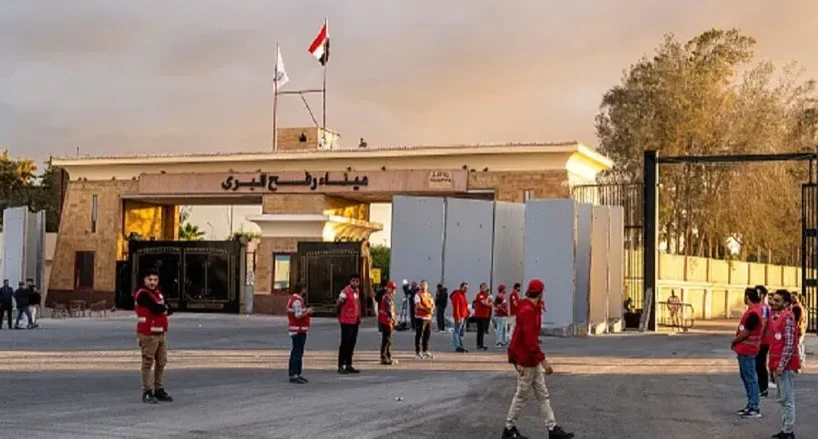
As the Rafah Crossing resumed
operations on February 2 under the second phase of the ceasefire agreement
between Israel and Hamas, Palestinians attempting to return to Gaza described a
journey marked by severe hardship, with some returnees summarizing the
experience with a single word: “death.”
Palestinian media reports indicate
that entry procedures involved multiple layers of screening after travelers
crossed from Egypt, during which individuals were separated, questioned for
extended periods, and deprived of personal belongings, including identification
documents and items belonging to children, such as toys.
Several accounts referred to
repeated diversions to checkpoints away from the crossing, where decisions were
made on who would be allowed to proceed. Of six buses carrying returnees,
according to the reports, only one was ultimately permitted to enter Gaza,
while the remainder were turned back to the Egyptian side.
“قطعة من عذاب جهنم”…شهادات من معبر رفح تكشف التنكيل بالعائدين إلى غزة وتسليمهم للجيش الإسرائيليروى عائدون إلى غزة عبر معبر رفح شهادات قاسية وصادمة عمّا تعرضوا له خلال رحلة العودة، من بينهم المواطنتان صباح الرقب وروتانا الرقب.وبحسب الشهادات، خضع نساء وأطفال لتحقيقات قاسية…
— غزة 24 | التغطية مستمرة (@Gaza24Live) February 3, 2026
Women featured prominently in the
testimonies. Sabah Al-Raqab recounted being held for hours alongside other
women, during which they were restrained, forcibly searched, verbally abused,
threatened with death, and stripped of their belongings before being released
after lengthy questioning.
Another returnee, Rotana Al-Raqab,
said she was taken by an armed group operating near the crossing and
transferred to Israeli forces. “They told me they were protecting people,” she
said, questioning how such protection could involve handing her over while she
was alone.
An elderly Palestinian woman who had
traveled to Egypt for medical treatment, and who was among only 11 of 50 people
allowed to enter, described being humiliated during her return. Recalling the
moment the crossing opened, she said, “I told them to register my name. I
wanted to go back to my children —my longing for Gaza is immense…I did not want
to leave my country, but I was forced to because I was ill and needed
treatment.”
“شوقي لغزة كبير” .. مسنة تروي ساعات التحقيق على يد قوات الاحتلال، ووصول 12 مسافرًا إلى قطاع غزة عبر معبر رفح pic.twitter.com/BNqnZZwCAV
— شبكة قدس الإخبارية (@qudsn) February 3, 2026
In other accounts, a woman who
reached Gaza through the crossing rejected displacement, declaring, “No to
expulsion —no one leaves,” before collapsing in tears when asked about her
experience, which she summed up with the word “death,” while other returnees
called the journey “a piece of hell’s torment,” underscoring that remaining
outside the strip was not a viable alternative.
إحدى اللواتي وصلن غزة اليوم عبر معبر رفح: لا للتهجير، ما حدا يطلع برّة.. pic.twitter.com/PxpLOgGuVp
— 𓂆 Eyad| إِيَادٌ (@ehajjarr) February 2, 2026
The Rafah Crossing reopened in both
directions for the first time since May 2024, following a limited trial run a
day earlier, as part of the ceasefire agreement, after a war that has resulted
in 71,803 deaths and 171,570 injuries, since October 7, 2023. The United
Nations has repeatedly warned that the blockade on Gaza has caused acute
shortages of food, medicine, fuel, and clean water, leaving hospitals
overwhelmed and preventing thousands of patients from traveling for treatment.
In a statement, Hamas condemned the
“deliberate mistreatment” of returnees, particularly women and children,
arguing that the practices were intended to discourage Palestinians from
returning to Gaza. The movement called on international human rights organizations
to document the incidents and urged mediators to ensure unrestricted and safe
passage through the crossing.
The Democratic Front for the
Liberation of Palestine criticized restrictions accompanying the reopening,
warning that limits on the travel of patients and wounded people endanger more
than 20,000 individuals awaiting urgent medical care. The Free Palestine
Movement condemned the treatment of travelers as “a violation of human rights”
and called for immediate intervention to compel Israel to abide by the
agreement and fully reopen the crossing.