Shafaq News
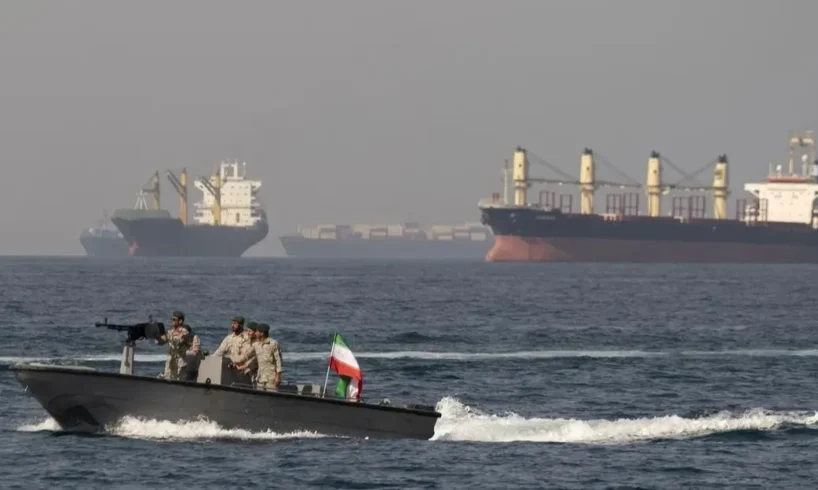
Each time Iran threatens to close the Strait of Hormuz in the event of a
war with the United States, concern reverberates across the region,
particularly in Iraq, given the strait’s role as a vital corridor for global
trade, especially oil and gas shipments. The potential risk to Iraq’s economy
becomes significant if Tehran carries out its threats or if Hormoz closes for
any other reason.
Amid preparations for possible military escalation between Washington
and Tehran should negotiations fail, Iraq, situated at the heart of a region
considered the world’s energy artery, appears among the countries most
vulnerable to rapid fluctuations in oil prices, the dollar exchange rate, and
essential commodities.
Previous experiences show that markets respond to fears before events
materialize. Brent crude recently rose by more than 7%, surpassing $70 per
barrel due to mounting tensions. Prices have historically surged whenever
concerns resurface about threats to navigation in the Strait of Hormuz.
While higher prices may theoretically appear beneficial for Iraq, the
reality is more complex.
Geography and Global Significance
The Strait of Hormuz lies in the eastern part of the Arabian Gulf and
the northwestern part of the Gulf of Oman, two connected waterways leading to
the Indian Ocean. Iran borders the Strait to the north and east, while Oman
borders it to the south and oversees maritime traffic, as shipping lanes fall
within its territorial waters.
Its northwestern boundary begins at the line connecting Ras Sheikh
Masoud on Oman’s Musandam Peninsula to Hengam Island, passing through Qeshm
Island to the Iranian coast. This line separates the Strait of Hormuz from the
Arabian Gulf. The southeastern boundary extends from Ras Dibba on the UAE coast
to Damagheh on the Iranian coast, separating the strait from the Gulf of Oman.
Due to its geographical location, the strait’s climatic conditions allow
year-round navigation. It stretches approximately 167 kilometers in length and
ranges between 33 and 95 kilometers in width, with depths between 60 and 100
meters.
Four islands control the northern entrance of the strait: Greater Tunb,
Lesser Tunb, Abu Mussa (three islands disputed between the UAE and Iran and
controlled by Iran since 1971), and the Iranian island of Farur.
According to a study by the Center for Strategic and International Studies
at Georgetown University, 86% of Middle Eastern oil exports pass near these
three islands, representing nearly half of the energy upon which global
industry, economies, and daily life depend.
Experts, therefore, consider that the party controlling these islands
can influence oil supply routes, which explains Iran’s ability to obstruct or
disrupt navigation in the strait.
The strait constitutes the only maritime passage connecting countries
such as Qatar, Bahrain, Iraq, and Kuwait to international trade routes, while
also serving as a primary gateway for the United Arab Emirates, Saudi Arabia,
Oman, and Iran.
Globally, its strategic importance is reflected in trade volumes: about
11% of global trade passes through it, including 34% of seaborne oil exports
and 30% of liquefied natural gas exports, according to the 2025 report of the
United Nations Conference on Trade and Development (UNCTAD).
By mid-June 2025, average vessel traffic through the strait reached
about 144 ships per day, including 37% oil tankers, 17% container ships, and
13% bulk carriers, according to the same data.
Read more: Iraq’s next Prime Minister held hostage by US-Iran standoff
Opportunity or Shock?
Oil and energy expert Kovand Sherwani affirmed that any Iranian move to
close the Strait would have major repercussions for global trade, including oil
supplies. He told Shafaq News, “Closing the passage would lead Iraq to lose
revenues from 3.5 million bpd.” If the closure were to last just one month, he
added, “Iraq could lose more than $6 billion, equivalent to about 90% of its
monthly revenues.”
Sherwani noted that the only export outlet relatively distant from
potential military operations is the pipeline to Turkiye’s Ceyhan port with the
Kurdistan Region, which currently transports about 200,000 bpd. However, this
accounts for less than 10% of total exports. “It could rise to one million bpd
with technical modifications, which would help mitigate the shock,” he
explained.
Oil expert Haider Abdul-Jabbar Al-Battat stated that oil prices
typically rise globally whenever Gulf supplies are threatened. Speaking to
Shafaq News, he added that this “could grant Iraq temporary financial gains,”
warning that “any actual disruption to exports through the Gulf or closure of
the strait would mean revenue stoppage despite higher global prices.”
Dollar Panic in Iraq
Regarding the dollar exchange rate, Iraqi markets appear particularly
sensitive. Economic researcher Ahmed Eid told Shafaq News that Iraqi markets
are psychologically affected before financial impacts occur. Any escalation, he
noted, would drive traders and citizens to increase demand for the dollar as a
hedge, “which pressures the exchange rate in the parallel market, especially if
accompanied by stricter US measures on external transfers.”
Al-Battat agreed, explaining that the dollar rises locally due to panic
and precautionary demand. He stated that tightening sanctions on Iran could
restrict transfers and pressure the currency window, while speculation
accelerates the increase, even if monetary fundamentals remain unchanged.
Sherwani warned of a more severe scenario, as declining oil revenues
would lead to a dollar shortage in markets. “The rate could reach about 200,000
dinars per $100 within a short period,” he said, expressing fears that this
would severely impact low-income groups as the dinar’s value declines and
commodity prices rise.
Read more: Iran–US nuclear talks 2026: Diplomatic breakthrough orimminent military confrontation?
Escalating Prices
The repercussions do not stop at oil and the dollar. Most Gulf trade,
including Iraq’s, passes through the Strait of Hormuz, “meaning any closure
would lead to shortages and price hikes across the region, including Qatar,
Saudi Arabia, Bahrain, and the UAE,” Sherwani projected.
Al-Battat also anticipated a slowdown or partial halt in trade crossings
with Iran, along with rising shipping and insurance costs, resulting in
shortages of certain food and construction materials. He stressed that
medicines and essential goods would be the first affected, adding that “higher
dollar rates and transport costs immediately reflect in prices, and any banking
or logistical disruption directly reaches the market.”
Eid attributed the anticipated crisis to the nature of Iraq’s rentier
economy, which depends heavily on oil. While Iraq may temporarily benefit from
rising prices, “this positive aspect is fragile, as increasing geopolitical
risks raise insurance and transport costs and affect investment flows. Iraq is
among the most vulnerable to any regional conflict because it is an arena of
intersecting interests,” he explained.
What Is the Solution?
In response to these concerns, Al-Battat urged measures to fortify the
economy, including tighter regulation of the dollar market to curb speculation,
building strategic reserves of food and medicine, diversifying trade channels,
and expanding non-oil exports.
Eid emphasized that maintaining internal political stability and
exercising restraint in political and security discourse represent the first
line of defense in shielding the economy from external shocks.
Read more: Without oil: Iraq’s economic future hanging in the balance
Written and edited by Shafaq News staff.