The wheeze behind the creation of Alba was simple. You could create a “supermajority” of independence-supporting MSPs by convincing SNP voters not to give both votes to the SNP.
In 2016, Nicola Sturgeon won 953,587 list votes and, because of the way the d’Hondt system works, she got just four MSPs.
Meanwhile, Labour and the Tories won 45 MSPs with a combined list vote tally of 960,000.
The argument was that if those “wasted” SNP votes went to another pro-independence party, you could game the system and pretty much fill Holyrood with pro-Yes MSPs.
It was an idea that had been about for a long time, but some on the independence side started to take it seriously in June 2020 when Mark Whittet, the lawyer behind the little-known Scotland’s Independence Referendum Party, commissioned a poll asking how successful his list-only party would be if Alex Salmond was top of the ballot paper.
Survation found that prospect would win over 28% of existing SNP voters and could ultimately lead to 23 MSPs.
But that did not happen. It didn’t even come close.
The problem with Alba’s theory was that SNP voters quite liked the SNP. They did not particularly want to vote for anyone else. And the SNP was quite keen to keep their voters voting SNP.
Alba’s candidates won a total 44,913 votes, just 1.66% of the regional vote. A year later, at the local elections, they failed to return even one councillor.
And that was when the party had both Alex Salmond in charge and cash.
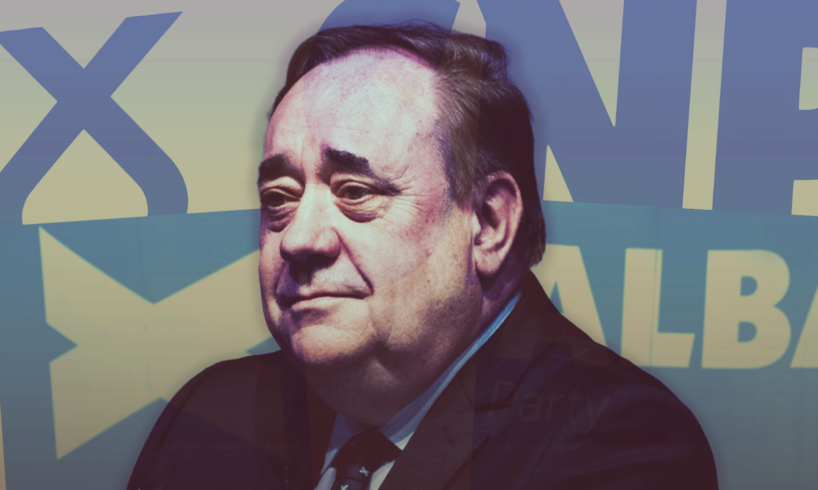
Now it has neither. Can it survive?
Kenny MacAskill, the man who replaced Salmond, says the party is unlikely to field candidates in May’s Holyrood election because it cannot afford deposits or campaigning costs.
He describes the situation as “very difficult” and attributes the party’s position to alleged fraud, currently under police investigation following claims of financial irregularities dating back to last year.
But Alba has not been a happy bunch for some time. There have been allegations of internal vote rigging.
There have long been questions over how money has been spent and who on the ruling NEC looked the other way, rather than act appropriately.
The latest internal manoeuvring underscores the party’s fragility.
Four senior figures — Tommy Sheridan, Angus MacNeil, Christina Hendry and Suzanne Blackley — have offered to step in with a transition team to keep Alba alive for the election.
Their intervention is not so much a rescue plan as a vote of no confidence in MacAskill.
He is not keen to hand over the reins just yet, certainly not while there is no plan to tackle the financial crisis.
There are about 4,000 members left and most of them are founding members who are emotionally attached to the name and because of Salmond.
But even if they can raised enough cash through a crowdfunder, candidates still need to get everything signed off with the Electoral Commission.
The whole situation would be challenging enough if Alba had any momentum. It does not.
What should be frustrating for Alba is that voters want change.
On Monday, Luke Tryl from More in Common took to social media to share some of his latest focus-group research of Scottish voters.
Basically, we are restless and frustrated. Just scunnered.
When asked what made people optimistic, Allison told the pollster it was “things are so shit”.
“Really are. I just feel as if everything’s exposed now and people are like actually we don’t want this.”
In this sort of environment, insurgent parties should thrive. Yet Alba has struggled to capture any of that floating discontent.
There is also a leadership vacuum across Scottish politics, as Tryl’s research notes.
Voters struggle to identify figures who match the stature of Nicola Sturgeon at her peak or Ruth Davidson on the right.
John Swinney is seen as safe but uninspiring. Again, that absence of dominant personalities creates space for challengers.
At the very least, it would reward parties able to project stability and relevance.
Still, it would be premature to write Alba’s obituary.
Parties have recovered from worse. Financial crises can be stabilised and leadership rows can be resolved.
Maybe Alba’s insurgent energy can return, particularly if constitutional politics heats up again. It’s a big maybe, though.
The dream may never die, as Salmond used to say, but Alba is currently on life support.