Shafaq
News
The
storm ignited by US Ambassador to Israel Mike Huckabee’s assertion that Israel
holds a “religious right” to land stretching from the Nile to the Euphrates has
evolved into more than a diplomatic controversy. Washington moved swiftly to
contain the fallout, privately assuring regional governments that the remarks
were personal and not a shift in policy, but the episode has exposed a
recurring tension in Trump-aligned diplomacy: the fusion of evangelical
ideology with official representation.
Immediately,
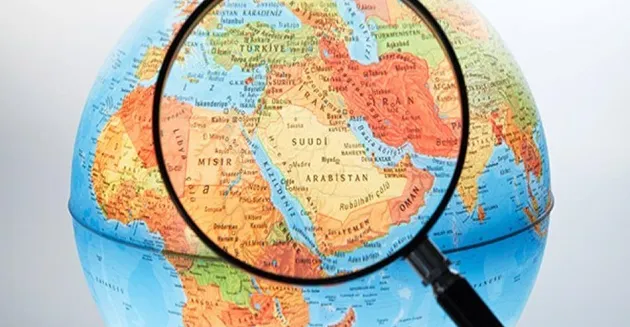
Arab and Islamic governments —including Iraq, Saudi Arabia, Jordan, Egypt, the
UAE, and Palestine— condemned the comments as provocative and destabilizing.
Huckabee had told conservative commentator Tucker Carlson that when asked about
biblical borders extending across Egypt, Iraq, Syria, Lebanon, Jordan, and
parts of Saudi Arabia, “It would be fine if they took it all.” He later
described the remark as “somewhat of a hyperbolic statement,” adding that
Israel was not seeking to take over the region but leaving open the possibility
of territorial expansion in the event of war.
Yet
the damage had already spread across diplomatic channels. Senior Trump
officials quietly reassured regional capitals that the ambassador’s comments
did not reflect any change in US policy. A US Embassy spokesperson reiterated
that Huckabee’s full remarks made clear Israel had no desire to alter its
current boundaries. Israeli officials, for their part, did not immediately
address either the interview or the wave of regional criticism.
Ideology
Inside Diplomacy
Professor
Hussein al-Deek, an international relations scholar at the University of Haifa,
argues the issue extends beyond personal belief. “The US ambassador in Israel
is America’s chief diplomat there, and any statement he makes reflects official
US policy, not merely his personal convictions as a former pastor or governor,”
he told Shafaq News.
Al-Deek
contends that invoking “Greater Israel” imagery carries serious legal and
political implications. “When he speaks of Israel stretching across the Middle
East, he includes Egypt, Palestine, Lebanon, Syria, Jordan, Iraq, and parts of
Saudi Arabia. Such statements violate international law and the sovereignty of
these states,” he noted, warning that they risk legitimizing occupation and
annexation narratives.
Lebanese
political analyst Ghaleb Sarhan places Huckabee’s remarks within a deeper
ideological current, considering them stemming from a profound religious and
political background, as the ambassador “belongs to the Christian Zionist
evangelical school in the United States, which embraces biblical claims about
the land from the Nile to the Euphrates.”
Sarhan
sees layered messaging at work. The first, he argues, reinforces unwavering US
backing for Israel. The second offers religious cover for Israeli military
actions. The third sends what he describes as “provocative signals” to targeted
regional states, as reflected in the force of their reactions.
A
Familiar Pattern Matters
Huckabee’s
case is not unprecedented. During Donald Trump’s previous administration,
Ambassador David Friedman repeatedly made statements widely interpreted as
supportive of Israeli annexation. He once asserted that Israel had a right to
“retain some” of the West Bank and described settlements as “part of Israel.”
Under
Trump-aligned envoys, statements have at times drifted beyond traditional
diplomatic language, blurring the line between personal conviction and official
messaging. While official US policy continues to reference negotiated solutions
and regional stability, rhetorical gestures have occasionally drifted toward
maximalist interpretations.
The
current administration’s rapid clarification suggests institutional continuity
remains intact. But repeated episodes of ideological rhetoric risk shaping
perception regardless of formal policy lines.
Regional
Calculations
For
Iraqi politician Mithal al-Alusi, the controversy may be overstated. He views
the episode as a blending of religious interpretation and diplomacy rather than
a strategic blueprint. “These are interpretive concepts not adopted by every
American or every Israeli,” he told Shafaq News, adding that perhaps only Prime
Minister Benjamin Netanyahu employs such language for populist mobilization.
“I do not give these statements significant
weight. They do not pose a real threat if regional states continue building
strong national institutions, rejecting extremism, and protecting human
rights,” he remarked, stressing that “countries will not be intimidated by an
ideological elderly ambassador.”
Yet
other analysts warn that language matters, especially in a region marked by
active conflicts and unresolved borders.
Radwan
Qassem, founder of Germany-based Bruggen Center for Strategic Studies and
International Relations, argues Huckabee’s remarks reflect enduring ideological
currents within segments of Israeli thought. “The idea of Greater Israel is
rooted in a religious-ideological background that views this region as the
Promised Land,” he told our agency, noting that such thinking has existed since
Israel’s establishment but is now articulated more openly.
Qassem
pointed to Israel’s expansion of control in Gaza, the West Bank, and the Golan
Heights as part of what he describes as a gradual implementation of that
vision. Whether one agrees with that framing or not, he suggests the present
climate has lowered the threshold for explicit statements.
Egyptian
writer and researcher Mounir Adib also views the rhetoric through a strategic
lens, pointing out that the objective of such statements is to “empower Israel
to impose a fait accompli on the Palestinian scene and advance its interests in
the Middle East.” He also warned that the implications “affect the entire
regional security structure, not only Palestinians.”
Public
Rhetoric, Private Reassurance
The
episode underscores a delicate balancing act in US diplomacy. On one hand,
evangelical constituencies remain an influential political force in American
domestic politics, particularly within conservative circles. On the other,
Washington maintains strategic partnerships across the Arab world, including
with states directly referenced in the biblical geography Huckabee described.
Even
when policy remains unchanged, diplomatic language alone can strain trust.
The
Israeli government’s silence in a region already strained by war in Gaza,
tensions along Lebanon’s southern border, and instability in Syria and Iraq can
also amplify anxiety.
The
Broader Implication
Huckabee’s
remarks may not herald a formal redefinition of US Middle East policy. Official
statements continue to affirm existing diplomatic frameworks. Yet the
repetition of ideological language by high-ranking envoys risks normalizing
expansionist narratives in political discourse.
The
controversy illustrates how language alone can reshape regional perceptions
—even when policy frameworks remain intact.
Written
and edited by Shafaq News staff.
Read more:TheWar that Never Ends: A century in Palestine