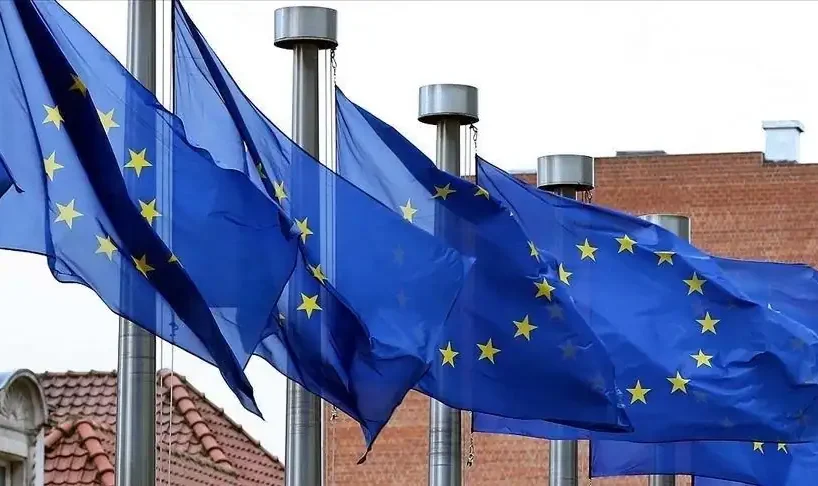
1 European Parliament votes on EU single market for defence — proposals to close critical capability gaps; Germany’s 2026 budget allocates €82.69bn (~$96bn) for Bundeswehr (+25% y/y); Merz targets 3.5% GDP by 2029; NATO’s 5% target by 2035; defence stocks dominant growth trade of 2026 — The European Parliament voted Wednesday on proposals to move toward a genuine EU single market for defence, aiming to close gaps identified in the Commission’s white paper on European Defence Readiness 2030; Germany’s 2026 federal budget allocates €82.69 billion (~$96 billion) for the Bundeswehr, a 25% year-on-year increase pushing spending to an estimated 2.6% of GDP; Chancellor Friedrich Merz aims to reach the 3.5% NATO target by 2029, six years ahead of the alliance’s 2035 guideline; in December 2025, German lawmakers approved procurement projects worth nearly €50 billion (~$58 billion); EU defence spending has increased 60% from 2020 to 2025, rising above 2% of GDP; the ReArm Europe Plan/Readiness 2030 envisions €800 billion (~$930 billion) in annual investment; Commissioner for Defence Andrius Kubilius has called for a “Big Bang” approach with a clear industry output plan and a 2030 target; 20 of 28 European NATO members now meet the 2% spending threshold
2 Macron-Merz launch Franco-German nuclear steering group — “forward deterrence” doctrine; 8 European allies sign up for nuclear-armed aircraft deployments; France increasing warheads for first time since 1990s; Le Pen opposition adds urgency before 2027 French elections — President Macron announced on March 2 from the Île Longue submarine base the most substantial shift in French nuclear posture in decades; he outlined a “forward nuclear deterrence strategy” allowing the temporary deployment of nuclear-armed Rafale aircraft to allied bases; eight countries signed up: Germany, Britain, Poland, Netherlands, Belgium, Greece, Sweden and Denmark; a Franco-German nuclear steering group was established with Germany to participate conventionally in French nuclear exercises from 2026; Macron said France will increase its warhead count above the current ~290 — the first expansion since the 1990s — and will stop disclosing the arsenal’s exact size; he declared: “To be free, one needs to be feared”; Poland’s PM Tusk wrote: “We are arming up together with our friends so that our enemies will never dare to attack us”; analysts note Macron is racing to lock in arrangements before the April 2027 presidential election, as Le Pen’s National Rally opposes sharing France’s nuclear deterrence
3 Germany breaks with UK and France on Iran — Merz calls Tehran regime “terrorist” and aligns with US-Israel; EU triad fractures; Spain leads principled opposition; Iranian drone with Russian component hits British base in Cyprus; France deploys missile defence to island — Chancellor Merz publicly aligned with the US-Israeli position, calling the Iranian regime “terrorist” and saying Germany shares the interest in “seeing an end to this regime’s terror and its dangerous nuclear and ballistic armament”; the statement broke Germany’s alignment with the other members of the EU triad — the UK and France — who had backed the 2015 nuclear deal even after Trump revoked it; Spain leads principled opposition to the war; an Iranian Shahed-136 drone struck the British RAF Akrotiri airbase in EU member Cyprus on March 2, with debris containing a Russian-made Kometa-M navigation receiver; Larnaca Airport cancelled 60+ flights; France deployed SAMP-T missile defence systems to Cyprus; the UK sent destroyer HMS Duncan; the strike raised questions about invoking Article 42.7 of the EU Treaty — the mutual defence clause; von der Leyen called on members to support progress toward an EU defence union
4 US launches Section 301 trade probes targeting EU alongside 15 economies — USTR Greer cites “excess manufacturing capacity”; Supreme Court IEEPA ruling forces legal pivot; remedies targeted by July; Vanguard estimates tariffs reduce eurozone GDP by 0.3pp in 2026 — The US Trade Representative opened Section 301 investigations targeting the EU and 15 other economies, pivoting to the Trade Act of 1974 after the Supreme Court struck down IEEPA-based “reciprocal” tariffs; USTR Jamieson Greer aims to complete investigations and impose remedies before Section 122 temporary tariffs expire in July; public comments are due by April 15; the EU is America’s largest trade partner; Vanguard estimates higher tariffs will reduce eurozone GDP by 0.3 percentage points in 2026; the proposed 15% US tariff rate would increase the effective EU tariff by 0.8 percentage points; the ECB now faces simultaneous trade and energy shocks; Switzerland and Norway were also named in the probes
5 Rheinmetall guides FY26 sales surging 40–45% to €14–14.5bn (~$16.3bn) — order backlog to double to €135bn (~$157bn); CEO Papperger: “prime position to replenish US missile stockpiles”; Leonardo FY25 sales +29% to €9.94bn (~$11.5bn); European defence sector outperforms all others — Rheinmetall guided revenue of €14–14.5 billion (~$16.3–16.9 billion) for 2026, a 40–45% increase, with CEO Armin Papperger positioning the company as a transatlantic defence platform capable of replenishing US missile stockpiles used in the Iran war; the order backlog is expected to double to €135 billion (~$157 billion); Italy’s Leonardo posted FY25 sales of €9.94 billion (~$11.5 billion), up 29%, with operating profit of €1.68 billion (~$1.9 billion) and 2026 margin guidance of ~19%; Leonardo shares surged 7.8% on Thursday; defence stocks are the dominant growth trade across European markets in 2026, consistently outperforming the broader Stoxx 600 which has fallen in five of seven sessions since the Iran war began