2026-04-04T20:09:08+00:00
font
Enable Reading Mode
A-
A
A+
Shafaq News- Baghdad
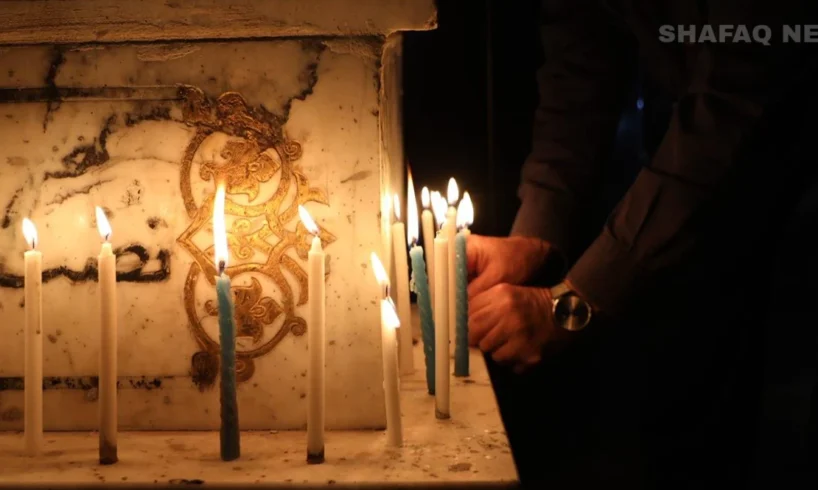
On “Feyli Martyr Day” (April 4), the community commemorates
its sacrifices amid unresolved issues that have yet to be fully addressed. Each
year, calls grow louder for the restoration of these rights, as Feyli Kurds
hold protests and mark the occasion in a recurring annual display of
remembrance and demands for justice.
Iraqi lawmaker Haider Abu Tira described the current
situation of Feyli Kurds as “tragic,” stating that they have yet to secure
basic rights such as citizenship and financial compensation guaranteed under
the Martyrs Foundation law. He also pointed to their marginalization and weak
representation in state institutions, noting that “nothing has been achieved to
do justice to this authentic community despite repeated demands and official
correspondence.”
Abu Tira added that the community’s political representation
remains limited to a single parliamentary seat, alongside representation in
Wasit and Baghdad provincial councils. He explained that before 2019, Feyli
Kurds held two positions in Wasit, deputy governor and deputy director of
education, but were later stripped of these roles. “This does not reflect real
representation for a broad community and does not match the scale of sacrifices
it has made,” he said.
The federal government officially designated April 4 as
Feyli Martyr Day following successive campaigns of forced displacement and
genocide against the community, which included stripping them of Iraqi
citizenship, classifying them as Iranians, confiscating their assets, deporting
hundreds of thousands, and the disappearance of more than 20,000 young men
whose remains have yet to be found.
Fouad Ali Akbar, advisor on Feyli affairs to the Iraqi
parliament, stated that the community endured severe atrocities, including
forced displacement, killings, arbitrary detention, loss of identity, and
seizure of both movable and immovable property.
Read more: Mass graves, missing thousands: Feyli Kurd families still seek answers
Despite nearly three decades since the fall of the former
regime, he noted that while some have regained part of their rights, the
majority continue to suffer. Thousands of victims are still listed as alive in
civil records, and their families remain uncompensated, while many face complex
property disputes in courts.
He also highlighted bureaucratic obstacles that hinder
access to rights, including administrative delays within institutions
responsible for martyrs and political prisoners, discouraging many from
pursuing their claims. “These files require serious review and genuine
political will,” he said, stressing that many rights remain denied and the
voices of Feyli Kurds largely unheard.
On November 29, 2010, the Iraqi High Criminal Court ruled
that the crimes committed against Feyli Kurds, including displacement,
disappearance, and rights confiscation, constituted genocide, affirming that
these acts were systematic rather than incidental.
Subsequently, on December 8, 2010, the Iraqi government,
followed by parliament on August 1 of the same year, issued decisions pledging
to address the consequences of these violations, provide compensation, trace
missing persons, and restore citizenship and property rights.
Historically, Feyli Kurds have faced compounded challenges,
including forced displacement, denationalization, property confiscation,
arrests, and systematic killings during the rule of former president Ahmed
Hassan al-Bakr in 1970 and 1975, and continuing under Saddam Hussein in 1980,
according to historians and historical sources.
Dhuha Al-Mandalawi, a member of the Feyli National
Framework, stressed the continued demand for rights in recognition of the
community’s sacrifices and suffering. She said Feyli Kurds still endure
marginalization and injustice, with many victims’ remains yet to be recovered
from mass graves, calling on authorities to deliver justice.
Key demands remain the recovery of victims’ remains, restoration
of citizenship, financial compensation for confiscated property, and meaningful
representation in state institutions, rights the Feyli Kurds have sought for
nearly three decades.
Despite official judicial recognition of genocide, delays in
implementing laws and delivering justice persist, leaving unresolved issues,
from citizenship restoration to political representation and civil rights, as
unmet national priorities.
Read more: Feyli Kurds: A “blood-stained” wound still awaiting justice after 46 years