Shafaq News
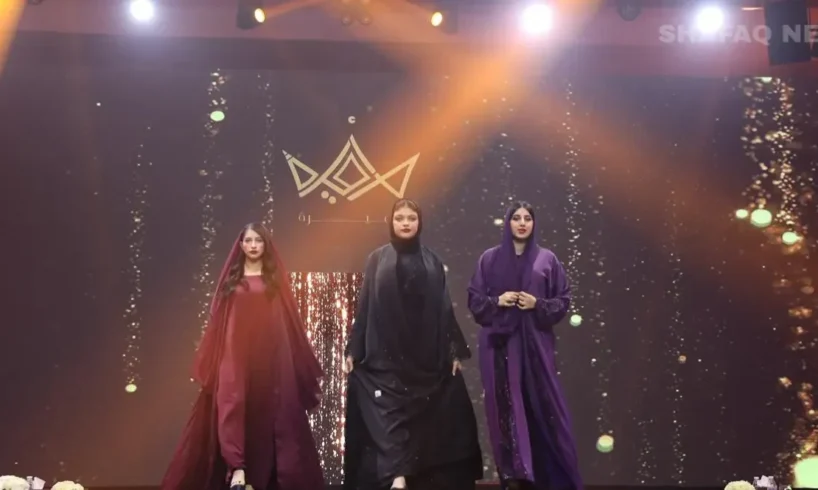
On the runway in Erbil of Iraqi Kurdistan,
Kurdish-inspired collections have shown that fashion in Iraq can speak with
confidence, color, and cultural depth. Events such as Kurdistan Fashion Week,
along with international appearances by Kurdish designers, have offered a
glimpse of what Iraqi design can achieve when talent finds a stage.
Kurdish traditional clothing, known for its layered
fabrics, vibrant colors, intricate embroidery, and wide belts worn over long
dresses, has long been a symbol of identity and celebration. Designers
increasingly reinterpret these elements into contemporary pieces, blending
heritage with global fashion trends.
One of the clearest examples came from Kurdish
designer Lara Dizeyee, whose collection “Enchanted Milan” drew attention at
Milan Fashion Week last year. Over nine months, she created 30 pieces inspired
by Kurdish history and culture, weaving in themes linked to Nowruz, the Kurdish
and Persian New Year, symbols from Roj Hilat (Eastern Kurdistan, largely in
Iran), and legendary figures such as Shah Zanan, or Ishtar, an ancient
Mesopotamian goddess. Her goal, she said, was to immerse Milan in Kurdish colors
and stories.
That visibility, however, remains the exception rather
than the rule.
Across Iraq, fashion design continues to survive more
through personal determination than institutional support. Designers work in a
fragmented environment shaped by weak official backing, limited exposure,
rising material costs, and the absence of a professional body that can
represent the sector and protect standards.
Saeed Al-Obaidi, a designer and faculty member at
Baghdad’s College of Fine Arts, one of Iraq’s main academic art institutions,
said the problem begins with a basic confusion over who counts as a designer.
In his view, the role has increasingly been taken over by tailors who can
produce garments but lack the academic and artistic training that fashion
design requires.
He described the discipline as one built on complex
details, yet in Iraq, the distinction between tailoring and design has become
blurred. As a result, “many of those now presented as designers are neither
academics nor professionals, while trained talent is receiving little media
attention and gradually disappearing from view.”
That weak visibility is compounded by the lack of
professional organization. Without a dedicated union or strong institutional
framework, Iraqi designers often work in isolation, with few channels to
develop their careers or market their work. Al-Obaidi said most local fashion
shows remain basic and popular in style, falling short of international
standards, with the notable exception of some elite events staged by the Iraqi
Fashion House, a state-run institution founded in the 1970s.
The market itself also remains narrow, as demand is
still centered largely on traditional garments such as dishdashas and
jellabiyas —loose-fitting robes commonly worn across the Middle East— leaving
limited room for broader experimentation in contemporary fashion. Al-Obaidi
said his faculty is trying to widen public understanding of design through
workshops and by bringing in international designers, in an effort to build a
more professional culture around the field.
Even when Iraqi designers are invited abroad, the cost
of participation can be prohibitive. Travel, accommodation, models, and
photographers all have to be covered personally, making international exposure
difficult for all but a small number of designers. According to Al-Obaidi, most
simply cannot afford it.
For those working behind the scenes of the industry,
the obstacles are also practical. Nour Hadi, who works in fashion management,
said Iraq does not produce thread locally, forcing designers to rely on
imported fabrics and materials purchased in foreign currency. “That raises
production costs and adds pressure to an already fragile sector.” She also
pointed to weak public confidence in local products and the lack of financial
support for fashion entrepreneurs.
In the Kurdistan Region, the scene appears more
active, but it is not free of the same structural problems. Designers there
still depend heavily on imports from Turkiye and China, while outdated
production facilities and small-scale workshops limit the ability of local
brands to compete more broadly.
Yet the Kurdistan experience also offers a clue to
what could work for Iraq as a whole: cultural identity can be a strength when
paired with visibility, investment, and professional support. Kurdish heritage
has already given designers a distinct language that resonates beyond the local
market.
“The wider Iraqi fashion scene has no shortage of
talent, but until that talent is backed by stronger institutions, better
resources, and clearer recognition of design as a profession, much of it will
remain stitched in isolation,” Al-Obaidi concluded.
Written and edited by Shafaq News staff.