Shafaq News
Iraq’s
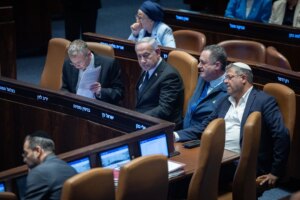
parliament is 70 days past the constitutional deadline to elect a president,
with a new session set for April 11, and whether it produces a result or
another postponement, the constitution offers no answer for what happens if it
does not.
This is not
an anomaly. It is the operating logic of post-2003 Iraqi governance.
Since the
fall of Saddam Hussein, Iraq has formed ten governments, none on schedule. The
shortest delay —the 2014 government of Haider al-Abadi— took 131 days,
compressed by international pressure and the existential emergency of ISIS’s
advance on Baghdad. The longest, the 2022 government of Mohammed Shia
al-Sudani, required 382 days, passing through armed clashes, the storming of
the heavily fortified Green Zone, which houses diplomatic buildings, and the
wholesale withdrawal of Muqtada al-Sadr’s movement bloc (The Sadrist) from
parliament. The current impasse, at 148 days since the November 2025 elections
and counting, sits closer to the norm than the exception.
Read more: A political norm shaping Iraq’s governments
“Since
2003 until today, governments have not actually stabilized, except for the 2006
and 2010 administrations,” political analyst Daoud al-Halfaya told Shafaq
News, referring to Nouri al-Maliki’s two terms, themselves born of prolonged
deadlock. The pattern, al-Halfaya argued, is not accidental: “Successive
governments have been staffed not with strong national figures but with weak
ones, undermining the capacity for decisive decision-making and any prospect of
institutional stability.”
The
constitution mandates that a president be elected within 30 days of
parliament’s first session. That session convened on December 29, 2025. The
deadline passed on January 29, 2026, unmet and unremarked upon by any
enforcement mechanism, because none exists. What followed was a constitutional
crisis in the legal sense, but at the same time, it is something more
corrosive: a constitutional norm treated, by all parties, as optional.
The
architecture of that weakness was partly assembled by judicial fiat. On March
25, 2010, the Federal Supreme Court issued Decision No. 25/Federal/2010, ruling
that the constitutional term “largest parliamentary bloc” could refer
either to the list winning the most seats in an election, or to a coalition
assembled inside parliament after results were ratified. The practical transferred
the right to form a government away from Ayad Allawi, whose Al-Iraqiya List had
won the most seats, and toward al-Maliki, who had not.
The ruling
has reverberated through every government formation since. It is widely seen as
having eroded public reverence toward both the constitution and the court,
precisely because it appeared to subordinate electoral outcomes to
post-election political maneuvering.
Iraq’s
Supreme Judicial Council President, Judge Faiq Zaidan, has himself acknowledged
the damage, describing Article 76 of the constitution as among its most
contentious provisions. A literal reading, he has argued, would restrict the
“largest bloc” designation to whichever list won the most votes;
allowing post-election coalitions to claim that status distorts voter intent
and undermines legitimacy.
Read more: Iraq’s Parliament “Largest Bloc”: A Renewed Struggle over Power
Ihsan
al-Shammari, head of the Iraqi Political Thinking Center, told Shafaq News that
“a serious error was committed in 2010 in interpreting the largest
bloc,” and that the Federal Court’s ruling must be reconsidered. al-Shammari
agree with Judge Zaidan, calling for a constitutional amendment or revision of
parliamentary bylaws to prevent further cycles of delay.
Al-Shammari
also identifies the emergence of rival Shia leaderships as a compounding
factor: “Shia parties have always disagreed over who assumes the
premiership and how ministerial portfolios are distributed, and the rise of new
political leaderships has complicated matters further, because these figures
threaten traditional hierarchies —leading to maneuvers around the largest bloc
even when it commands genuine popular support.”
Aqeel
al-Rudaini, spokesperson for former Prime Minister al-Abadi’s al-Nasr
coalition, is more direct: “Quota politics, internal power struggles,
political money and influence among parties, and the presence of weapons
outside state authority have all contributed to delaying government
formation.” The last item on that list —armed factions operating beyond
the reach of the state— is not a peripheral concern. It is a negotiating
variable.
According
to Al-Shammari, the regional interference [especially from the United States
and Iran] sometimes prevents government formation outright or places a veto on a
specific candidate, directly affecting the parliamentary confidence vote.”
Al-Rudaini also stressed that “every ethnic community and political bloc
carries regional influence behind it, and this damages Iraq’s national interest
while deepening internal divisions.”
Al-Halfaya
frames the consequence plainly: political competition has shifted to
“competing for the backing of external powers rather than policy
programs,” removing national interest from the calculus entirely.
The
two-thirds quorum requirement for the presidential vote, imposed by the Federal
Supreme Court since 2022, has made the calculus more punishing still. Any bloc
controlling more than a third of parliament’s 329 seats holds effective veto
power over the entire process —the so-called “blocking third.” What
was designed as a consensus mechanism has become, in practice, a tool for
extraction: no presidency, no prime ministerial mandate, no government, until
the holdouts are satisfied.
In an
attempt to break the pattern, the Speaker warned MPs this week that absences
from the April 11 session would be formally recorded and penalized with a
one-million-dinar (approximately $763) salary deduction —the first-time
attendance at a presidential vote has carried any stated consequence. In a
political economy where ministerial portfolios are negotiated in billions, the
figure measures the distance between the penalty available and the stakes being
protected.
The cost of
this paralysis goes beyond politics. Economist Nabil al-Marsoumi has warned
that Iraq faces a salary shortfall of five trillion dinars (approximately $3.8
billion) for May, the result of declining oil revenues compounded by
disruptions in the Strait of Hormuz. “Iraq requires more than nine
trillion dinars (approximately $6.87 billion) monthly to cover public sector
salaries and social welfare,” al-Marsoumi told Shafaq News, “and any
shortfall hits citizens directly.”
A caretaker
government, legally prohibited from passing budgets, signing major contracts,
or approving structural spending, cannot address the gap. Caretaker
restrictions have separately frozen between eight and ten billion dollars in
contracts spanning infrastructure, water, and services, with over 6,000
administrative decisions in suspension.
Read more: Parliament paralysis: Divisions and pressure expose Iraq’s fragile system
The 220
lawmakers who signed the petition demanding the April 11 session represent
genuine pressure from within the legislature. Pressure, in Iraq’s post-2003
political grammar, is not the same as accountability. The constitution sets
deadlines, but does not punish those who miss them. Neither legal mechanism
compels parliament to convene, nor court have the authority —or the
institutional standing— to enforce compliance. Al-Shammari’s prescription,
shared by Judge Zaidan, is a constitutional amendment or revision of
parliamentary internal rules. Those proposals have circulated in various forms
since 2010 and have not advanced.
The Federal
Supreme Court has scheduled its own ruling on the constitutional implications
of the missed deadline for April 14, three days after parliament’s session. The
court will interpret the violation only after the political class has already
attempted to move past it, a sequencing that captures, with accidental
precision, how Iraq’s institutions relate to its constitution: commentary
follows action; accountability trails power.
Iraq’s
political class has not failed to build a government. It has succeeded,
repeatedly, in building a system in which not building one is a viable
—sometimes optimal— political strategy.
Written and
edited by Shafaq News staff.