2026-04-29T18:08:53+00:00
font
Enable Reading Mode
A-
A
A+
Shafaq News- Baghdad
The Reconstruction and Development (Al-Ima’ar wal Tanmiya)
Coalition, led by caretaker Prime Minister Mohammed Shia al-Sudani, is expected
to secure the largest share of ministerial portfolios in Prime
Minister-designate Ali Al-Zaidi’s government, a preliminary cabinet map shows,
according to a political source who spoke to Shafaq News on Wednesday.
The allocation is being shaped by parliamentary weight following the recent elections, alongside proposals submitted during
government formation talks.
According to the initial map, Al-Sudani’s coalition —winner of 46
parliamentary seats— is set to receive five ministries, including the sovereign
Finance Ministry, in addition to a deputy prime minister post.
Coordination Framework Allocations
Within the Coordination Framework (CF) —a Shiite-led coalition that
holds 162 of parliament’s 329 seats— other key allocations are taking shape.
The State of Law Coalition (SLC), headed by former Prime Minister Nouri
al-Maliki, which secured 29 seats, is expected to obtain the Oil Ministry and
another service portfolio. The Badr Organization, led by Hadi al-Amiri, which
holds 18 seats, is likely to take the Interior Ministry.
The Planning Ministry is projected to go to the National Wisdom (Al-Hikma)
Movement, led by Ammar al-Hakim, part of the State Forces Alliance that also
secured 18 seats. The Electricity Ministry may be assigned to the Virtue (Fadilah)
Party, while the Education Ministry is expected to fall to the Services (Khadamat) Alliance,
led by Shibl al-Zaidi, which holds 5 seats, rising to 9 when the Wasit al-Ajmal
Alliance, aligned with it, is included.
The Supreme Islamic Council of Iraq, led by Humam Hamoudi, which
ran in the elections through the Abshir Ya Iraq Alliance and secured 4 seats, is
set to receive the Youth and Sports Ministry. Meanwhile, the Sadiqoun Movement,
led by Qais al-Khazali, which won 27 seats, is expected to obtain the Labor and
Social Affairs, and Industry and Minerals ministries, in addition to a deputy
prime minister position.
Sunni Bloc Allocations
Among Sunni blocs, the Progress (Taqaddum) Party, headed by former Parliament
Speaker Mohammed al-Halbousi, which won 27 seats, is expected to secure the
Higher Education Ministry, while the Al-Azm Alliance, led by Muthanna
al-Samarrai, which holds 15 seats, is likely to take the Defense Ministry.
Kurdish Party Allocations
The Kurdistan Democratic Party (KDP), which won 26 seats, is
expected to obtain the Foreign Affairs and Justice ministries, while the Patriotic
Union of Kurdistan (PUK), which secured 15 seats, may receive the Ministry of
Health and Environment and the Ministry of Culture, Tourism and Antiquities.
Formation Process
Cabinet positions in Iraq are typically distributed through
political agreements under the muhasasa system, a post-2003 power-sharing
arrangement among the country’s major political and ethnic blocs.
Within the Coordination Framework, discussions are ongoing to
finalize the distribution using a “points system,” assigning ministries values
typically ranging between 10 and 16 points based on political, financial, and
service weight.
Earlier today, CF member Abu Methaq al-Masari told our agency that
Al-Zaidi has formed two teams —one to draft the government program and another
to select the ministerial cabinet— while political leaders are set to meet him
later on Wednesday to finalize the cabinet structure and allocations.
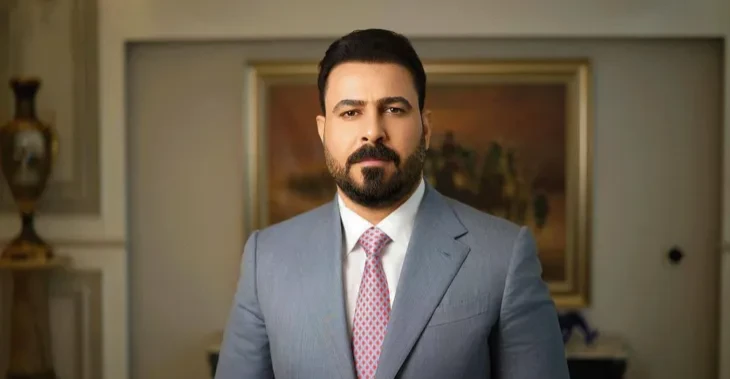
On April 27, Iraqi President Nizar Amedi tasked Al-Zaidi, the
Framework’s candidate, with forming a government within 30 days and securing
parliamentary confidence under Article 76 of the constitution.
Read more: Ali al-Zaidi named Iraq’s prime minister: Easy nomination, harder road ahead