2026-04-29T16:06:52+00:00
font
Enable Reading Mode
A-
A
A+
Shafaq News-
Beirut
Lebanese
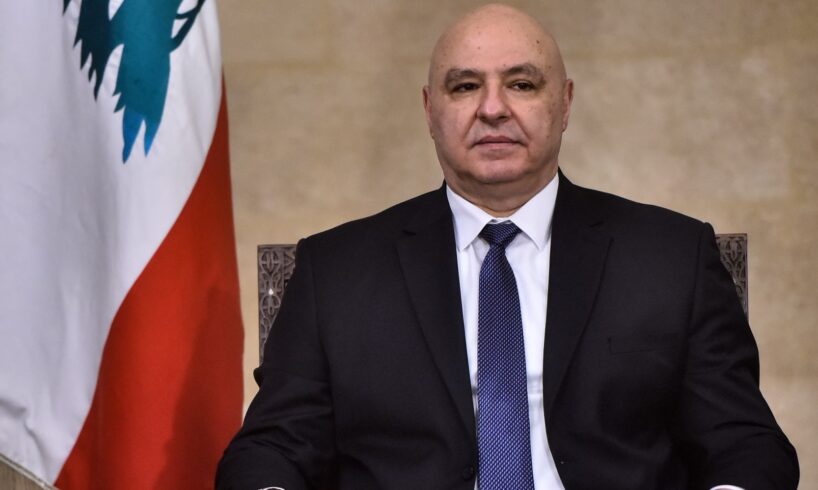
President Joseph Aoun said Wednesday he has coordinated every step of his
country’s negotiating posture with both the Speaker of Parliament and the Prime
Minister, pushing back against reports suggesting he had acted unilaterally in
pursuing diplomatic contact with Israel.
On April 14,
the US Department of State convened a trilateral meeting with the participation
of Secretary of State Marco Rubio, Lebanese Ambassador to the United States
Nada Hamadeh Moawad, and Israeli Ambassador to the United States Yechiel Leiter
—the first major high-level engagement between the governments of Israel and
Lebanon since 1993. All sides agreed to launch direct negotiations at a
mutually agreed time and venue. A second round followed on April 23 at the
White House, after which President Donald Trump announced a three-week
extension of the 10-day ceasefire that had taken effect on April 16.
One of the
most contested points of that diplomatic process has been the joint statement
issued by the US State Department following the April 14 meeting. Critics in
Lebanon argued that the text effectively granted Israel a license to continue
strikes on Lebanese territory. Aoun rejected that reading, stating the document
was identical in wording to the November 2024 cessation of hostilities text
that all parties —including Lebanon’s then-government— had accepted. He drew a
categorical distinction between a statement and a binding agreement, saying the
latter could only result from the conclusion of formal negotiations, which had not yet begun.
Read more: Ceasefire without sovereignty: how Lebanon’s fragmented power blocks a peace with Israel
Earlier,
Parliament Speaker Nabih Berri, who leads the Amal Movement and has long served
as a political interlocutor between the Lebanese state and Hezbollah, strongly
denounced the Washington talks, stating the delegation went to seek a ceasefire
but returned with measures that fuel aggression against the resistance. He
firmly rejected direct negotiations with Israel, arguing the real priority must
be preserving the ceasefire and preventing internal division.
Hezbollah
Secretary-General Naim Qassem called the negotiations a free concession to
Israel and the United States, and warned that negotiating under fire amounts to
signing a document of surrender.
On the
substance of the negotiations, Aoun stressed that Israel must implement a full
and unconditional ceasefire before direct talks can proceed. Security along the
southern border, he said, cannot be achieved through military force or the
destruction of border villages.
The only
actor capable of guaranteeing that security, Aoun argued, is the Lebanese state
operating at full capacity across all southern territory up to the
internationally recognized border, a formulation that tracks the requirements
of UN Security Council Resolution 1701, which calls for the disarmament of
non-state armed groups and the extension of Lebanese state authority to the
south.
Lebanon is
awaiting a date from Washington to formally open negotiations. The president
confirmed that the Lebanese file now sits directly with Trump, describing the
US president’s engagement as a strategic opening the country cannot afford to
miss.
الرئيس جوزاف عون امام وفد الهيئات الاقتصادية: – في كل خطوة اتخذتها في ما يتعلق بالمفاوضات كنت على تنسيق وتشاور مع رئيسي مجلس النواب والحكومة، على عكس ما يحكى في الاعلام. أما بالنسبة للانتقادات بأن لبنان وافق من خلال البيان الأميركي الذي صدر على اثر المحادثات الثلاثية في واشنطن،… pic.twitter.com/i91xKkSOkC
— Lebanese Presidency (@LBpresidency) April 29, 2026
Source