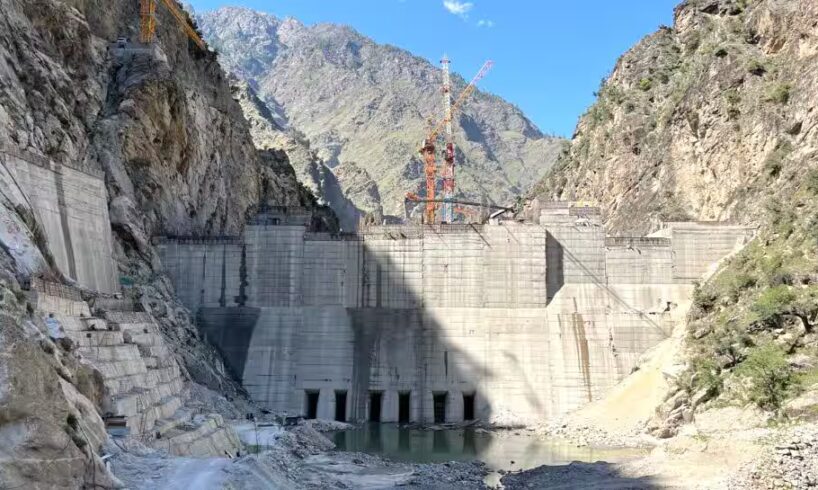
New Delhi: Raising objections to India’s hydroelectric projects in Jammu and Kashmir, Pakistan has once again taken its concerns over the Indus Waters Treaty to an international arbitration platform. The issue was heard before the Permanent Court of Arbitration (PCA), where hearings on the case were concluded on Tuesday (April 30).
Pakistan argued that India’s ongoing hydroelectric development on western rivers is affecting its water security and urged the court to take note of several projects that are outside the scope of formal arbitration cases.
India, on its part, has rejected the jurisdiction of the PCA in this matter and has not participated in the proceedings.
Add Zee News as a Preferred Source
Pakistan flags multiple hydro projects
During the hearings, Pakistan raised a set of Indian hydroelectric projects that are not part of ongoing disputes under World Bank-linked mechanisms. In a written submission dated January 19, Islamabad included the 624 MW Kiru hydroelectric project on the Chenab River in Kishtwar as a case study. It described New Delhi’s claims over water storage rights at Kiru as overstated.
It also referred to other major Indian projects such as Baglihar, Dul Hasti, Kiru and Kwar, all located in Jammu and Kashmir. According to Pakistan’s argument, these projects are important to India’s plan to expand power generation but are also associated with increased water storage capacity.
Claims of misuse and water flow concerns
In its oral submissions on February 2, Pakistani lawyers argued that India was proposing higher water storage allocations for large hydroelectric plants. They said this approach would impact downstream flow into Pakistan and described it as a misuse of the system.
They further claimed that India’s hydroelectric development plan on western rivers is large in scale and does not match provisions under the Indus Waters Treaty. It said that the design and storage plans for these projects would have a negative impact on water availability downstream.
On February 3, Pakistan added that India’s hydroelectric expansion on the western rivers appears extensive, especially on the Chenab River where projects above 300 MW are under development. It argued that storage calculations are being pushed beyond agreed limits under the treaty.
India’s position and treaty background
India has taken a different position and has not participated in the PCA proceedings related to the treaty. It has also rejected arbitration in this case.
Following the attack in Pahalgam in Kashmir last year, India had suspended the Indus Waters Treaty. After that decision, construction work on several hydropower projects in the region picked up pace. These include the 1,000 MW Pakal Dul project and the 624 MW Kiru project, both targeted for completion within a compressed timeline.
Smaller projects such as the 37.5 MW Parnai and 540 MW Kwar are also being pushed toward completion by 2027.
What is being heard at PCA
The present proceedings at the Permanent Court of Arbitration are not about the design or full technical structure of all Indian projects. The court is mainly dealing with disputes related to Kishanganga and Ratle projects, particularly issues around pondage and design under treaty provisions.
However, Pakistan has expanded its submissions to include references to other Indian hydroelectric projects over time. In its 81-page note, it has dedicated a full section to the Kiru project, questioning India’s interpretation of pondage rights.
The country also argued that pondage calculations should take into account environmental flow requirements to prevent ecological harm. It suggested limits on pondage capacity, placing it within a specific range.
At the same time, Islamabad has clarified that it is not asking the court to decide directly on the Kiru project but wants broader principles under the treaty to be interpreted in a way that considers its concerns.
It has also questioned the data shared by India regarding pondage and design details, saying limited disclosure makes it difficult to accept the calculations presented.