An inquest has heard that Clarissa Street, 24, was given an oxygen mask not connected to anything before she died from a pulmonary embolism at Royal Oldham Hospital
Charlotte Fisher Reporter and Kirstie McCrum Deputy Head of News, Live News Network
14:26, 07 May 2026
Clarissa Street, who passed away in 2024(Image: The University of Manchester School of Social Sciences/Facebook)
A ‘talented’ and ‘outgoing’ woman tragically passed away after being left in a hospital corridor for more than an hour while suffering from a pulmonary embolism, an inquest has been told.
Clarissa Street, remembered by loved ones as a highly popular, artistic and sociable individual who loved attending concerts and being amongst friends, sadly lost her life in 2024.
A three-day inquest examining the circumstances of her death heard on Wednesday (May 6) that Clarissa died on August 14, 2024.
Click here to hear the latest from Manchester’s courts in our newsletter
Clarissa, who graduated from the University of Manchester with a degree in Sociology and received the Dean’s Award for her dissertation, was rushed to A&E in the late hours of August 13 after experiencing bouts of dizziness and feeling poorly, reports the Manchester Evening News.
The inquest was told she had previously suffered a provoked pulmonary embolism and deep vein thrombosis in 2017, and had been prescribed blood thinning medication intermittently between that time and 2024.
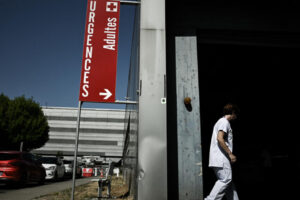
Yet, following her arrival at Royal Oldham Hospital, Clarissa was provided with an oxygen mask that wasn’t actually connected to a supply ‘to try and regulate her breathing’, and remained in a corridor for approximately an hour before being moved to a higher level of care, the inquest was informed.
Evidence presented to the inquest revealed that a paramedic had indicated they believed Clarissa was ‘overreacting and having a panic attack’ when handing her over to triage personnel. However, her health worsened and she passed away several hours afterwards from a pulmonary embolism alongside underlying fatty liver disease, the hearing was informed.
Clarissa went to hospital after passing out
Clarissa, who lived in Castleton, Rochdale, had felt unwell for two days prior to her boyfriend calling an ambulance on August 13 after she began losing consciousness, the inquest was told. In the days before her hospital arrival, she had experienced sleeplessness and difficulty keeping food and water down.
Upon reaching the hospital, Clarissa received an oxygen mask which wasn’t attached to any supply in an attempt to ‘regulate her breathing’ and was left waiting in a corridor.
Staff Nurse Michelle Neale, who was conducting triage duties that evening, requested an ECG, blood tests and venous blood gas analysis for Clarissa. She stated the ambulance crew had informed her the patient was hyperventilating but they had managed to control her breathing through conversation.
She acknowledged she ‘didn’t know’ her reasoning for providing the unconnected mask and admitted it was inappropriate – though maintained it ‘did regulate her breathing’ and that Clarissa was ‘speaking in full sentences’.
Ms Neale subsequently handed Clarissa’s care to a more experienced nurse and indicated she would need a cubicle. Nevertheless, Clarissa, whose blood oxygen saturation was low and pulse rate elevated, remained in a corridor for approximately an hour. She added that the senior nurse had informed her that Clarissa was ‘young so we’ll just keep an eye on her’ when she was placed on fluids and left in the corridor.
Ms Neale said: “Normally I would challenge it but Clarissa was talking to me. She could speak to me in full sentences.
“I remember her coming in. She was able to talk to me and she told me that she had been on holiday to the Canary Islands. I went back to Clarissa on the corridor and I asked her had [the oxygen mask] helped her and she said yes.”
She further noted that a more senior nurse indicated they would administer fluids to Clarissa before reassessing her, with the intention of transferring her to an urgent treatment centre.
Despite this, Clarissa was ultimately moved to a higher level of care to be seen by a doctor, before her condition worsened and she tragically passed away in the early hours of 14 August.
The inquest was told that, in accordance with national guidelines, there had been no requirement for a haematology referral in 2017 following her pulmonary embolism, nor any necessity for long-term anticoagulant medication, given that her embolism had been provoked.
It was acknowledged that, with the benefit of hindsight, a haematology referral and additional testing might have benefited Clarissa and could potentially have uncovered an underlying contributing factor. Nevertheless, the inquest heard that her 2024 embolism was unprovoked and it ‘cannot be said that the two are linked’.
The inquest commenced on Wednesday, May, 6 at Rochdale Coroner’s Court and is expected to conclude after three days, on Friday, May 8.
Want to see more of the stories you love from Coventry Live? To add us as a preferred source of news on Google, simply click here.