Shafaq News
Every summer, when Iraq’s
electricity grid begins to strain under rising temperatures, the crisis that
follows is never just technical. It is geopolitical. On one side, gas flows
from Iran keep power plants running. On the other, the dollars that finance
those imports —and sustain Iraq’s entire state budget— move through a financial
system overseen by the United States.
These are often described as
two separate dependencies. In reality, they form two sides of a single
strategic equation. Iran’s leverage is built into Iraq’s energy supply. The
United States’ leverage is embedded in its financial bloodstream. Between them,
Iraq has become a space where competition is operational, constant, and deeply
consequential.
This dual structure did not
emerge overnight. It has taken shape gradually since the 2003 US-led invasion
that toppled the regime of Saddam Hussein, embedding itself in the foundations
of Iraq’s post-war economic order and becoming more entrenched over time.
Read more: Twenty-three years on: Iraq got what the 2003 invasion produced
Wired to Tehran
Iran’s relationship with Iraq
is often framed through trade. According to Iran’s Trade Promotion
Organization, bilateral exchange reached about $11.6 billion in 2025, with a
target of $15 billion by 2026. Iraq’s Ministry of Finance identifies Iran as
one of its largest sources of imported goods. Yet the strategic significance of
the relationship extends far beyond commercial exchange, particularly in the
energy sector.
Data from the US Energy
Information Administration (EIA) shows that Iranian natural gas fuels power
plants responsible for roughly 30% to 40% of Iraq’s electricity generation,
placing Tehran at the center of Iraq’s energy stability.
The scale of dependency
becomes clearer when measured against domestic demand. Iraq imports about 15
million cubic meters of gas per day, while its gas-fired power stations require
roughly 50 million. The resulting shortfall —around 35 million cubic meters
daily— leaves the system operating at only about 30% of its required capacity.
On paper, Iraq is permitted to
import up to 50 million cubic meters per day under its arrangement with Iran.
In practice, deliveries consistently fall below that ceiling, creating a gap
between formal capacity and actual supply. That gap is where leverage quietly
operates.
During periods of reduced inflows, including in March 2026, Iraq lost between 4,000 and 4,500 megawatts
of generating capacity, forcing plants to scale back operations and pushing the
grid into crisis during peak summer demand. Access to fuel has therefore become
closely tied to timing, reliability, and predictability —factors that directly
shape domestic stability.
Iran’s economic influence also
extends well beyond gas supplies. Figures from Iraq’s Central Statistical
Organization show that Baghdad imported more than $7 billion worth of Iranian
non-oil products in the first seven months of 2025, including construction
materials, machinery, food, and plastics. These goods are deeply embedded in
everyday consumption patterns, especially in Iraq’s southern provinces like
Basra, Karbala, and Dhi Qar.
At the same time, Iraq’s
exports to Iran remain between $400 million and $700 million annually, mostly
raw materials and agricultural products. The imbalance reinforces a broader
structural asymmetry between the two economies.
Along the border, Iranian
goods circulate through partially regulated channels. Financial transactions
often bypass formal banking systems, forming what the International Monetary
Fund (IMF) describes as a parallel economic layer that weakens oversight and
increases exposure to external shocks. Over time, Iran’s role has expanded
beyond that of a neighboring supplier, becoming intertwined with Iraq’s
consumption networks, energy system, and segments of its informal economy.
But this is only one side of
the equation. The other is not a counterweight; it is a different kind of
control system entirely.
Read more: Iraq’s power crisis: Dependence on Iranian gas and limited alternatives
The Green Gate
More than 85% of Iraq’s
government income comes from oil, according to the World Bank. Those revenues
pass through accounts at the Federal Reserve Bank of New York before being
released in US dollars to Baghdad.
The arrangement emerged in the
aftermath of the 2003 US-led regime change and was designed to integrate Iraq’s
oil revenues into a monitored international financial system. Over time, it
evolved into a structural feature of Iraq’s economic sovereignty, effectively
placing liquidity management within an externally supervised framework while
maintaining the appearance of financial independence.
As a result, Iraq’s fiscal
core remains tied to a system beyond its direct control. Government spending
—including salaries, pensions, and subsidies— depends on the uninterrupted
conversion of oil revenues into liquidity. The state’s ability to function is
therefore shaped not only by how much revenue it generates, but also by the
speed and conditions under which those funds become accessible.
This framework is reinforced
through periodic cash shipments linked to oil revenues, typically ranging
between $400 million and $500 million per transfer. The flows help stabilize
domestic liquidity while also illustrating Iraq’s continuing reliance on external
financial authorization.
Whenever transfers are delayed
or suspended, the consequences emerge quickly. Dollar scarcity intensifies
inside the country, pressure mounts on the Iraqi dinar, and import costs rise
across essential goods.
Recent developments have
underscored the scale of this vulnerability. According to the US-based
Foundation for Defense of Democracies, Washington has halted roughly $500
million in cash shipments to Iraq amid pressure linked to Iran-backed groups,
while also suspending parts of security cooperation with Baghdad. Kataib
Hezbollah and elements within the Popular Mobilization Forces (PMF) have been
specifically cited in relation to financial restrictions and enforcement
measures.
At the center of the system
stands Rafidain Bank, which channels oil revenues after their release from New
York and distributes them across the Iraqi economy, including public sector
salaries. Under the new US oversight framework, parts of this distribution have
shifted through smaller institutions such as Al-Nahrain Islamic Bank, altering
the channels through which funds move without changing the underlying structure
itself.
The financial system also
serves as a mechanism for behavioral pressure. US authorities have tightened
access to the dollar system for Iraqi banks suspected of facilitating
transactions linked to sanctioned financial networks. The measures include
efforts to restrict monetary flows connected to Iran-aligned actors operating
within Iraq’s political and security landscape.
The effect is therefore
cumulative: banking supervision becomes a mechanism of geopolitical pressure.
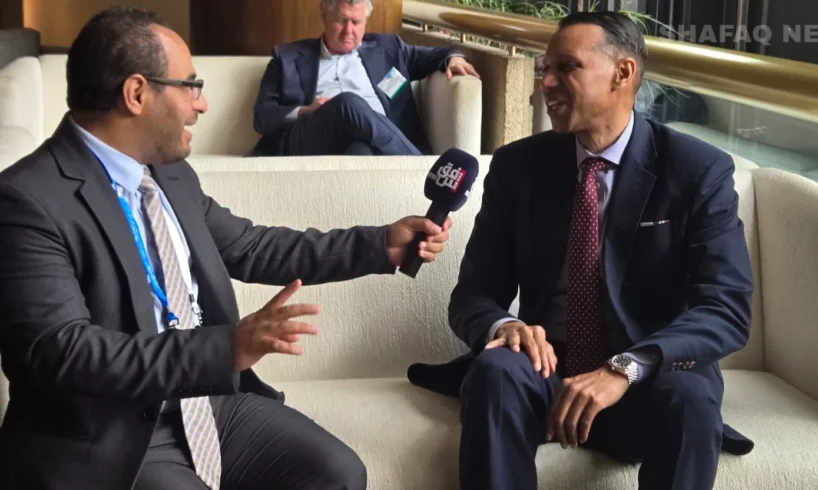
Speaking to Shafaq News, Myles Caggins, who served three tours in Iraq between
2003 and 2020, noted that currency restrictions and banking oversight function
as tools to encourage Iraq to reduce reliance on Iranian energy while also
restricting illicit financial flows.
“The United States is using
all elements of its power to encourage Iraq to distance itself from Iranian
control, particularly after attacks by outlaw groups such as the Islamic
Resistance in Iraq (IRI) on American assets,” he explained, describing economic
leverage as the main focus at this stage.
He added that restrictions on
liquidity and access to dollars carry clear macroeconomic consequences, placing
pressure on exchange rates, raising import costs, and fueling inflation in a
highly dollar-dependent economy like Iraq.
But the deeper impact is
slower and more structural. “When formal banking channels tighten, parts of the
economy shift into informal networks, increasing opacity and weakening the
state’s ability to fully track financial flows,” he remarked, pointing to recent
comments by caretaker Prime Minister Mohammed Shia al-Sudani, who expressed a
desire to recalibrate Baghdad’s ties with both Washington and Tehran toward a
more balanced relationship.
Read more: Sovereignty strain: US sanctions trigger Iraq’s liquidity nightmare
Sovereignty Divided
Iraq’s experience is shaped by
the simultaneous presence of two external systems operating through different
mechanisms inside the same state structure. Together, they have narrowed
Baghdad’s room for independent economic maneuvering.
Since 2003, Iraq has struggled
to transform formal sovereignty into fully autonomous state capacity. Its
political landscape remains divided between forces that lean toward Washington
—often including parts of the Kurdish and Sunni communities— and others that
prioritize ties with Tehran, particularly within the Shiite camp. External
pressure, as a result, is reinforced not only from abroad, but also through
internal political alignments.
Baghdad has nevertheless
attempted to ease parts of these dependencies by expanding domestic gas
production, pursuing electricity connections with Gulf States, and introducing
banking reforms. Progress, however, remains uneven and constrained by structural
challenges that cannot be resolved quickly, according to the World Bank.
Until Iraq moves beyond this
model, its sovereignty is likely to remain constrained in practice.
Read more: Multiple actors, one battlefield: Iraq since US-Israel-Iran war began
Written and edited by Shafaq
News staff.