2026-06-01T23:21:00+00:00
font
Enable Reading Mode
A-
A
A+
Shafaq News- Baghdad
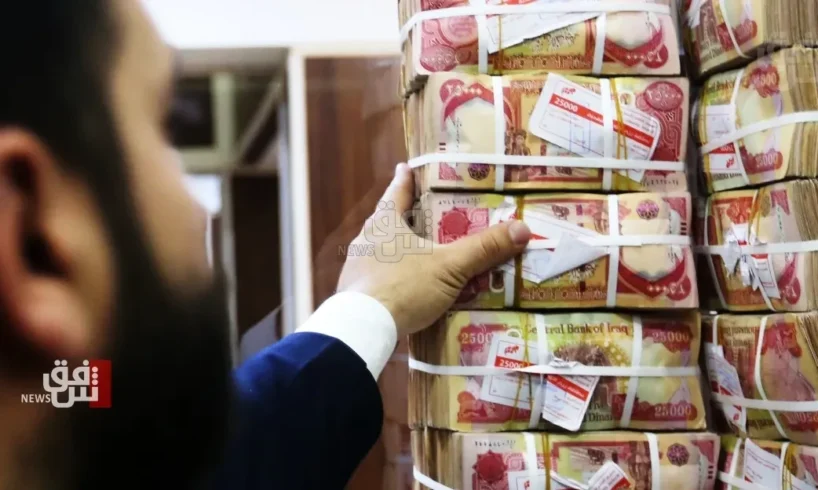
Exchange and money transfer offices have expanded
significantly across Iraq in recent years, reflecting continued reliance by
citizens and traders on non-bank financial services despite gradual
improvements in financial inclusion.
According to Prime Minister’s financial adviser Mudher
Mohammed Saleh, about 87% of Iraq’s money supply, roughly 95 trillion Iraqi
dinars (about $72.5 billion) out of a total 109 trillion dinars (around $83.2
billion), remains outside the banking system. “The trend limits banks’ ability to channel
funds into lending and investment and highlights the persistence of cash
hoarding and weak integration into the formal financial sector.”
Although financial inclusion indicators have improved, a
large segment of Iraq’s population remains outside the banking system or uses
it only occasionally. The Central Bank of Iraq said financial inclusion
surpassed 40% in 2025, up from around 20% in previous years. The figure
includes bank accounts, electronic wallets, and digital payment tools rather
than traditional bank accounts alone.
Economic estimates nevertheless suggest that many adults
either do not have active bank accounts or rarely use them, underscoring the
continued dominance of cash transactions in the local economy.
Iraq’s heavy dependence on imports has also contributed to
demand for exchange offices. Traders often turn to these businesses for foreign
currency and international transfers because of customs-related complications
and difficulties some importers face in accessing US dollars through the
Central Bank’s official channels.
This dynamic has increased demand for dollars in the local
market, particularly among small and medium-sized traders who struggle to
access formal transfer mechanisms. Regulatory estimates indicate that Iraq has
thousands of exchange offices and currency companies nationwide, compared with
roughly 900 branches operated by public and private banks.
The exchange sector plays an important role in maintaining
liquidity flows, but the gap between the official dollar exchange rate and the
parallel market rate, ranging from 15% to 20% during periods of market stress, has
encouraged transactions outside the banking system and fueled currency
speculation. The sector is also estimated to support more than 50,000 direct
and indirect jobs in money transfers and liquidity management.
Read more: Cash culture dominates Iraq, reform efforts stall
In an interview with Shafaq News, economic expert Dirgham
Mohammed Ali said some exchange companies have begun performing functions
similar to those of banks by providing loans and salary-backed financing,
practices he described as falling outside their legally authorized activities.
Ali noted that the trend reflects the limited role of some
banks in extending credit to economic sectors and warned that such lending
carries significant risks because of high interest rates and the absence of
regulatory oversight governing loan issuance and repayment mechanisms.
“Lending activities are not part of the nature of exchange
companies’ work or the licenses granted to them,” he said, adding that their
legal role is limited to currency exchange and foreign transfers.
Financial expert Hilal al-Taan told Shafaq News that many
Iraqis prefer exchange offices because they offer faster services, simpler
procedures, and longer operating hours than government banks.
He added that weak confidence in the banking sector and the
economy’s heavy reliance on cash have reinforced this preference. Exchange
offices, he argued, facilitate domestic and international transfers and help
provide dollars for trade and imports.
On the foreign exchange market, al-Taan stressed that
exchange offices influence the dollar rate indirectly through supply and demand
dynamics. Increased demand for foreign currency, speculation, and the gap
between official and market rates contribute to exchange-rate fluctuations,
while expectations of future price increases can also encourage citizens to buy
dollars.
Read more: From Cash to Cards: Iraq’s shift to a cashless future