The insurance market supports the need to replenish the state budget during wartime, while noting that raising the corporate income tax on banks to 50% poses risks not only to the banking system but also to Ukraine’s entire financial ecosystem.
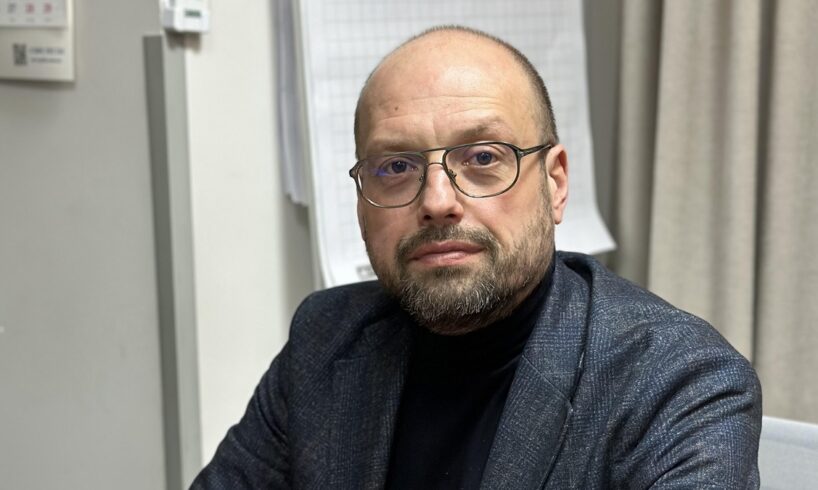
This was announced by President of the League of Insurance Organizations of Ukraine Viktor Berlin, during a joint meeting of the Association of Ukrainian Banks and the National Association of Banks of Ukraine on Monday.
“Such a decision weakens the financial sector’s ability to finance the economy, worsens the investment climate, increases the cost of financial and insurance services for citizens and businesses, and contradicts Ukraine’s strategic goal of developing a modern, competitive, and EU-integrated financial market,” he said.
Tax stability is a key condition for retaining and attracting capital, he added.
According to him, Ukraine is in dire need of new investments today. Under such conditions, the predictability of tax policy becomes no less important than the tax rate itself. If a tax that was declared a temporary anti-crisis measure effectively becomes permanent, this sends a signal to investors about high regulatory risks in the country.
He also noted that for the insurance market, the proposed solution would have several simultaneous consequences.
First, the volume of lending decreases-the number of active transactions drops, which affects insurance premiums. Banks are one of the most profitable sales channels for insurance companies, accounting for about 13% of insurers’ sales channels.
Second, banks are not lending-the economy is not growing, and consequently neither is GDP nor, of course, the insurance sector. Thus, insurers are taking a double hit. However, the insurance market represents long-term capital in the country’s economy, invested in government securities and held in bank deposits, and these funds drive the economy.
Thus, the increased tax burden on banks actually affects more than just the banking sector. Its consequences extend to the insurance market, investment prospects, business, and millions of consumers of financial services, he said.
“Under these conditions, the priority of state policy should be to build up the capital of banks, insurance companies, and other financial institutions, not to withdraw it. An additional 20 billion hryvnias for the budget today should not cost Ukraine hundreds of billions of hryvnias in investment and credit resources tomorrow,” the League of Insurance Organizations head said.
According to him, it is the development of the financial sector, not additional taxation, that creates the foundation for long-term economic recovery, improved public welfare, and the flow of investment into Ukraine.
“While in Brussels and London, I see how high the interest of European investors in Ukraine is. Unpredictable tax burdens send a very negative signal to them. Investors always compare countries with one another. If Poland, the Czech Republic, Romania, or the Baltic states have stable tax rules, while in Ukraine the tax burden can change on a case-by-case basis for specific sectors of the economy, capital will naturally gravitate toward more predictable jurisdictions. The fact that we are currently talking about the financial sector is, in my view, particularly dangerous, because the banking sector is precisely what should become one of the drivers of post-war recovery. Every hryvnia of capital that does not enter Ukraine’s banking or insurance system means fewer loans for businesses, less insurance coverage, and fewer long-term investments in the economy. And generally, given the possibility of managing the process of finding sources to fill the state budget in such a chaotic manner, I have a question: who’s next? Which market will be in the crosshairs of political populists tomorrow?” Berlin said.